Guides / 徹底解説:従量課金制ガイド
徹底解説:従量課金制ガイド

従量課金制は、顧客がサービスや製品を利用した分だけ課金・請求される戦略です。例えば、APIコール数、使用したデータ容量(ギガバイト)、消費電力量(キロワット時)、あるいはチャットボットの出力内容などが該当します。
この柔軟な価格設定アプローチは、顧客に対して価値と透明性を提供し、信頼とロイヤルティの構築につながります。コンサンプション(従量課金)モデルは、クラウドコンピューティング、公共料金、通信など複数の業界で活用されており、企業が顧客のニーズや利用状況に応じてサービスを拡張できるようにしています。さらに、従量課金制およびハイブリッドモデルは、AIや生成AI(GenAI)関連のオファーにおいても、ベンダーと顧客の双方にとって急速に主流となりつつあります。
コンサンプション(従量課金)モデルの導入は一見すると非常に困難に思えるかもしれませんが、本ガイドでは、貴社全体でこの変革を成功裏に進めるために必要な知識と戦略をご紹介します。
What is usage-based pricing?
Usage-based pricing is a strategy where customers are charged and billed based on how much of a service or product they use. This could be anything from the number of API calls, gigabytes of data used, kilowatt hours of energy, or outputs from a chatbot.
This flexible pricing approach provides value and transparency to customers and helps build trust and loyalty. Usage models are used across multiple industries, including cloud computing, utilities, and telecommunications, where they allow businesses to scale their services according to customer needs and usage patterns.
Usage-based pricing and hybrid models are also quickly becoming the model of choice for AI and GenAI offers, both for vendors and their customers. Launching a usage-based model can seem like an insurmountable challenge, but this guide will provide the knowledge and strategies you need to successfully make the shift across your business.
Usage is fast emerging as the pricing model of choice for companies across industries, especially those developing and launching new GenAI offers. This is because the model provides good alignment with and demonstration of value to the customer.
Subscribed Institute research has shown that many of the fastest-growing SaaS companies leverage a usage-based model. In fact, the number of companies employing some form of usage-based pricing increased 9% to 26% between 2020 and 2022.
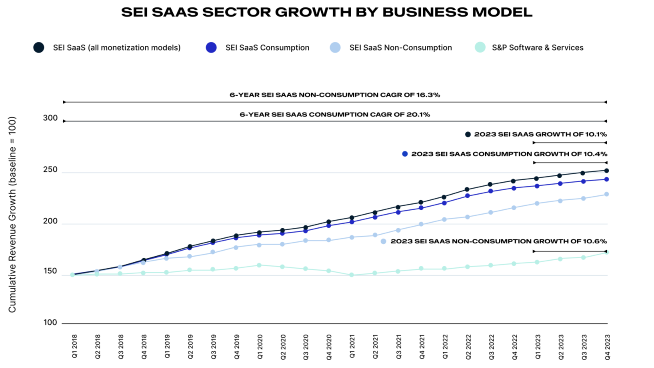
なぜコンサンプション(従量課金)モデルはこれほど人気なのでしょうか?
従量課金制は競争上の差別化要因となり得るほか、販売コストの削減や参入障壁の低減にも寄与します。また、ハイブリッドモデルの一部として従量課金制を活用することで、企業規模を問わず、年間経常収益(ARR)の対前年成長率が向上することが示されています。
顧客は、投資対効果(ROI)の明確化や初期リスクの低減をますます求めており、自社がどれだけ製品を利用し、どれほどの価値を得られるのかを把握したいと考えています。実際、顧客の80%が、従量課金制は受け取る価値との整合性が高いと回答しています。
顧客は、初めて製品を試す際には柔軟性を重視するため、シンプルな従量課金制は新規顧客のオンボーディングに適した選択肢となります。しかし、製品の利用が進み、顧客が貴社のソリューションに自信を持つようになると、より高い予測可能性を求めるようになります。そのため、顧客との関係が深まるにつれて、製品の利用方法に応じた課金方法も変化することが期待されます。結果として、貴社のマネタイズ機能も顧客の期待に応じて柔軟に対応できる体制が求められます。
コンサンプション(従量課金)モデルが最適な選択かどうか、どのように判断できますか?
従量課金制を導入する際には、継続的な成長を実現するために「企業および製品」「ユースケース」「価格モデル」という3つの重要な要素を考慮する必要があります。
コンサンプション(従量課金)モデルをどのように導入すべきか?
従量課金制のメリットや、貴社に最適なモデルやその組み合わせの選び方が分かったところで、次は「いかに迅速に従量課金価格を導入するか」、そして「どのような機能が必要か」についてご案内します。
コンサンプション(従量課金)モデルを成功に導くために必要な主要な4つの機能は以下の通りです。
1. 開発者の手を介さず価格設定ができること
- ノーコード価格設定ツール:豊富な開発リソースを必要とせずに、価格モデルの変更や価格ポイントの調整が可能。
- 自動価格更新:価格の変更が、アプリ内課金やeコマースプラットフォーム、CPQシステムなど全システムに反映されることを保証。
- データに基づくバリューメトリクス:すべての製品に対して収益化できるメーターを迅速に追跡・定義可能。
2. 多様な価格戦略で実験できること
- モデルの組み合わせを試す:ボリューム、階層型、マルチアトリビュート、従量課金(使った分だけ支払い)など、さまざまな顧客ニーズに対応できるオプションを含める。
- プリペイドクレジットとチャージ:顧客が予算管理しやすいよう、前払いでクレジットを購入し、必要に応じて利用できる仕組みを提供。
- 割引・トライアル:新規ユーザー獲得や利用促進のためのプロモーション価格や無料トライアルを導入。
3. 利用データの収集・測定・追跡
- 自動メディエーション:利用データの集約・処理を効率的に管理し、さまざまなソースからのデータを正規化し、請求に正確に反映できるようにする。
- スケーラビリティと統合性:利用データを請求システムとシームレスに統合し、大量データもパフォーマンスを維持しつつ対応可能。
- 動的データ統合:複数ソースから利用データをストリーミングし、自動でデータの拡充・集約・重複排除を行う。
4. 成長のための分析と最適化
- リアルタイム分析:利用パターンを継続的にモニタリング・分析し、顧客行動を把握してサービス内容を柔軟に調整。
- コスト・収益追跡:各価格プランごとにコストと収益を比較し、最も収益性の高い戦略を特定。
- 実験:同じ利用データに異なる価格プランを適用し、収益最大化や顧客満足度向上につながるものを見出す。
- 部門横断的な導入:営業や収益会計チームなど、複数のステークホルダーと連携・計画し、全社で新たな価格設定を円滑に展開。
関連リソース
コンサンプション(従量課金)モデルがビジネスの成功に貢献する方法
従量課金型価格モデルを導入・拡大するための実証済みの戦略とツールをご紹介します。当社の調査によれば、ハイブリッドモデルを活用しているSaaS企業は、継続的な成長において他のすべてのビジネスを凌駕しています。
Hybrid & commitment models (the gold standard)
Recently, hybrid consumption models that combine predictable subscription approaches with more variable usage models have gained prominence as drivers of recurring revenue. Although the SaaS sector is still fine-tuning these pricing and packaging strategies, the results are promising compared to non-usage models.
While pure usage revenue can be less predictable and more volatile, hybrid consumption models can be a good fit for SaaS offerings, particularly cloud services and generative AI. These hybrid, agile models can help provide predictability, while also improving value to the customer by tying pricing and payments more directly to usage and actual demand.
Some of the most successful businesses have no more than 25% of their total revenue coming from usage models. They anchor pricing on a value metric first and then grow that pricing by combining pay-as-you-go models (low risk) with pre-paid models (high predictability), thereby driving recurring growth.
- Hybrid consumption: This approach employs a mix of both subscription and usage-based charge models for a single offering.
- Minimum commitment: This allows you to charge your customer at their commitment level on each invoice, even if they don’t fully consume the committed usage amount. With this model, businesses have a level of predictability in revenue expectations according to the customer’s commitment level.
- Pre-paid with drawdown: Customers pay upfront for a set of units (or hold a cash balance) that is drawn down over a period of time. This offers flexibility for customers in terms of choosing a prepaid amount and revenue predictability for the business.
- Multi-attribute: This model charges customers through a variety of different metrics. For example, Zipcar charges customers through a combination of time of day, type of car, day of the week, and other attributes.
利用メディエーションとは何ですか?
利用メディエーションは、すべての利用イベントに内在する情報を最大限に引き出すために、顧客の利用データを統合・計測・追跡する役割を果たします。顧客が実際にどのように製品やサービスを利用しているかについて、正確かつタイムリーなデータを得ることは、従量課金価格や請求戦略を最適化するうえで不可欠です。
従量課金制の導入を始めたばかりの多くの企業は、価格プランの選定・実装(レーティング)から着手しがちです。しかし、価格設定やパッケージングを最適化する前に、まず顧客やその消費パターンを包括的に理解することが重要です。これは、メディエーションを通じて顧客の利用データを収集・計測することで実現できます。
カスタマイズされたソリューションやアドオンで請求システムに利用データの取り込みや計測機能を追加することも可能ですが、多くの企業にとって最も効率的かつコスト効果の高い選択肢は、すべての利用データ要件に対応し、既存の請求・収益認識システムと統合できる専用のメディエーションエンジンです。
What are the challenges of usage-based pricing?
Implementing a usage-based pricing strategy can also present challenges. Companies need to balance value while also having enough cash to cover costs. Pricing too high could put some customers off, while pricing too low will result in a loss. Implementing usage-based pricing requires planning and consideration of the potential risks and challenges.
- Surprise overages or shut-offs: Surprises lead to terrible customer experiences. For this reason, customers tend to dislike simple pay-as-you-go billing; it may not provide the predictability they require. The nature of usage pricing means that customers might not realize how much they’re using. The answer is transparency and mediation. Customers need to stay apprised of their consumption patterns. And if you do it right, it’s not only a better experience, but can be a key growth lever as well.
- Customers may overcommit: Usage-based pricing models may introduce a situation where customers end up overcommitting or pre-paying for too much. Businesses will then have to decide how to handle the extra credits, money, or units customers already paid you for.
- Billing becomes substantially more complicated: Usage charges are typically billed in arrears, after the billing cycle. This may be different from the way your billing team operates today, if your customers are typically billed in advance. This new process means that billing teams will have to ensure charges are calculated accurately, invoices are sent out on time, and billing operations are maintained for customers who may not be on a usage model. This often means that billing teams have to work out of multiple systems to collect the data needed for accurate billing.
- The role of Billing Operations will have to expand: In a traditional subscription model, a customer can’t dispute that they bought 5 seats after they sign the contract and pay the invoice. In a model tied to usage, there’s a myriad of opportunities for billing confusion and inaccuracies to spiral out of control, destroy customer experiences and bog down your support team. Billing Ops will need to expand from deal support and invoice accuracy to forecasting, notification, and dispute defensibility.
- Revenue recognition and reporting can hinder success: Under ASC606 and IFRS15, there are specific revenue recognition rules that accounting teams have to adhere to. Without a system in place to handle complex usage revenue recognition, this will lead to manual efforts and hundreds of thousands of lines of spreadsheets to reconcile.
メディエーションエンジンとは何ですか?
家庭の電力量計(メーター)が電力使用量を測定し、請求可能なキロワット時(kWh)に変換するのと同様に、メディエーションエンジンはあらかじめ定義された利用価値指標ごとに利用状況を測定・計量します。貴社にとっての利用価値指標は、kWhの代わりにストレージ容量(GB)や通話時間(分)などになる場合がありますが、基本的な考え方は同じです。
しかし、利用データやメディエーションのプロセスは、それ以上の幅広い用途で活用できますし、活用すべきです。従量課金戦略を用いて継続的な成長を実現するには、クロスセルやアップセルの機会、コスト削減施策など、実際に活用できるインサイトを抽出できることが重要です。顧客がいつ、どこで、なぜ、どのように製品を利用しているのかをより深く理解できれば、オファリングや価格設定、製品自体を最適化することが可能になります。
従量課金制を導入している多くの企業は、どのようなメディエーションソリューションを選択すべきか分からない、あるいはその必要性自体にまだ気づいていないことがよくあります。R&D部門やIT部門が独自のメディエーションツールなど、カスタムソリューションの構築・保守を担わされるケースも多く見受けられます。
また、アドオン製品やETL(Extract, Transform, Load)ツールを選択する場合もありますが、最終的にはこれらのソリューションが多大な開発リソースを必要とし、コスト増加につながることが判明する企業が少なくありません。
一方、メディエーションエンジンであれば、利用データの収集・変換・計測・追跡に必要なすべてのツールを提供します。プロダクトマネージャーに対しても、純粋な従量課金制からハイブリッドコンサンプション(従量課金)モデルまで、リアルタイムで柔軟に価格戦略を転換できる可視性をもたらします。
従量課金制価格戦略の一環として、メディエーションエンジンは、顧客が必要なタイミングで必要な分だけ消費できる柔軟性と、自身の利用状況や料金を常に把握できる透明性の両方を実現するための基盤となります。

Tip
Make the most of your data
Work with your analytics team to consolidate and evaluate usage data to uncover trends and help inform the selection of usage value metrics. Consider adding a mediation engine—a purpose-built solution that can handle all your usage data needs and integrate with your current billing and rev rec systems.
To increase the accuracy of usage forecasts, CFOs should encourage cross-functional collaboration within the organization and alignment on the business’s approach to new use cases.
Work with your analytics team to consolidate and evaluate usage data to uncover trends and help inform the selection of usage value metrics. Consider adding a mediation engine, a purpose-built solution that can handle all your usage data needs, and integrate with your current billing and rev rec systems.
To increase the accuracy of usage forecasts, CFOs should encourage cross-functional collaboration within the organization and alignment on the business’s approach to new use cases.
Forecast usage revenue using existing business use cases
Usage forecasting enables revenue teams to anticipate how much revenue will be gained through usage-based pricing models. This means forecasting variables such as usage, customer lifetime value (CLV), and potential overage charges. This gets increasingly complex when you introduce different bundles and offers.
Part of the appeal of usage models is that they allow customers to vary their use of a product or service, and therefore their charges, but this can make revenue predictability and forecasting tenuous. Often, the unique challenges and potential pitfalls presented by usage forecasting are not realized until accounting is tasked with recognizing usage revenue.
For example, FP&A or sales operations teams may develop their own usage forecasting without incorporating the more complicated, GAAP-compliant revenue accounting policies required for usage data and contracts. This can result in vastly different forecasts from one end of the OTC process to the other and may require a cumbersome reconciliation.
To avoid this, revenue accounting teams should advocate for cross-functional networking within the organization and alignment on the business’s approach to new use cases. Look for technology that can capture and analyze multiple dimensions of upstream data to quickly identify and resolve issues. In addition, real-time reconciliation and a close process dashboard can increase visibility and the accuracy of your revenue forecasts.
Ensuring accurate revenue recognition (asc 606)
The conversation about revenue recognition should begin as soon as the business elects to incorporate usage-based pricing. With a usage model, you might charge a flat fee, offer a volume or tier discount, or use multiple units of measurement depending on the country, time of day, or any of dozens of other variables. These varying permutations could create multiple different prices for the same service.
The charge model you implement determines your financial relationship to your customers, and it obligates you to accurately report on that financial relationship in a compliant way.
In particular, ASC 606 can make usage pricing tricky. Usage models require granular, real-time visibility, not just to total up usage at the end of a billing period, but also to monitor customer usage at any given time. Even with the addition of a usage model, you will need to layer in a recurring component. That could be a true prepaid model, a credit system, or a system tied directly to the usage metric itself, for example, gigabytes of storage.
It’s also important to consider what you’ll do if a customer doesn’t use everything they prepaid for and how that discrepancy could impact subscriber experience.
Why manual processes fail:
- Liability: If customers are prepaying on a contract, for example, that creates liability for you as a company and obligates you to deliver against the contract. The customer determines when they want to draw on what they’ve paid for, and that determines when you deliver against it and have to report to the street.
- Drawdown complexity: As different customers draw down their balances at different rates, you face another layer of complexity in tracking and reporting earned and deferred revenue. This is different from a prepaid model based on availability. For example, SaaS subscription companies often charge customers for one seat for one year, even if they collect payment every month. How or when the customer chooses to use that seat doesn’t impact the SaaS company’s revenue because their obligation was simply to make the service available. With usage, however, tracking usage is important not just for providing the service, but also for tracking revenue.
- Audit risk: Manual usage revenue recognition processes, along with increased scrutiny from auditors, will make audits more time-consuming and expensive, as auditors will be forced to sift through thousands of lines of usage data. For companies launching an initial public offering (IPO), issues uncovered during the audit process could cause delays.
Automate revenue recognition to streamline processes
Successfully managing usage data can require multiple tools to track data, meter usage, and analyze historical revenue trends.
Even some level of automation in the form of an ERP may not be enough, since legacy systems were not built for usage. ERP solutions are still built on the basis of handling one-time product fees, and are often unable to fully support usage pricing models without significant customization efforts. Unfortunately, even with customizations, 60% of revenue accounting team members report that their ERP revenue modules do not fully support their business requirements.
Usage models also require granular, real-time visibility, not just to total up usage at the end of a billing period, but also to monitor customer usage at any given time. The time and money spent on retrofitting ERP systems for new models can stall initiatives.
Revenue accounting teams are already feeling the strain of this lack of automation: 68% report not having the right technology to address growing demands from the business. Adding a new usage model without the necessary technology is certain to exacerbate these issues.
By centralizing revenue data through automated integrations, you can eliminate sprawling networks of spreadsheets that need to be updated and linked manually. Eliminating a large chunk of time-consuming, low-value manual tasks translates directly into operational efficiencies and significant savings in both time to close the books and money. Many teams experience a reduced time to close, a reduction in employee overtime, and the ability to focus on more strategic tasks.
More and more companies, especially those adopting usage, have shifted away from managing revenue recognition within an ERP. Instead, they turn to specialized revenue subledger solutions that can operate as a revenue subledger and feed data directly to the ERP general ledger.
The advantage of these point solutions is their native capability to provide features that are critical to the usage revenue accounting process, such as SSP analysis, contract modification, and revenue analytics—without expensive or complex customizations.
利用データの取り込みと保存
メディエーションを開始するには、すべての関連ソースから利用データを収集する必要があります。これには、ユーザーの操作データ、システムログ、センサー情報、その他のソースが含まれる場合があります。
メディエーションソリューションがない場合、貴社のITチームが製品から発生するすべての利用データの管理、ルーティング、クレンジングを担うことになります。数千件におよぶイベントをデータウェアハウスに集約した後、データを分析・変換し、活用できる状態にしなければなりません。
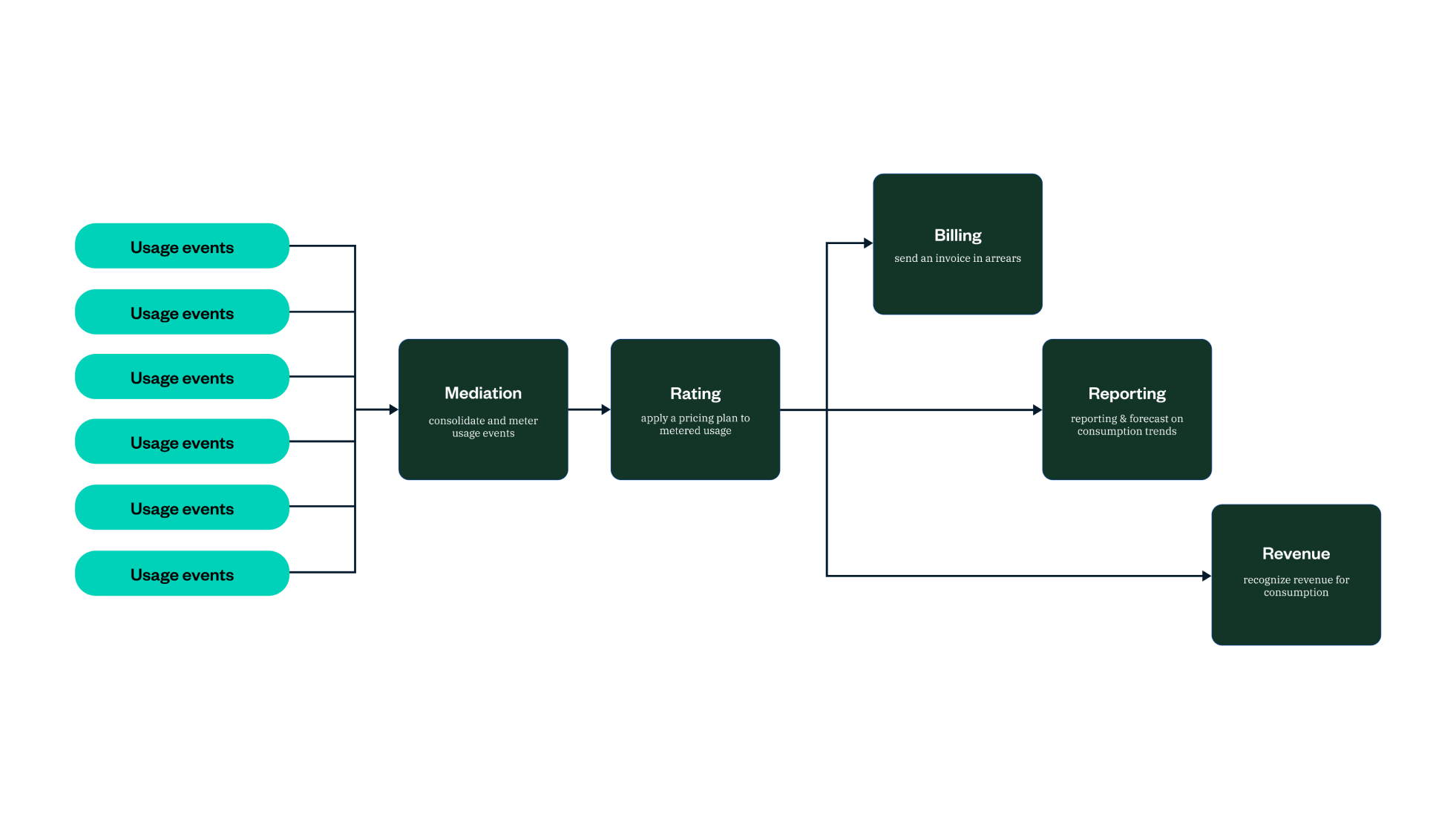
How do I ingest and store usage data?
To begin mediation, you’ll need to collect usage data from all relevant sources. This could be data from user interactions, system logs, sensors, or other sources.
If you don’t have a mediation solution, your IT team will likely have to manage, route, and clean up all of the usage data coming from your product. After aggregating thousands of events into a data warehouse, they’ll then have to analyze and transform the data to make it accessible.
A mediation engine can automatically stream near real-time usage data from multiple sources using APIs or batch uploads. Look for a solution that allows you to stream at high volumes (up to ~200K) of usage events, so you’re able to accommodate peak periods. And, by using a purpose-built mediation engine for aggregation and storage, your usage data becomes more manageable, accessible, and secure. Plus, removing the need for a separate data warehouse can help cut unnecessary storage costs.
How do I meter usage-based data?
After ingesting and storing your usage data, you must measure it in a process called metering. To do this, you’ll need to determine the metrics that are relevant to your product or service by analyzing customer data. These are the parameters or attributes that you’ll measure and use to charge your customers.
When it comes to usage-based pricing models, you’ll want to identify and measure key usage value metrics. These key metrics should not only be usage attributes that your company can track, but should also satisfy value alignment, leave room for growth, and offer predictability both for the customer and your business.
Research shows that companies utilizing hybrid consumption models, with metrics anchored on both usage and recurring revenue, outperform all other businesses when it comes to year-over-year (YoY) annual recurring revenue (ARR) growth.
Companies that already have an ETL tool might leverage it for usage metering, but ETL tools only do batch loads, so developer involvement is still required to customize and maintain. And as new offerings are added, metering requirements can slow down the time-to-market.
Revenue recognition will be impacted too, when proper metering and measurement of usage data isn’t occurring, or data isn’t in a form that’s readily available to accounting, rev rec will be slowed down, and the business will suffer.
How can a mediation engine help meter and identify key metrics?
A mediation engine can assist in collecting, aggregating, analyzing, and monitoring data related to customer usage. This data-driven approach can help you make informed decisions about which metrics are most relevant for your pricing model, ensuring that you align your pricing with customer behavior and value.
The more attributes you have to base your pricing on, the more you can create the perfect offering for your customers. Look for a solution with drag and drop capabilities, making it easy to quickly put together the right combination of metrics.
Step 2: Rating and pricing strategy
Usage models shine when it comes to product-led growth. Pure pay-as-you-go pricing reduces risk for customers and gives them confidence to try your product, which in turn may help increase your customer acquisition rates at a lower cost.
Ideally, at some point, your customers’ use of your product grows to the point where the cost becomes material to their business. At this point in your customer’s consumption lifecycle, two key concepts become critical: notifications driven by real-time metering and rating, and being able to offer more predictable contract terms and pricing models.
Step 3: Billing and invoicing
For usage pricing to work long-term, you need a system that provides real-time usage rating and threshold notifications. There is almost no worse customer experience than being surprised with a surprisingly large invoice they weren’t expecting. It will always be imperative that you give your customers as much transparency about their costs as possible, in as close to real-time as possible.
The best businesses attack this problem from multiple angles by offering self-service portals, triggering threshold notifications, and arming their field teams supporting customers with data tools to stay ahead of any surprises.
While customized or add-on solutions can be layered on top of your billing system to ingest, meter, and rate data, the most efficient and cost-effective solution for the majority of businesses is a mediation engine, a purpose-built solution that can handle all your usage data needs and integrate with your current billing and revenue recognition systems.
Adding predictability:
If there’s one thing CIOs hate, it’s surprising their CFOs. Pay-as-you-go models work great for enticing customers to try new products, but if you’re not ready to offer contract terms and pricing models that give them more predictability, you’re likely to lose these customers to a competitor who will.
So, while pure usage-based pricing is good for acquisition, adding recurring and pre-paid models to create a hybrid offering tend to be better for retention and allow you to lock customers into a more predictable agreement that serves all parties better.
Step 4: Analyze and optimize
Successful usage models are iterative. You should apply different pricing plans to the same usage data to discover which maximizes revenue and customer satisfaction. Compare costs against revenue for each pricing plan to identify the most profitable strategies.
利用データのメータリング
利用データを集約・変換した後は、「メータリング」と呼ばれるプロセスで計測を行う必要があります。そのためには、顧客データを分析し、貴社の製品やサービスにとって適切な指標を決定することが必要です。これらは、顧客への課金に利用するパラメータや属性となります。コンサンプション(従量課金)モデルを採用する場合、特に重要な利用価値指標を特定し、計測することが求められます。
これらの主要指標は、単に自社で追跡可能な利用属性であるだけでなく、顧客価値との整合性を持ち、将来的な成長の余地を残し、顧客と事業双方にとって予測可能性をもたらす必要があります。調査によれば、利用量と定期収益の双方に基づく指標を持ったハイブリッドコンサンプション(従量課金)モデルを採用している企業は、年間経常収益(ARR)の前年比成長率において他の企業を大きく上回っています。
既にETLツールを導入している企業では、それを利用してメータリングを行うケースもありますが、ETLツールはバッチ処理しか対応できないため、開発者によるカスタマイズや保守が不可欠です。新たなオファリングの追加時には、メータリング要件が市場投入までの時間を遅らせる要因にもなり得ます。
収益認識にも影響が及びます。適切なメータリングや利用データの計測が行われていなかったり、会計部門で即時活用できるデータ形式になっていない場合、収益認識プロセスが遅延し、事業の成長に悪影響を及ぼします。
明確な価格戦略は必須要件
従量課金制の価格設定は、純粋な消費型ビジネスモデルの中核となる要素です。提供者は、顧客がどれだけ製品を利用したかを測定できなければ、効果的な請求を行うことができません。この考え方は「バリューメトリクス」「単位」「価格設定の基準」などと呼ばれることがあります。
バリューメトリクスとは、企業が追跡可能で、顧客価値と整合し、成長の余地があり、顧客・企業双方に予測可能性をもたらす利用属性のことです。一般的な指標としては、ユーザー数、消費データ量、イベント数など、価値ベース・測定可能・コントロール可能なものが挙げられます。
バリューメトリクスを選定した後は、利用単位ごとの価格(レーティングロジック)を決定します。これは、利用1回ごとの定額料金(例:APIコール)から、コンピュートとストレージの組み合わせのような多次元アルゴリズムまで、シンプルなものから複雑なものまで幅広く設定可能です。
もう一つ重要な価格設定要素が「タイミング」です。すなわち、顧客が製品利用に対していつ支払いを約束するかという点です。最も成功している企業の多くは、総収益のうちコンサンプション(従量課金)モデルが占める割合が25%未満にとどまっています。こうした企業は、まずバリューメトリクスを基準に価格設定を行い、リスクの低い従量課金型(Pay-as-you-go)と予測性の高い前払いモデルを組み合わせて継続的な成長を実現しています。
一般的な従量課金価格モデルにはどのようなものがありますか?
従量課金価格には、すべてに当てはまる「万能モデル」は存在しません。当社データが示す通り、成長を最大化するには、全体的な従量課金型ビジネスモデルの中で最適な従量課金比率を見極める必要があります。継続的な収益成長を実現するためには、複数のモデルを組み合わせたハイブリッドコンサンプション(従量課金)モデルの導入を検討してください。
ここでは最も一般的な価格モデルをご紹介します。
単位ごと(従量課金型/Pay-as-you-go)
純粋なコンサンプション(従量課金)モデルで、顧客は利用した分だけ支払います。ニーズが予測しにくい顧客には有力な選択肢であり、利用量の急増やそれに伴うコストにも柔軟に対応できます。顧客が必要な分だけ消費できる最大の柔軟性を提供します。Chariotのような乗車ごとのサービスや、Amazon Web ServicesのAPIごと課金が好例です。
ボリューム型
購入ボリュームに応じて価格を設定するモデルです。SaaSのAPIコールなど、特定のユースケースで特に有効です。例えば1〜1,000回のAPIコールは1回あたり$0.10、1,001〜10,000回は1回あたり$0.15など。単価が下がることで、顧客の利用促進を図れます。
階層型(ティア型/ステップ価格)
利用ボリュームが増加するに従い、段階的に価格が変わるモデルです。ボリューム型に似ていますが、階層ごとに異なる単価が適用され、各階層の消費単位ごとに価格が異なります。
超過課金型
一定量の利用単位(例:通話の月間分数など)が含まれており、それを超過した分は超過分の単価で課金されます。
階層型+超過課金
階層型課金モデルに加え、最上位階層を超えた利用分に超過料金が発生するモデルです。
マルチアトリビュート型
複数の指標による課金モデルです。例えばZipcarの場合、時間帯、車種、曜日など複数の属性を組み合わせて課金します。
プリペイド型(前払い消化)
一定量の単位を前払いし、利用の都度消化していくモデルです。顧客はあらかじめ金額を決めて利用でき、企業側は収益予測性を確保できます。
最低コミットメント型
顧客がコミットした利用量に対して請求するモデルです。たとえ実際の利用がコミット量に満たなくても、コミットレベルでの請求が発生し、企業側は収益予測性を維持できます。
ハイブリッド消費型
最近では、予測可能なサブスクリプションモデルと変動性の高いコンサンプション(従量課金)モデルを組み合わせたハイブリッドコンサンプション(従量課金)モデルが、継続的な収益成長の推進役として注目されています。
SaaS業界では、これらの価格設定・パッケージング戦略の最適化が進行中ですが、コンサンプション(従量課金)モデル導入していないモデルと比べても良好な結果が出つつあります。
純粋な従量課金収益は予測が難しく変動性も高いですが、ハイブリッドコンサンプション(従量課金)モデルは特にクラウドサービスや生成AIをはじめとするSaaSに適している場合が多いです。これらのハイブリッド型・機動的なモデルは、予測可能性を維持しつつ、価格や支払いを実際の利用・需要により密接に連動させることで顧客価値も向上します。