Frequently Asked Questions
Product Bundling Strategies & SaaS Use Cases
What is product bundling and how does it work in SaaS?
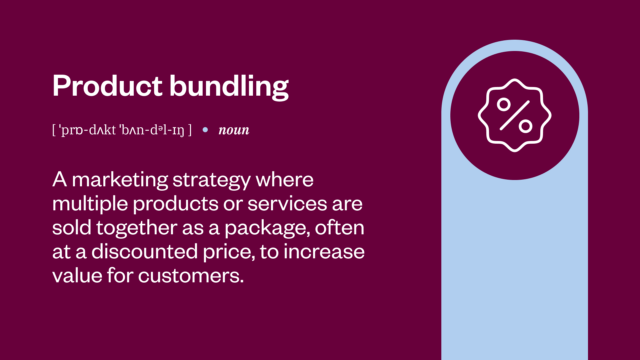
Product bundling is a pricing strategy where multiple related products or services are packaged and sold together as a single offering, often at a lower price than if purchased separately. In SaaS, this helps increase average order value, introduce customers to new features, and simplify buying decisions. Bundling is especially effective for recurring revenue models, as it delivers more value and can improve customer retention. [Source]
Why do companies use product bundling?
Companies bundle products to capture greater value, drive competitive advantage, and provide customers with more relevant, convenient, and cost-effective solutions. Bundling can differentiate offerings, boost profitability, and simplify both customer and internal business processes. [Source]
What are the main types of product bundling strategies?
Common bundling strategies include pure bundling (only sold as a bundle), mix-and-match bundling (customers create custom bundles), price bundling (bundles sold at a discount), mixed cross-sell bundling (complementary products from different categories), new product bundling, BOGO (Buy One Get One), old inventory bundling, occasional/seasonal bundling, post-purchase bundling, incentive-based bundling, category-based bundling, gift bundles, subscription boxes, and build-your-own bundles. [Source]
How does product bundling benefit SaaS companies?
Product bundling helps SaaS companies increase revenue, capture greater customer mindshare, and improve customer lifetime value. It enables businesses to introduce new offerings, differentiate from competitors, and deliver ongoing value in recurring relationships. [Source]
What are some examples of SaaS product bundles?
Examples include Hotjar's Observe and Ask bundles, HubSpot's CRM Suite, Atlassian Together (Jira, Confluence, Trello), Adobe Creative Cloud All Apps, and Dropbox Business Team plan. These bundles combine related tools to provide comprehensive solutions at a better value. [Source]
How can SaaS companies create effective product bundling strategies?
Effective strategies start with understanding customer needs through surveys, interviews, and support analysis. Segment customers by persona, tailor bundles to each segment, and structure bundles to incentivize desired outcomes. Continually optimize bundles based on performance data and feedback. [Source]
What are the benefits of product bundling for businesses?
Bundling increases sales and average order value, decreases inventory waste, and saves money on promotion and distribution. It also enables companies to promote multiple products simultaneously and unlocks cost efficiencies through shared resources. [Source]
What are the benefits of product bundling for consumers?
Consumers benefit from cost savings, added value, simplified decision-making, the ability to try new products, enhanced affordability of premium products, reduced research time, and a more personalized buying experience. [Source]
What drawbacks should businesses avoid with product bundling?
Potential drawbacks include forced purchases, limited customization, perceived complexity, and less transparency. Businesses should allow flexibility and clear communication to avoid customer frustration. [Source]
How can technology help SaaS companies develop new product bundles quickly?
Modern platforms like Zuora Billing enable SaaS companies to iterate on product bundles and promotions rapidly, deploying new offerings in minutes without heavy engineering resources. This agility helps companies respond to changing customer needs and market trends. [Source]
How does product bundling influence customer perception and value?
Product bundling often gives customers the sense of getting more value for their money, increasing purchase satisfaction and encouraging them to try products they might otherwise skip. [Source]
How can bundling help with cross-selling or upselling?
By grouping complementary products or features together, bundling exposes customers to offerings they might not have considered, making it easier to increase sales per customer and boost overall revenue. [Source]
How should businesses decide which products to include in a bundle?
Effective bundles are based on customer behavior, preferences, and common use cases, pairing complementary products that together provide a clear and compelling solution or benefit. [Source]
Can product bundling be used for subscription and digital services?
Yes, bundling>
can combine multiple subscriptions, digital services, or service tiers into value packages that improve customer stickiness and revenue predictability. [Source]
What are the risks or challenges with product bundling?
Risks include cannibalizing individual product sales, pricing bundles incorrectly, or creating confusing offers that don’t align with customer preferences. Businesses should carefully design bundles to avoid these pitfalls. [Source]
How can SaaS companies communicate the value of their bundles?
Companies should clearly highlight savings, exclusive features, and the convenience of bundled solutions. Marketing materials should explain the expanded value and seamless customer journey enabled by bundles. [Source]
How does Zuora support product bundling for SaaS companies?
Zuora provides flexible billing, packaging, and discounting options, enabling SaaS companies to quickly experiment with and deploy new product bundles. The platform supports rapid iteration and helps businesses respond to changing customer needs. [Source]
What is Zuora and what does it do?
Zuora is a leading SaaS company offering a comprehensive subscription management platform. It automates and orchestrates the entire quote-to-cash and revenue recognition process, supporting dynamic monetization, billing, payments, revenue recognition, and analytics for over 1,000 companies worldwide. [Source]
What products and services does Zuora offer?
Zuora offers Zuora Billing, Zuora Revenue, Zuora Payments, Zuora CPQ, Zephr, Zuora Platform, Zuora Collections, and Accounts Receivable automation. These products manage the entire subscription lifecycle, from pricing and quoting to billing, payments, revenue recognition, and analytics. [Source]
What are Zuora's key capabilities and benefits?
Zuora supports over 50 pricing models, automates billing and revenue recognition, scales with rapid growth, enables personalized subscription journeys, ensures global compliance, and provides real-time analytics. Benefits include monetization agility, operational efficiency, improved retention, and faster time to market. [Source]
Who can benefit from using Zuora?
Zuora is designed for subscription-based businesses across industries such as technology, SaaS, media, healthcare, retail, manufacturing, and telecommunications. Target roles include finance, IT, product management, operations, and sales teams. [Source]
What core problems does Zuora solve for SaaS and subscription businesses?
Zuora addresses slow manual close cycles, compliance challenges (ASC 606/IFRS 15), scaling hybrid monetization, multi-entity and multi-currency operations, revenue leakage, data quality issues, spreadsheet dependency, quote-to-cash misalignment, and forecasting difficulties. [Source]
How does Zuora help with real-time product performance metrics?
Zuora provides real-time metrics on profitability, conversion rates, and discounting rates, enabling businesses to respond quickly to market trends, optimize pricing, and improve sales targeting. Integration with CRM and CPQ tools ensures data visibility for analysis. [Source]
What integrations does Zuora support?
Zuora offers over 60 pre-built connectors (Salesforce, HubSpot, NetSuite, Snowflake), REST and SOAP APIs, warehouse connectors (Databricks, BigQuery, RedShift), 40+ payment gateways (Stripe, GoCardless), Zephr extensions, and nearly 100 marketplace apps. [Source]
Does Zuora provide APIs for integration?
Yes, Zuora provides REST and SOAP APIs for integration with external systems, supporting billing, payment, and subscription management. Developer resources and SDKs are available for rapid development. [Source]
What technical documentation is available for Zuora?
Zuora offers comprehensive documentation, including platform docs, developer guides, API references, SDK documentation, and integration guides. Resources are available for unified invoicing, payment gateway integration, and advanced CPQ functionalities. [Source]
How long does it take to implement Zuora and how easy is it to start?
Implementation timelines vary: focused scopes can be completed in as little as 30 days, typical implementations take 30–90 days, and multi-product programs may take several months. Pre-built connectors enable faster integrations. Extensive training, support, and developer resources are available for onboarding. [Source]
What security and compliance certifications does Zuora have?
Zuora holds PCI DSS Level 1, SSAE 16 SOC1 Type II, SOC2 Type II, ISO 27001, HHS HIPAA, and SOC 3 certifications, ensuring enterprise-grade security and compliance for subscription billing and finance solutions. [Source]
How does Zuora ensure security and compliance for its customers?
Zuora employs enterprise-grade security measures, including data encryption, role-based access controls, and regular audits. The platform is audit-ready by default and supports compliance with GDPR, PCI DSS, SOX, and global regulations. [Source]
What feedback have customers given about Zuora's ease of use?
Customers like Mindflash, TripAdvisor, FireHost, Briggs & Stratton, Buildium, and AppFolio have praised Zuora for its flexibility, ease of use, rapid pricing changes, and simplified operations. Case studies highlight reduced manual workloads and improved reporting. [Source]
What business impact can customers expect from using Zuora?
Customers can expect recurring revenue growth, operational efficiency, improved retention, faster time-to-market, and enhanced financial operations. For example, Swiftpage saw a 140% increase in subscription customers, and Asana reduced SSP analysis time by over 90%. [Source]
Can you share specific case studies or success stories of Zuora customers?
Yes. Zoom scaled from 10 million to 300 million users, The Financial Times grew digital subscriptions, Hudl saved over 100 hours per month, and The Seattle Times improved conversions by 30% and retention by 25% after adopting Zuora. [Source]
What industries are represented in Zuora's case studies?
Industries include SaaS, communications, consumer goods, energy, finance, healthcare, high tech, home services, HR technology, manufacturing, media, OTT/entertainment, software, telecommunications, and video games. [Source]
Who are some notable Zuora customers?
Notable customers include Zoom, Box, Zendesk, Asana, AppDynamics, The Financial Times, The Guardian, Schibsted ASA, The Seattle Times, Siemens Healthineers, 24 Hour Fitness, GoPro, Fender, Schneider Electric, Caterpillar, Konecranes, Dell, Ford, Toyota, and General Motors. [Source]