AI is pushing companies beyond seats into usage, tokens, credits, outcomes, and hybrid models. The challenge is no longer just choosing a price, but making the model work across usage, billing, collections, revenue recognition, and audit. Zuora helps finance and revenue teams move from AI experiments to scalable, controlled revenue.
...AI is reshaping how companies drive revenue.
...AI is reshaping how companies drive revenue.
AI Credit Monetization: What Finance and Revenue Leaders Need to Know
Written by - Michael Mansard, Principal Director, Subscription Strategy, Zuora
The good news: The playbook for AI monetization is the same across industries
The AI Pricing Pivot: Why SaaS Must Transform Again
Practical guidance for choosing AI pricing metrics and launching transparently—with the COMPASS framework inside.
WHITEPAPER
The latest AI monetization research
Pricing Agentic AI: The Impossible Triangle
How to balance cost‑to‑serve, customer adoption, and value delivered, all at the same time.
ARTICLE
Pricing Agentic AI: The COMPASS Framework
A prescriptive map to choose per‑agent, per‑activity, per‑output, or per‑outcome, based on scope and attribution.
WHITEPAPER
Michael Mansard, Zuora Principal Director of Subscription Strategy and developer of the COMPASS framework for AI monetization
Monetizing Agentic AI: Why CFOs and CIOs Must Lead Together
Discover why Finance and IT must join forces to make AI monetization a true success.
ARTICLE
State of GenAI Monetization
What leading SaaS companies are getting right (and wrong) about cost, adoption, value—and why usage and hybrid models are surging.
RESEARCH
Why a usage-based model is key to monetizing AI for SaaS
Successful AI monetization requires robust strategies and technologies to enable accurate usage metering, value quantification, and billing and revenue …
ARTICLE
Stories from the frontlines of innovation
Go behind the scenes with the leaders who are already operationalizing AI monetization.
[1]
[2]
With the arrival of AI, many new pricing metrics are emerging. The challenge is to choose the one that will make sense for the future—both for the customer and for us. Zuora gives us the flexibility to test and pivot quickly as we learn what resonates most.
Mélanie Septe, Senior Vice President of Pricing, Cegid
STORY
From a customer-centric perspective, you really need to know what tools are you building so that you can actually predict the usage so that customers can budget it and then they can pay you.
Ramya Raj, VP & Global Head of Go-to-Customer Solutions, Genesys
STORY
Ready to monetize AI
— for real?
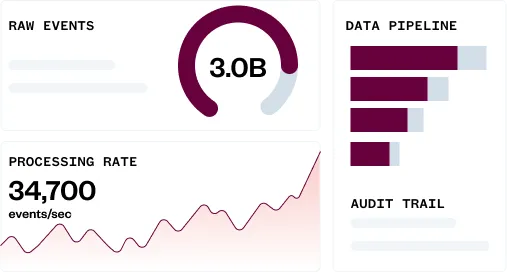
Monetize Usage From Event to Invoice to Revenue Go live with usage, hybrid, and commitment models with real‑time mediation, auditable rating, and revenue automation to protect margins as adoption grows.
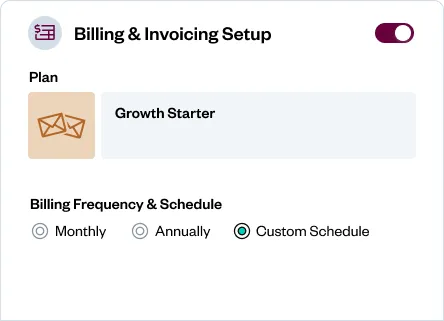
Intelligent Pricing & Packaging With an AI-ready Catalog Define once, deploy everywhere across CPQ, ecommerce, and self‑service. Support 50+ charge models and align pricing rules with accounting policies.
AI monetization is the strategy and operating model for turning AI products, features, agents, or outputs into revenue. It can include usage, token, credit, outcome, subscription, commitment, or hybrid pricing models, plus the systems needed to meter, bill, collect, and recognize revenue accurately.
What are AI credits?
AI credits are prepaid units customers draw down as they use AI capabilities. They can help simplify variable consumption and create budget predictability, but they require clear rules for usage, balances, top-ups, rollover, expiration, overages, billing, and revenue recognition.
When should a company use credit-based AI pricing?
Credit-based AI pricing is usually most useful when an AI product has multiple capabilities, variable cost profiles, unpredictable usage, and a need for customer budget control. If the offer is simple or easy to meter directly, credits may add unnecessary complexity.
How do companies monetize AI without hurting margins?
Companies need to align pricing with value and cost-to-serve, instrument usage in real time, give customers visibility into consumption, and connect pricing decisions to billing, collections, and revenue recognition. Finance should be involved early because AI pricing changes often create downstream accounting and audit implications.
How does Zuora support AI monetization?
Zuora helps companies operationalize AI monetization by connecting product catalog, pricing, usage metering, billing, collections, payments, and revenue recognition. This allows teams to launch and evolve usage, credit, outcome, and hybrid models while maintaining finance-grade controls and auditability.