Frequently Asked Questions

Subscription Pricing Models & Strategy

What is a subscription pricing model?

A subscription pricing model is a strategy where customers pay recurring fees—usually monthly or annually—for access to a product or service. This approach enables predictable revenue and fosters long-term customer relationships, as businesses must continually deliver value to retain subscribers. [Source]

What are the main types of subscription pricing models?

The main types are flat-rate, tiered, usage-based, freemium, and hybrid models. Each is suited to different customer needs and business goals. For example, flat-rate offers simplicity, tiered targets different segments, usage-based charges by consumption, freemium attracts with a free tier, and hybrid combines elements for flexibility. [Source]

How does flat-rate subscription pricing work?

Flat-rate pricing charges a fixed fee for access to the entire product or service for a set period. It's simple and predictable for customers but may not suit those with varying needs, as all pay the same rate regardless of usage. [Source]

What is tiered subscription pricing?

Tiered pricing divides offerings into different levels, each with its own price and features. This allows businesses to target various customer segments and encourage upgrades as needs grow. [Source]

How does usage-based subscription pricing work?

Usage-based pricing charges customers based on their actual use of the product or service. It's ideal for fluctuating demand and for customers who want to pay only for what they use, but it can make revenue less predictable for businesses. [Source]

What is the freemium subscription model?

The freemium model offers basic services for free and charges for premium features. It attracts a large user base and converts users to paid plans as they see value in advanced offerings. [Source]

How do hybrid subscription pricing models work?

Hybrid models combine elements from multiple pricing strategies, such as a flat fee for basic access plus variable charges for additional features. This approach maximizes revenue potential and appeals to a broader audience. [Source]

What are the advantages of using subscription pricing?

Subscription pricing provides predictable revenue, fosters customer loyalty, and allows businesses to scale pricing flexibly. It supports long-term relationships and better financial planning. [Source]

What challenges do businesses face with subscription pricing?

Common challenges include setting the right price, managing churn, addressing pricing objections, and adapting pricing as customer needs change. Overcoming these requires market research, customer feedback, and ongoing optimization. [Source]

How can you choose the right subscription pricing model for your business?

Choosing the right model involves understanding your target audience, value proposition, and competitor pricing. Evaluate price metrics and structures, test options, and align with customer value and business goals. [Source]

What is a price metric in subscription pricing?

A price metric is the unit of measure for pricing, such as per user, per transaction, or per gigabyte. The right metric should align with customer value and business objectives. [Source]

How do you evaluate and choose the best price metric?

List possible metrics, then evaluate each for fairness, flexibility, predictability, customer adoption, value capture, and ease of implementation. Use a matrix to score and select the ideal metrics. [Source]

What are best practices for implementing subscription pricing models?

Best practices include segmenting customers for personalized pricing, offering trial periods and incentives, and regularly analyzing and adjusting your pricing strategy based on market trends and feedback. [Source]

Why do some subscription pricing models fail?

Pricing models can fail if they don't align with brand identity or customer expectations, or if the price structure is too complex or disconnected from perceived value. Regular alignment and customer feedback are essential. [Source]

How does aligning price metrics with customer value improve success?

Aligning price metrics with customer value ensures fairness, drives adoption, and enables scalable pricing as customers grow. For example, Carbonite uses per-computer and per-gigabyte metrics to match different customer needs. [Source]

Can subscription pricing work for all industries?

Yes. Subscription pricing is used in SaaS, media, manufacturing, healthcare, and consumer goods—anywhere ongoing value can be delivered. [Source]

How does Zuora help businesses optimize their subscription pricing models?

Zuora provides tools for designing, testing, and managing multiple pricing models, including flat-rate, tiered, usage-based, and hybrid. The platform supports continuous optimization based on performance and feedback. [Source]

What is the impact of price structure on customer perception?

Price structure should align with brand positioning and customer expectations. For example, too many surcharges can harm perceptions of sincerity, while predictable pricing builds trust. [Source]

How can businesses address pricing objections in subscription models?

Address objections by clearly communicating value, offering transparent pricing, and providing flexible options. Incentives and trial periods can also help overcome hesitations. [Source]

Zuora Platform Features & Capabilities

What products and services does Zuora offer?

Zuora offers a suite of products for managing the entire subscription lifecycle, including Zuora Billing, Zuora Revenue, Zuora Payments, Zuora CPQ, Zephr, Zuora Platform, Zuora Collections, and Accounts Receivable automation. These tools support pricing, quoting, billing, payments, revenue recognition, and analytics. [Source]

What features does Zuora provide for subscription businesses?

Zuora supports over 50 pricing models, automates billing and revenue recognition, integrates with 60+ systems, provides AI-powered tools for engagement, and ensures compliance with global standards. [Source]

Does Zuora support integration with other business systems?

Yes, Zuora offers an Integration Hub with over 60 pre-built connectors (e.g., Salesforce, HubSpot, NetSuite), REST and SOAP APIs, warehouse connectors, payment gateways, and a Connect Marketplace with nearly 100 apps. [Source]

Does Zuora provide APIs for developers?

Yes, Zuora provides REST and SOAP APIs for integration, automation, and customization. Developer resources, SDKs, and guides are available in the Zuora Developer Center. [Source]

What technical documentation is available for Zuora?

Zuora offers comprehensive documentation, including platform guides, API references, SDK docs, and integration guides. Resources are available at the Zuora Docs Portal, Developer Center, and Knowledge Center. [Source]

What security and compliance certifications does Zuora have?

Zuora holds PCI DSS Level 1, SSAE 16 SOC1 Type II, SOC2 Type II, ISO 27001, HHS HIPAA, and SOC 3 certifications, ensuring enterprise-grade security and regulatory compliance. [Source]

How does Zuora ensure data security and privacy?

Zuora employs data encryption, role-based access controls, audit trails, and regular audits. The platform is built to support GDPR, PCI DSS, SOX, and other global regulations. [Source]

What real-time product performance metrics does Zuora provide?

Zuora offers real-time metrics on profitability, conversion rates, and discounting rates, enabling businesses to optimize pricing, respond to trends, and improve sales velocity. [Source]

Use Cases, Benefits & Customer Success

Who can benefit from using Zuora?

Zuora is designed for subscription-based businesses across industries such as SaaS, media, healthcare, manufacturing, retail, and telecommunications. Target roles include finance, IT, product management, operations, and sales teams. [Source]

What business impact can customers expect from Zuora?

Customers can expect recurring revenue growth, operational efficiency, improved retention, faster time-to-market, and global compliance. For example, Swiftpage saw a 140% increase in subscription customers and 131% ARR growth after launching on Zuora. [Source]

Can you share some customer success stories with Zuora?

Yes. Zoom scaled from 10M to 300M users, The Financial Times grew digital subscriptions, and Hudl saved 100+ hours/month by automating with Zuora. See more at Zuora's Customer Case Studies.

What feedback have customers given about Zuora's ease of use?

Customers like Mindflash, TripAdvisor, and Briggs & Stratton praise Zuora's flexibility, ease of setup, and rapid integration. AppFolio and Buildium report reduced manual workloads and improved team morale. [Source]

What industries are represented in Zuora's case studies?

Industries include SaaS, communications, retail, energy, finance, healthcare, high tech, manufacturing, media, entertainment, video games, and more. [Source]

What core problems does Zuora solve for businesses?

Zuora automates financial close cycles, ensures compliance, supports hybrid monetization, simplifies global operations, reduces revenue leakage, and provides unified reporting. It addresses pain points like manual processes, data fragmentation, and quote-to-cash misalignment. [Source]

What are common pain points Zuora helps address?

Zuora helps with slow manual closes, compliance challenges, scaling hybrid models, multi-entity operations, cash flow issues, data quality, spreadsheet dependency, and forecasting. [Source]

How long does it take to implement Zuora?

Implementation can be as fast as 30 days for focused scopes, 30–90 days for typical projects, and several months for complex programs. Pre-built connectors can enable integrations in as little as one day. [Source]

How easy is it to get started with Zuora?

Zuora offers Quick Start Tutorials, Zuora University (500+ courses), 24x5 support, developer resources, and a community portal to ensure a smooth onboarding process. [Source]

Why should a customer choose Zuora over other solutions?

Zuora stands out for its flexibility (50+ pricing models), scalability (proven by Zoom's growth), AI-powered tools, hybrid monetization, compliance certifications, and a track record of success with leading brands. [Source]

Glossary Hub / Subscription Pricing Models – Optimize Revenue and Growth

Subscription Pricing Models – Optimize Revenue and Growth

A person presents data on a screen to a group in a glass-walled meeting room.

TL;DR

A subscription pricing model is a strategy where customers pay recurring fees — usually monthly or annually — for access to a product or service. This model enables predictable revenue and stronger customer relationships compared with one-time purchases. There are multiple types of subscription pricing, including flat-rate, tiered, usage-based, freemium, and hybrid approaches, each suited to different customer needs and business goals. Choosing the right model requires aligning pricing with value delivered, understanding customer segments, and continuously optimizing based on performance and feedback.

What is a Subscription Pricing Model?

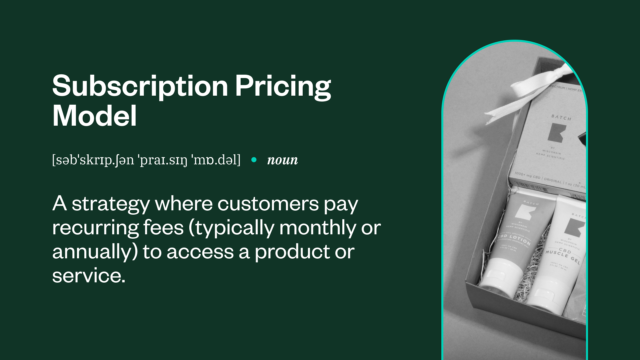
A subscription pricing model is a pricing strategy that allows customers to access a product or service on a recurring basis in exchange for periodic payments, typically monthly or annually. This model has gained immense popularity across various industries, from software and entertainment to consumer goods and services, because it offers predictable revenue streams for businesses and convenience for customers.

subscription pricing model

Unlike traditional one-time purchase models, subscription pricing fosters a long-term relationship between the provider and the customer. It emphasizes customer retention and engagement, as businesses must continually deliver value to maintain subscriptions. Understanding and effectively implementing a subscription pricing model can significantly influence a company’s success in today’s competitive marketplace.

Types of Subscription Pricing Models

1. Flat-Rate Pricing

Flat-rate pricing is one of the simplest subscription models, where customers pay a fixed fee for access to the entire product or service for a specified period. This approach is straightforward and easy to understand, making it appealing to customers who prefer predictability in their expenses. However, it may not cater well to users with varying needs, as all customers pay the same rate regardless of usage.

2. Tiered Pricing

Tiered pricing divides the subscription offerings into different levels or tiers, each with its own price point and set of features. This model allows businesses to target various customer segments, accommodating different budgets and usage levels. For instance, a software company might offer a basic tier with essential features and a premium tier that includes advanced tools. This structure can encourage customers to upgrade as their needs grow.

3. Usage-Based Pricing

In a usage-based pricing model, customers are charged based on their actual usage of the product or service. This can be particularly appealing for businesses that experience fluctuating demand or for customers who prefer to pay only for what they use. For example, cloud storage services often charge based on the amount of data stored or the number of transactions processed. While this model can drive customer satisfaction, it may also lead to revenue unpredictability for the business.

4. Freemium Model

The freemium model offers basic services for free while charging for premium features or content. This strategy attracts a large user base by providing value without an upfront cost, which can lead to conversions as users discover the benefits of premium offerings. Popularized by apps and software, this model can be highly effective, but businesses must balance the value provided in the free tier with the incentives to upgrade.

5. Hybrid Models

Hybrid models combine elements from multiple pricing strategies to create a more flexible offering. For example, a subscription service might incorporate a flat fee for basic access and a variable charge based on usage for additional features. This approach allows businesses to cater to a broader audience while maximizing revenue potential from various customer segments.

Advantages of Using Subscription Pricing

Subscription pricing models offer several advantages for businesses, making them a popular choice in today’s market. Let’s explore some of the key benefits:

Predictable Revenue Stream: One of the biggest advantages of subscription pricing is the ability to generate a predictable and consistent revenue stream. Unlike one-time purchases, subscriptions provide businesses with recurring income, allowing for better financial planning and stability.

Customer Loyalty and Retention: Subscription-based pricing fosters customer loyalty and encourages long-term relationships with your brand. By offering ongoing value and personalized experiences, you can build trust and enhance customer satisfaction, leading to higher retention rates.

Flexibility to Scale Pricing: Subscription pricing allows businesses to adjust their pricing models based on the needs of their customers and market conditions. Whether it’s offering different tiers of subscriptions or introducing add-ons and upgrades, you have the flexibility to adapt your subscription pricing strategy to maximize revenue.

Challenges of Subscription Pricing and How to Overcome Them

Setting the right price point is a crucial aspect of subscription pricing models. It requires careful analysis and consideration to ensure that your pricing aligns with the value you provide to customers. One common challenge is determining the optimal price that maximizes revenue while still attracting and retaining customers. Conducting market research, analyzing customer data, and testing different price points can help you strike the right balance.

Managing customer churn is another challenge that subscription businesses face. Churn refers to the rate at which customers cancel their subscriptions. To overcome this challenge, it’s important to understand the reasons behind customer churn and take proactive steps to address them. This may involve improving the quality of your products or services, enhancing customer support, or offering incentives to encourage customer loyalty.

Addressing pricing objections is also crucial in subscription pricing models. Customers may have concerns about the cost, value, or terms of your subscription offering. It’s essential to address these objections effectively to convince potential customers to choose your product or service. This can be achieved by clearly communicating the benefits, value, and unique features of your subscription, providing transparent pricing information, and offering flexible pricing options to accommodate different customer needs.

How to choose the right subscription pricing model

It is crucial for you to create the right pricing model for your recurring revenue business regardless of whether you are launching a new subscription-based offering, transitioning from a perpetual to a subscription model, or wondering why you are not monetizing as well as you should be on your current subscription product.

When it comes to selecting the right subscription pricing model for your business, it’s important to consider how different audiences may resonate with different options. By tailoring your pricing strategy to the specific needs and preferences of your target audience, you can increase your chances of success.

One crucial aspect to evaluate is the value proposition of your product or service. What unique benefits does it offer to your customers? By clearly defining the value your offering brings, you can better determine the subscription pricing model that will not only maximize revenue but also remain attractive to your target audience.

Another factor worth considering is competitor analysis and pricing comparison. It is essential to invest time in researching and analyzing your competitors’ pricing models and strategies. This exercise will help you understand industry standards and identify gaps or opportunities where your pricing can differentiate you from the competition.

Zuora partner Simon-Kucher & Partners has worked on hundreds of projects helping companies determine their subscription pricing model, and there are two aspects of determining price that are often marginalized as effective monetization levers:

Price metric: Define how cost is measured for customers (e.g. per seat, per concurrent user, by a usage measure)

Price structure: Define how the price level changes over time / usage / etc. (e.g. flat fee, variable, tiered)

Aligning subscription price metric with customer value

Price metric = customer’s unit-of-measure for price & value

Price metrics are a powerful lever for subscription products because there are many metrics possible for a single type of subscription business.

A good example of this is in online computer backup services. Customers in this space include both consumers, who often have no idea how much data needs to be backed up, and businesses, who often have a network of computers that need to be backed up. Some online backup service providers charge per computer while others charge by data storage limit, but the majority have only one price model.

Carbonite is a great example of a subscription business that aligns its metrics with customer value and needs. Carbonite offers “Personal Plans” that are charged per year per computer and “Pro Plans” that are charged per year per xgigabytes. Using multiple price metrics lets consumers use as much data as they need and lets businesses support multiple computers.

Systematically evaluate and choose your subscription price metric

The first step in identifying the right price metric is to understand the possibilities – what metrics align with customer value? What are competitors using for their price metrics?

Price metrics for subscription products typically fall into the following categories:

  • User-based: named user, concurrent user, etc.

  • Activity-based: number of transactions, number of reports, etc.

  • Business scale: size of business, number of customers, etc.

  • Performance-based: against key performance metrics or client performance, etc.

Create a list of metrics in a workshop or through email threads to brainstorm possibilities. Discussing even seemingly odd metrics can spark good ideas.

Once you have a list of 10-20 possibilities, you should evaluate the performance of each metric on its benefits to customers:

  • Fairness / acceptability: The metric is tied to the intrinsic value of the product, enables competitive comparisons

  • Flexibility: The metric allows customers to scale service with their willingness-to-pay, overcome budget constraints, and scale with future usage & growth

  • Predictability: Costs can be estimated and forecasted

The metric should also have a positive impact on your internal goals and be rated on its benefits to your business:

  • Customer adoption: The metric drives adoption, enables up-sell & cross-sell

  • Ability to capture full customer value: The metric covers all customer segments, scales with customer growth, and allows future price increases

  • Ease of implementation: The metric makes it easy to administer, monitor, control and enforce prices; it is easy to sell and communicate

Create a single score for “benefit to customers” and another for “benefit to your business”, and plot the score for each metric on a matrix (as shown in the Metric Evaluation Matrix). The metrics you should use are the ones in the top right “Ideal” corner of the matrix.

Price metric evaluation metric

It is likely you will find that a few metrics land in the ideal quadrant. As you are choosing the metrics to move forward with, keep in mind:

  • It is alright (and typical) to use multiple metrics together

  • It is possible to have different price models for different customer segments – like Carbonite did

  • Align the simplicity or complexity of the price metrics you use with your company goals – just because a competitor or even the market leader is using a metric does NOT mean it is the best metric for your company.

Best Practices for Implementing Subscription Pricing Models

Implementing subscription pricing models can be a strategic move for businesses looking to optimize revenue streams and enhance customer experiences. To ensure success, it is essential to follow best practices that align with your business goals. Here are three key practices to consider:

Segmenting customers for personalized pricing: One size does not fit all when it comes to pricing. By segmenting your customer base and offering personalized pricing options, you can cater to the unique needs and preferences of different customer groups. This approach not only increases customer satisfaction but also helps maximize revenue by capturing the full value of your products or services.

Offering trial periods and incentives: Providing trial periods or incentives can be an effective way to attract new customers and encourage them to subscribe. By giving potential customers a taste of what your subscription offers, you can showcase the value and benefits they can enjoy. Additionally, offering incentives such as discounts or exclusive access can further incentivize customers to choose your subscription over competitors.

Regularly analyzing and adjusting pricing strategy: Pricing is not a one-time decision. It requires continuous monitoring and analysis to ensure competitiveness and profitability. Regularly evaluate market trends, customer feedback, and competitor pricing to make informed adjustments to your pricing strategy. By staying agile and responsive, you can maintain a competitive edge and meet the evolving needs of your target audience.

Implementing subscription pricing models can be a complex process, but by following these best practices, you can optimize your pricing strategy and drive sustainable growth for your business.

Why do the best price metrics and subscription price models fail?

Even the most well-researched and strategically designed pricing models can fall flat if they are not aligned with a company’s brand identity and customer expectations. Successful subscription pricing hinges not only on selecting the right price metrics but also on ensuring that the entire pricing structure resonates with both the company’s values and the needs of its customers.

A misalignment can lead to confusion, dissatisfaction, and ultimately churn, as customers may perceive the pricing as unfair or disconnected from the value they receive. Let’s explore common pitfalls that can derail effective pricing strategies.

  1. You use a price structure that does not align with your brand

When building your price structure, you should evaluate whether the intended price structure aligns with the firm’s brand positioning. (See exhibit 1). For example, a company that operates with a brand positioning of sincerity should have fewer multi-dimensional prices/surcharges. Doing so may drive the perception of nickel-and-diming customers, which would contradict the projected image of Sincerity.

Exhibit 1: Price structure should align with brand positioning

Price structure should align to brand positioning

  1. You use a price structure without understanding your customer’s needs & expectations

When building a price structure, you should consider customer preferences when choosing among the various permutations of flat & variable components.

Flat components increase predictability for the customers as they can estimate spend and budget accordingly. Typically, predictability is more important for larger customers with formal budgeting cycles. Higher predictability also benefits the firm by offering a consistent revenue stream to continue operations (smaller firms would oftentimes link this component with fixed costs in their business).

Companies with greater revenue coming from subscription pricing, which affords customers with higher predictability than transactional pricing (e.g. software license and implementation), get a higher revenue/EBITDA multiple in the market compared to their peers.

Variable components increase value-sharing. Customers like such components since the fee scales with their usage. Smaller customers also prefer higher variable components as their fee commitment increases as their business scale increases. When using such components, the firm is willing to position itself to succeed when their clients use their product. This increases the variance in revenue from month to month but the upside is oftentimes higher.

In some cases, one can also link variable components to business outcomes. The biggest challenge to adoption usually is the ability to measure & attractiveness of such a component to the firmSuch metrics are often not tracked directly through the firm’s products and the burden of reporting usage is the prerogative of the customer. For example, a firm that makes enterprise management software for insurance agents may not be able to measure the value of the insurance policies written by the agent (directly through the software).

A second aspect is if the business outcomes are not attractive. In the example above even if the firm can track policy premiums it still may not wish to use it in their pricing model as the overall premiums in the market may have remained flat or even have declined year over year.

The firm can also use a hybrid model by using structural modifiers. Establishing a floor (minimum commitment) can get predictability in a variable structure for the firm. Caps (maximum possible commitment) can help large customers address concerns that their risk is not unconstrained with a transactional model.

Tiers and breakpoints can be used to charge a different fee at different levels of usage. These components are used by firms to provide volume discounts to the customers with higher usage in a variable-component based model.

Price structure in action

A great example of using the right price model is a recent Simon-Kucher customer that sells trading software in the financial market space. The customer had been using multiple different metrics but had not seriously thought how that was affecting their customer base. They decided to focus on a “Sophistication” positioning and created a price model that had an upfront fixed fee and a tiered transactional charge that was capped. The company has since implemented and has received feedback from its customers that the new model is elegant (simplifies the unnecessary pricing complexity), scales well with growth and offers predictability as well.

Next learn about pricing and packaging solutions.

Subscription Pricing Models FAQs

How do you choose the right subscription pricing model for your business?

The right subscription pricing model depends on your target customers, the value your product delivers, and how that value scales over time. Businesses should consider factors like customer usage patterns, willingness to pay, competitive benchmarks, and operational complexity, then test and iterate to find the best fit.

How is subscription pricing different from usage-based or one-time pricing?

Unlike one-time pricing, subscription pricing creates recurring revenue and fosters ongoing customer relationships. Usage-based pricing charges customers based on how much they use a service, which can also be incorporated into a hybrid subscription model.

What are common types of subscription pricing models?

Common subscription pricing models include flat-rate, tiered, usage-based, freemium, and hybrid models. Each offers different advantages depending on customer needs, product complexity, and growth strategy.

Why do businesses choose subscription pricing?

Businesses choose subscription pricing because it enables predictable recurring revenue, supports long-term customer relationships, and allows for greater flexibility in packaging, pricing, and product evolution over time.

What are common challenges with subscription pricing?

Common challenges include setting the right price, managing subscriber churn, clearly communicating value, and adapting pricing as customer needs change. These challenges often require ongoing experimentation and data-driven optimization.

Can subscription pricing work for all industries?

Yes. While subscription pricing is especially common in SaaS and digital services, it is increasingly used across industries — including media, manufacturing, healthcare, and physical goods — wherever ongoing value can be delivered to customers.