In the early days of subscription sales, companies had poor churn management processes, and would attempt to prevent churn by making things hard for the customer: creating multi-step cancellation processes, obscuring cancellation information, requiring in-person communication to cancel, and so on.
We’re long past the point of considering these dark UX tactics as viable options. When customers want to cancel, make it easy for them to do so. You won’t win them back by frustrating them further.
Instead, subscription companies should examine their workflows to determine how to prevent customers from reaching the churn point in the first place.
Let’s look at a few concrete steps that can help keep customers on board.
Revamp your onboarding process
Is your onboarding process effective for your customers? Start by assessing its strengths and weaknesses and get feedback from customers who have gone through it. If it lacks personalization, communication, or education, it’s time to revamp it.
When onboarding customers, personalize the experience and communicate with them throughout the process. Set clear expectations and milestones for achieving goals. This will help customers understand what to expect from your product or service without overwhelming them.
Segment your most at-risk and valuable customers
The best way to reduce churn is to avoid it in the first place, but how can you predict when a customer might choose to leave?
They’ll tell you themselves—by way of the insights hidden in your customer relationship management (CRM) software.
Have customers struggled to make payments? Have they complained about services? How many times have they contacted support? Ideally, you’ll have a subscriber management platform that allows you to aggregate all customer insights across sales, billing, and support.
Modern analytics platforms use APIs and SDKs to extend into your existing business applications to make this process easier, pull information, and allow you to generate custom reports on churn, lifetime value, and other subscription metrics.
Backed by this information, you can create customer segments for those most likely to churn and those who are safe. This segmentation shows which customers may need more hands-on outreach and provides an easy method of prioritization and where to focus your attention.
Prioritize your existing relationships
When a customer says goodbye, many companies immediately seek new prospects to fill the gap. This is fine, but as we know, it costs far more to acquire a new customer than to retain an existing one. By some estimates, 5-25 times more expensive.
In other words, investments made in your existing customer base may yield substantially higher returns than those spent on your acquisition cycle. Set schedules for regular outreach within your subscription management platform, and find out how subscribers feel about their services.
You may also consider developing additional educational resources that further extend the value of your arrangement, such as webinars, demos, loyalty/incentive programs, and more, all to help them get excited about their partnership with your company.
Refine your subscription cancellation email and exit process
Sometimes customers cancel their subscription, even if you give it your best efforts, which is okay. At this point, your goal should be to learn from them and understand what forces drove them to cancel in the first place. Your subscription cancellation email is a great way to do it.
Create a template that hits all the obvious points—thank them for their service. But while you’re at it, ask them for details you can use to serve your existing customers better. If the customer is a high-value one, you may schedule an exit interview to connect directly with them. But either way, your mission is to get direct feedback that you can use to improve in the future.
Put some thought into this, but don’t overwhelm them. Keep things short, sweet, and personal. Many customers won’t bite, and with enough refining, you can develop a template that generates consistent results.
Minimize subscription churn with data-driven processes
Small amounts of churn may be acceptable as the cost of doing business, but churn can quickly spiral out of control when hidden problems go uncorrected.
To reduce churn, you need to collect and organize the data you have, get insights into your customers’ motivations, and predict how to focus your attention to meet customers’ needs before they leave. These subscription management efforts are important for your current and future business needs.
It’s become commonplace for companies to use more sophisticated software solutions to meet these goals. These subscription analytics software platforms offer a variety of out-of-the-box metrics for analyzing churn, as well as assessment tools for tracking and analyzing trends, including statistical models for predicting potential churn trends and segmentation tools for managing customers.
Subscription management platforms help bring together your key financial and performance metrics and get deeper insights into the motivations that drive customer behavior.
Equip your support and sales team with the best training and resources
One of the many mistakes businesses make is that they rate their support team based on a vanity metric—their speed on calls—that’s the number of calls a customer support team handles.
Ensure your sales and support team has the best training and resources to answer queries promptly and efficiently. Rather than quickly getting off the phone with customers, ensure your sales and support teams are able to connect with customers and more deeply understand their challenges and concerns. This can improve customer satisfaction and make a big difference to your churn rate.
Invest in a customer success team
Sometimes churn happens when customers think they’re no longer getting value for their money. This is where a customer success team is essential. Unlike support teams, who are mostly reactional to customer queries and technical issues, a customer success team proactively engages customers to ensure they get value from your product or service.
Why should you have a customer success team when you already have a support team?
This question often comes from businesses thinking they’re the same thing, or both can work interchangeably. Well, they are not always different in terms of KPI.
The customer success team focuses on helping customers get value for their money by understanding their goals and helping them realize them through constant support and guidance throughout the customer journey—while the support team involves troubleshooting and resolving issues.

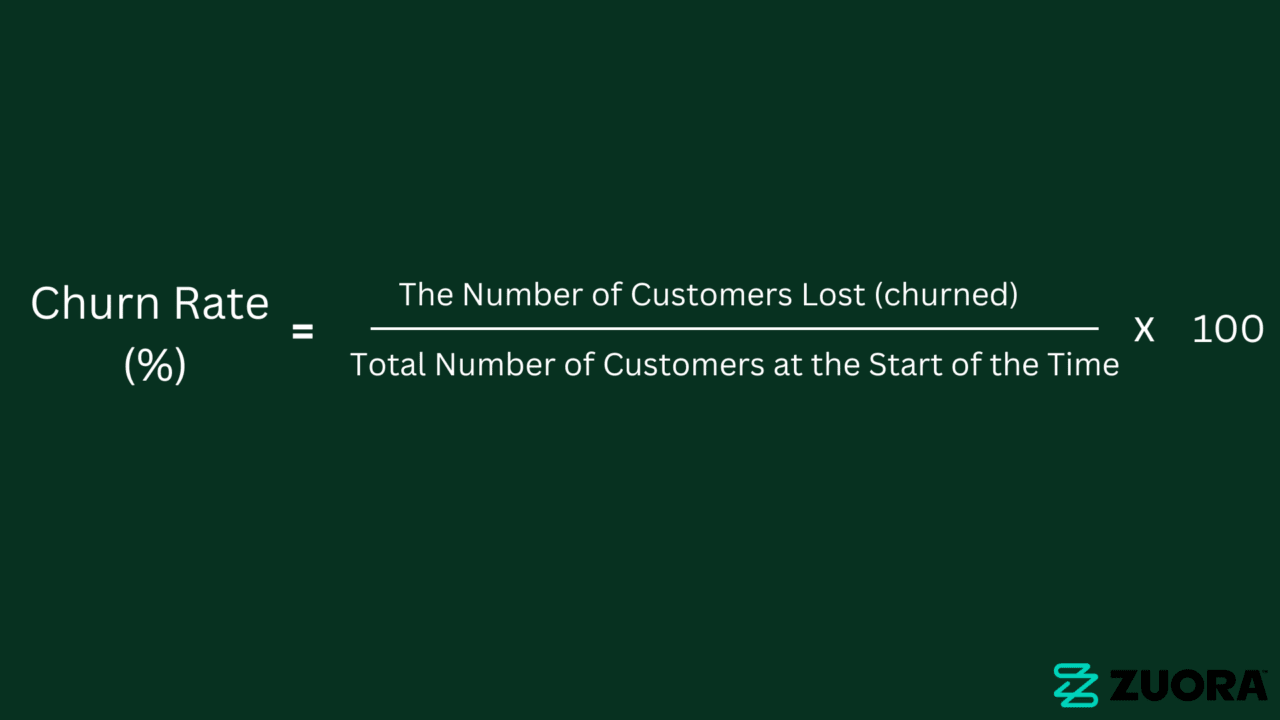
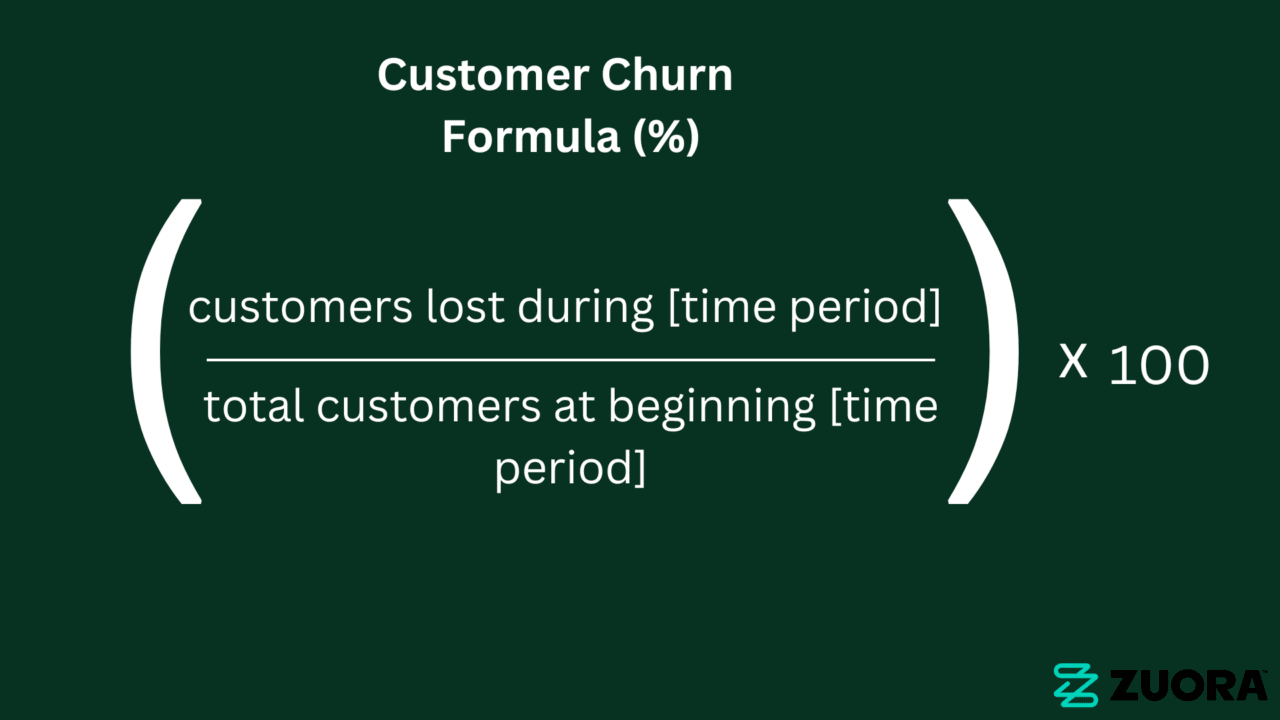
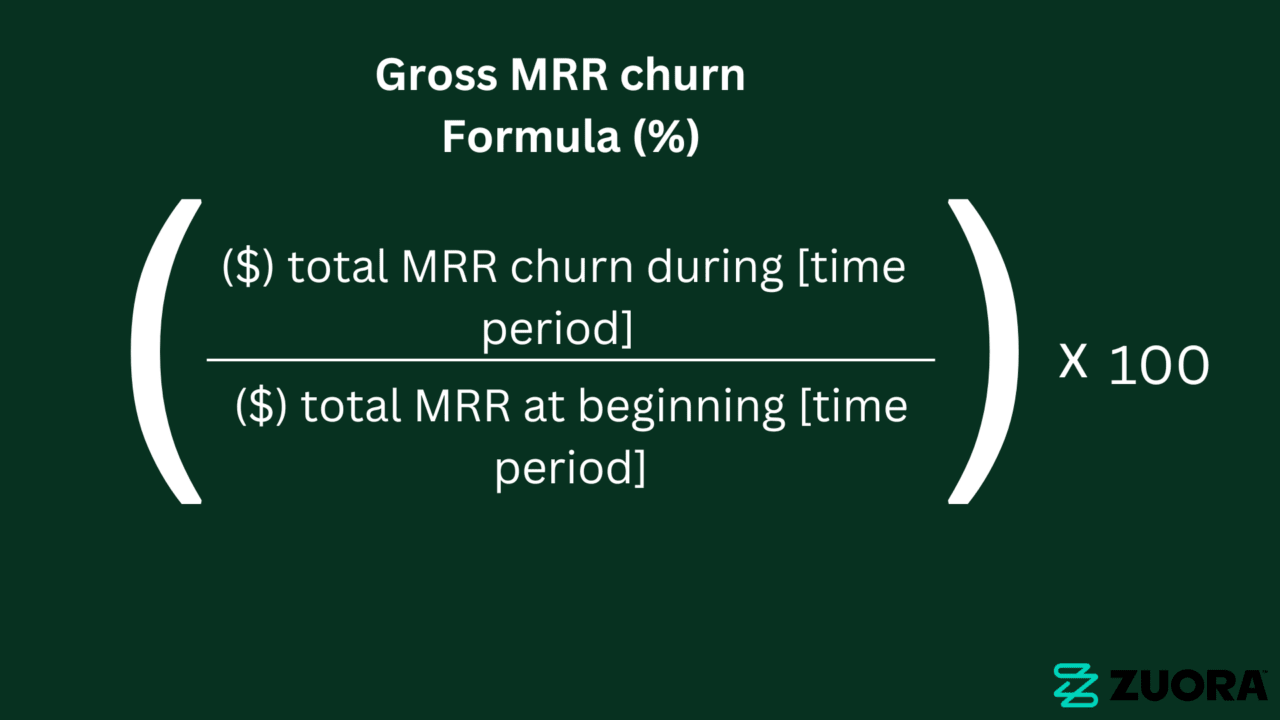
![Revenue churn rate = (revenue canceling or lapsing during [time period] ÷ total revenue up for renewal during [time period]) × 100](https://marvel-b1-cdn.bc0a.com/f00000000004333/www.zuora.com/wp-content/uploads/2023/08/image1-2-1280x720.png)
![Net MRR churn rate = ([total MRR lost – expansion MRR] ÷ total MRR at the beginning of that month) × 100](https://www.zuora.com/wp-content/uploads/2023/08/image3-1280x720.png)