Frequently Asked Questions
Product Overview & Core Capabilities
What is Zuora Billing?
Zuora Billing is an enterprise-grade recurring billing and monetization platform that automates billing, invoicing, and revenue processes for subscription, usage-based, and hybrid pricing models. It integrates with CRMs, ERPs, and payment gateways to streamline the entire order-to-revenue lifecycle. [Source]
What types of billing models does Zuora Billing support?
Zuora Billing supports over 50 pricing models, including one-time, recurring, usage-based, milestone, and hybrid models. This flexibility allows businesses to tailor their monetization strategies to evolving customer needs. [Source]
How does Zuora Billing handle high transaction volumes?
Zuora Billing is built for scale, processing over 400,000 invoices per hour and managing upwards of 6.2 billion usage events per month. Its API-first architecture ensures performance and reliability for enterprise workloads. [Source]
What are the main features of Zuora Billing?
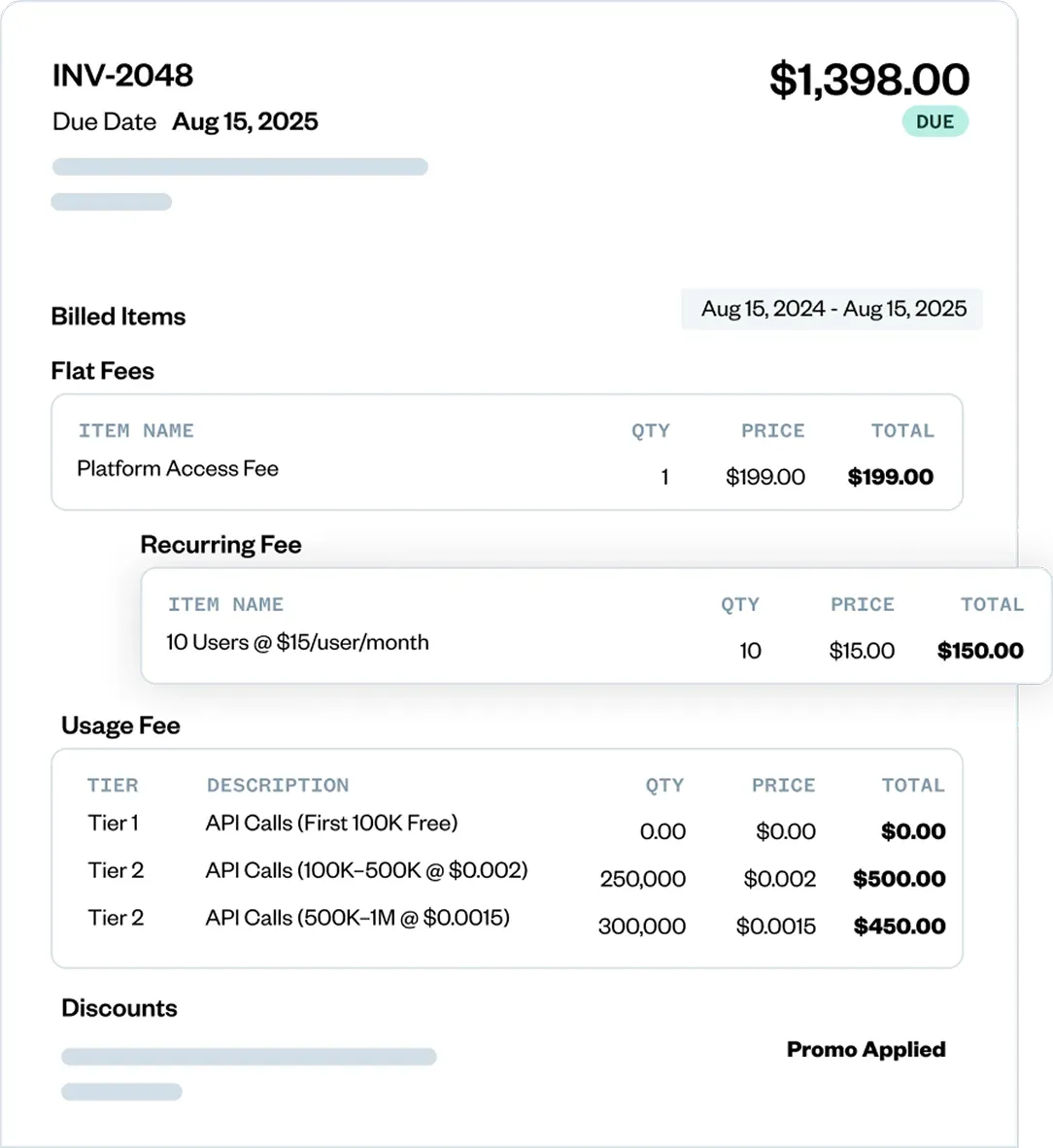
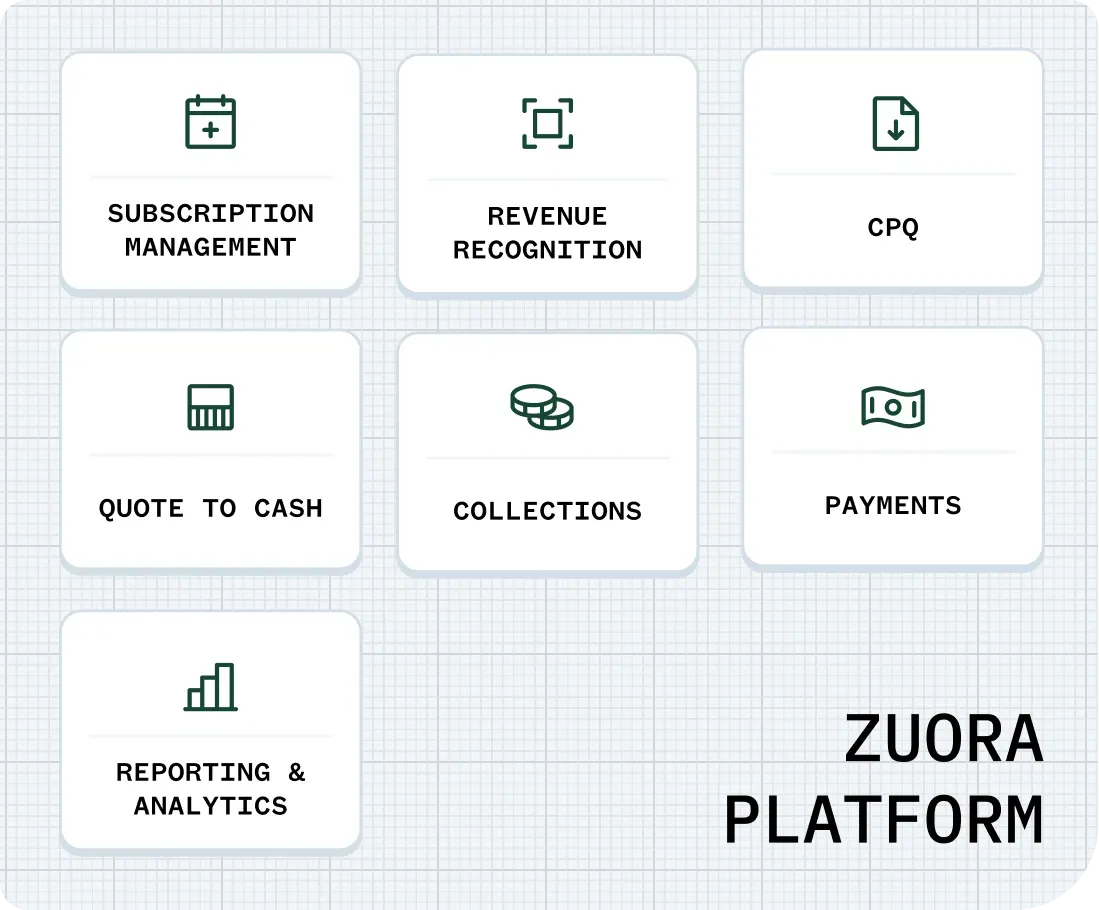
Key features include flexible pricing and packaging, usage metering and billing, global payments orchestration, e-invoicing and tax compliance, integrated CPQ, centralized omni-channel billing, and built-in extensibility through the Extension Studio. [Source]
How does Zuora Billing support global operations?
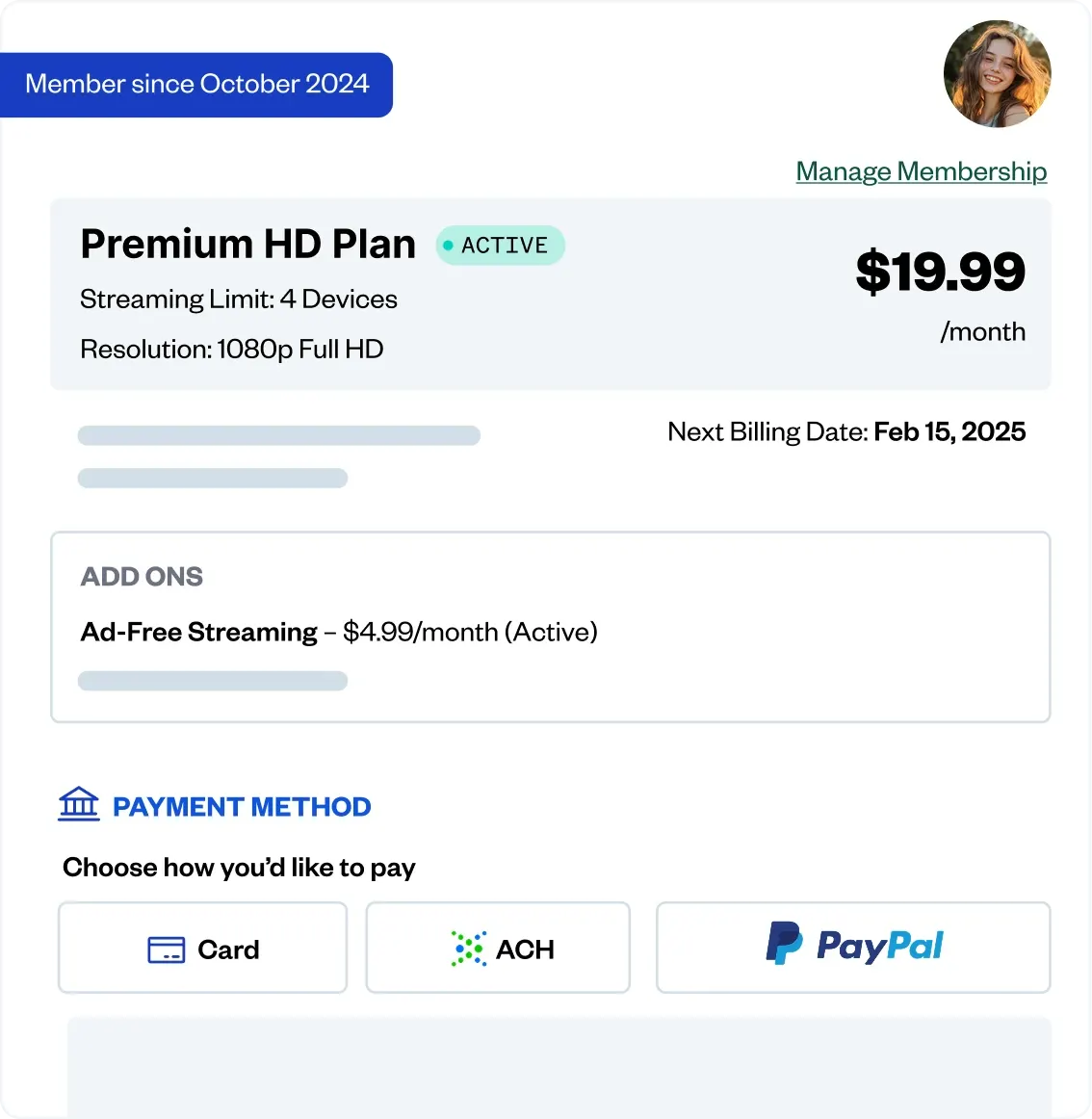
Zuora Billing supports multiple currencies, 40+ payment gateways, and 20+ payment methods, enabling businesses to operate and scale globally. It also offers pre-built integrations for tax and e-invoicing compliance in various countries. [Source]
What is usage-based billing and how does Zuora support it?
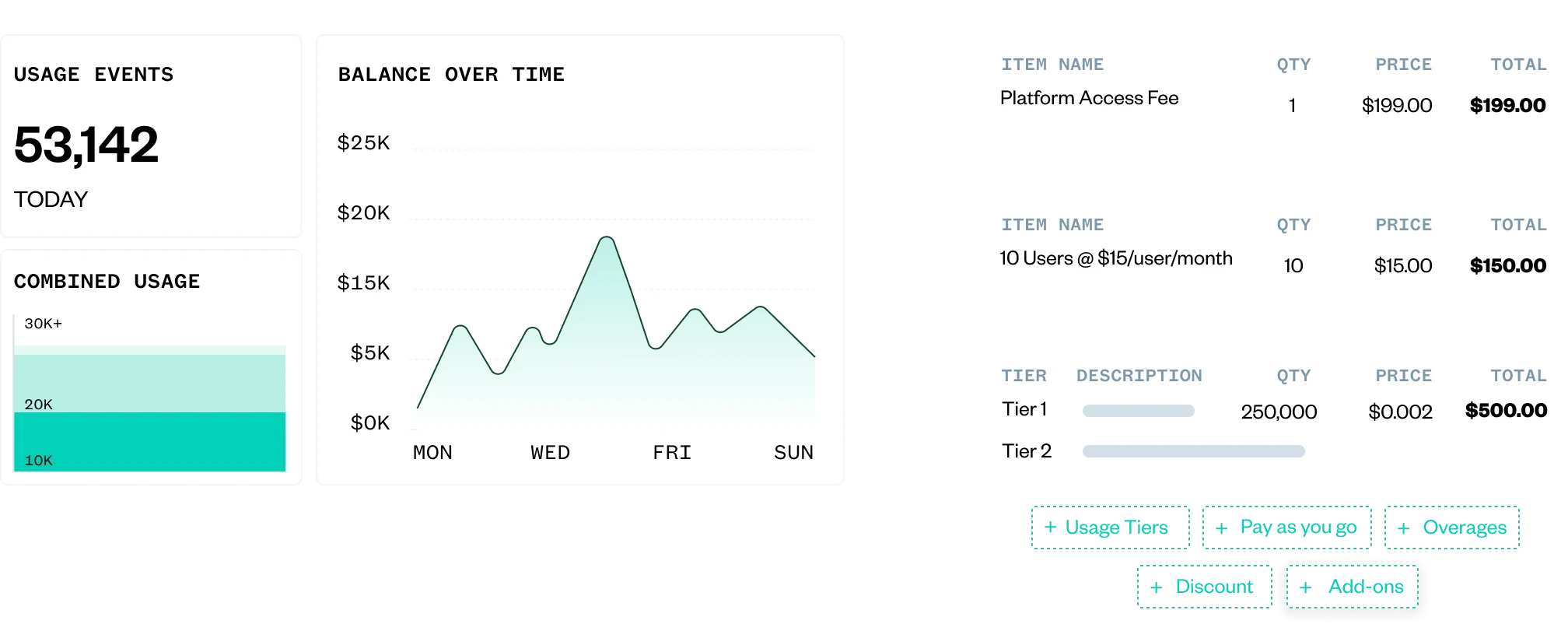
Usage-based billing allows companies to charge customers based on actual consumption. Zuora Billing provides built-in mediation and rating, enabling organizations to monetize every interaction in real time and manage billions of usage events per month. [Source]
How does Zuora Billing help with flexible pricing and packaging?
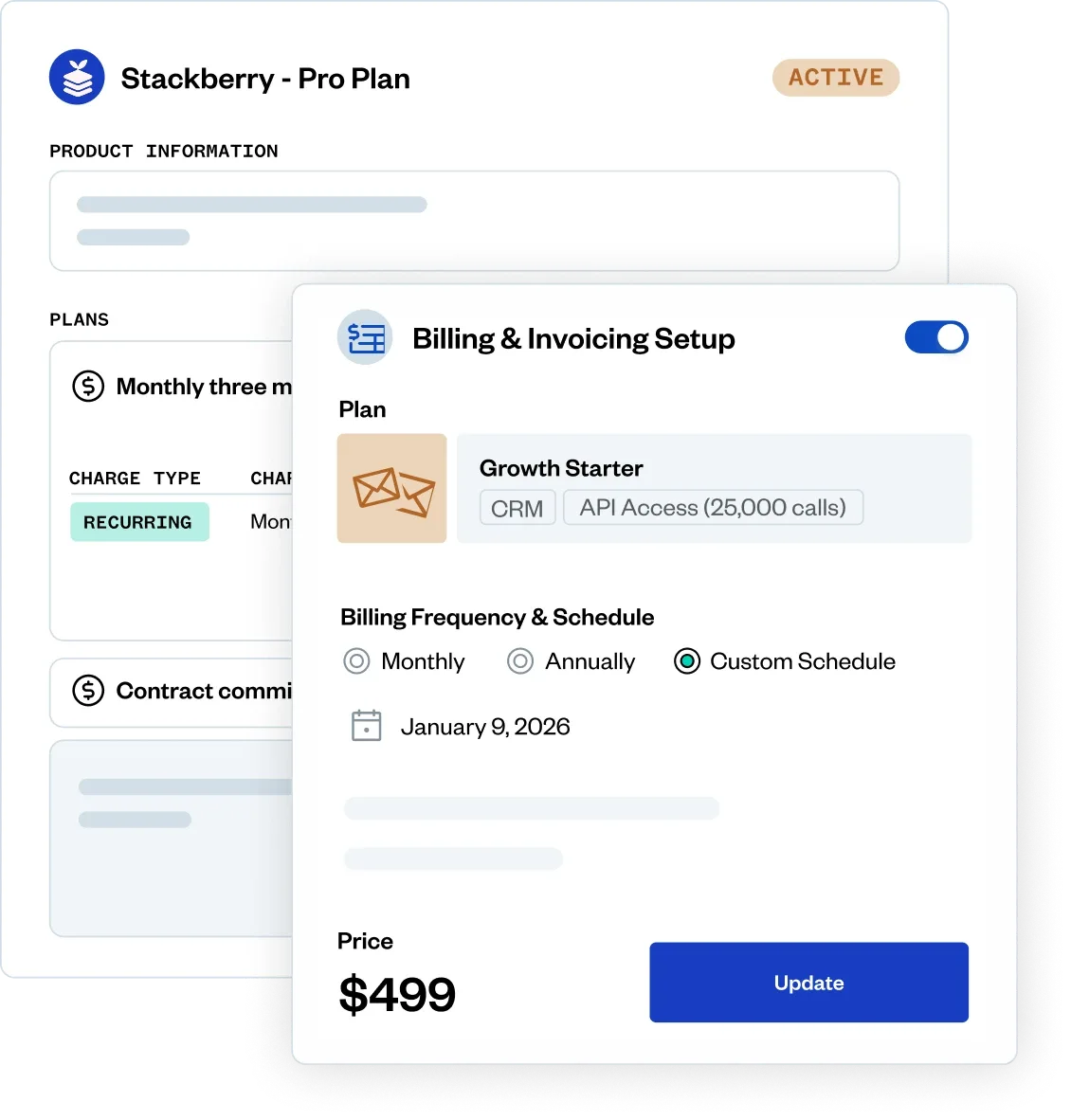
Zuora Billing enables businesses to quickly design, deploy, and iterate on pricing and packaging using a low-code/no-code pricing designer. It supports dynamic pricing based on attributes like GB used or API calls and offers bundling options to meet evolving customer demands. [Source]
What is the Extension Studio in Zuora Billing?
The Extension Studio allows businesses to create custom solutions, monitor critical activity, accelerate deployments, and configure custom business logic, objects, events, and UI pages to adapt to unique business needs. [Source]
How does Zuora Billing integrate with quoting tools?
Zuora Billing integrates with Zuora CPQ and other CPQ solutions like Salesforce CPQ and HubSpot CPQ, enabling sales reps to quote for any combination of subscriptions, usage, and one-time charges, and ensuring accurate downstream billing and metrics. [Source]
What metrics and analytics does Zuora Billing provide?
Zuora Billing provides dashboards for metrics such as MRR, TCB, TCV, ELP, and unbilled revenue. It delivers real-time insights into billing performance, revenue forecasting, and customer trends to support informed financial decision-making. [Source]
Integrations & Technical Requirements
What integrations are available with Zuora Billing?
Zuora Billing offers over 60 pre-built connectors, including Salesforce, HubSpot, NetSuite, and Snowflake. It also supports REST and SOAP APIs, warehouse connectors (Databricks, BigQuery, RedShift), 40+ payment gateways, and a Connect Marketplace with nearly 100 apps. [Source]
Does Zuora Billing have an API?
Yes, Zuora Billing provides both REST and SOAP APIs for seamless integration with external systems. These APIs support common web storefront operations and detailed billing, payment, and subscription management. [Source]
What technical documentation is available for Zuora Billing?
Zuora offers comprehensive technical documentation, including platform docs, API references, SDK guides, integration tutorials, and payment gateway integration guides. Resources are available at the Zuora Docs Portal and Developer Center.
How does Zuora Billing support e-invoicing and tax compliance?
Zuora Billing provides pre-built integrations with leading tax engines like Sovos and Avalara, supports country-specific templates, tax management reports, and e-invoice archiving, and ensures compliance with global e-invoicing regulations. [Source]
Can Zuora Billing be integrated with existing CRM and ERP systems?
Yes, Zuora Billing integrates with popular CRM and ERP systems such as Salesforce, NetSuite, and HubSpot, enabling seamless data flow and unified billing operations. [Source]
Security, Compliance & Reliability
What security certifications does Zuora Billing have?
Zuora Billing is certified for PCI DSS Level 1, SSAE 16 SOC1 Type II, SOC2 Type II, ISO 27001, HHS HIPAA, and SOC 3, ensuring enterprise-grade security and compliance for sensitive data and financial operations. [Source]
How does Zuora Billing ensure data security and privacy?
Zuora Billing employs data encryption, role-based access controls, audit trails, and regular security audits. It is compliant with GDPR, PCI DSS, SOX, and other global regulations, providing built-in features to simplify compliance. [Source]
Is Zuora Billing suitable for businesses with global compliance needs?
Yes, Zuora Billing supports multi-currency, tax compliance, and global e-invoicing requirements, making it suitable for businesses operating in multiple regions with complex regulatory landscapes. [Source]
Implementation, Support & Ease of Use
How long does it take to implement Zuora Billing?
Implementation timelines vary: focused scopes can be completed in as little as 30 days, typical projects take 30–90 days, and multi-product or multi-entity programs may take several months. Pre-built connectors can enable integrations in as little as one day. [Source]
What training and support resources are available for Zuora Billing?
Zuora offers Quick Start Tutorials, Zuora University (500+ courses and certifications), 24x5 live global support, email and ticketing support, and a community portal for peer engagement. Premium support options are also available. [Source]
How easy is it to get started with Zuora Billing?
Zuora Billing is designed for straightforward onboarding, with extensive training, developer resources, and pre-built integrations to help customers get up and running quickly. [Source]
What feedback have customers given about Zuora Billing's ease of use?
Customers like Mindflash, TripAdvisor, FireHost, Briggs & Stratton, Buildium, and AppFolio have praised Zuora Billing for its flexibility, ease of integration, and ability to simplify operations and reduce manual effort. [Source]
Use Cases, Industries & Customer Proof
Who uses Zuora Billing?
Zuora Billing is used by over 1,000 companies worldwide, including Zoom, Asana, Box, Docusign, Ford, NCR Voyix, Ubisoft, and GoPro, across industries such as SaaS, manufacturing, media, and more. [Source]
What industries are represented in Zuora Billing's customer base?
Industries include SaaS, communications, consumer goods, energy, finance, healthcare, high tech, manufacturing, media, OTT/entertainment, software, telecommunications, and video games. [Source]
Can you share specific case studies of companies using Zuora Billing?
Yes. For example, Zoom scaled from 10 million to 300 million users, Box tested 125+ new offerings, and Hudl saved over 100 hours per month using Zuora Billing. More case studies are available on Zuora's website. [Source]
What business impact can customers expect from Zuora Billing?
Customers have seen recurring revenue growth, operational efficiency, improved retention, faster time-to-market, and scalability. For example, Swiftpage saw a 140% increase in subscription customers, and Hudl saved 100+ hours per month. [Source]
What roles and companies are best suited for Zuora Billing?
Zuora Billing is ideal for finance professionals, IT leaders, product managers, operations teams, and sales/customer success teams in industries like technology, media, healthcare, consumer goods, manufacturing, and telecommunications. [Source]
Pain Points & Problem Solving
What common pain points does Zuora Billing address?
Zuora Billing addresses slow manual close cycles, compliance challenges (ASC 606/IFRS 15), scaling hybrid monetization, multi-entity and multi-currency operations, revenue leakage, data quality issues, spreadsheet dependency, quote-to-cash misalignment, and forecasting difficulties. [Source]
How does Zuora Billing help reduce revenue leakage?
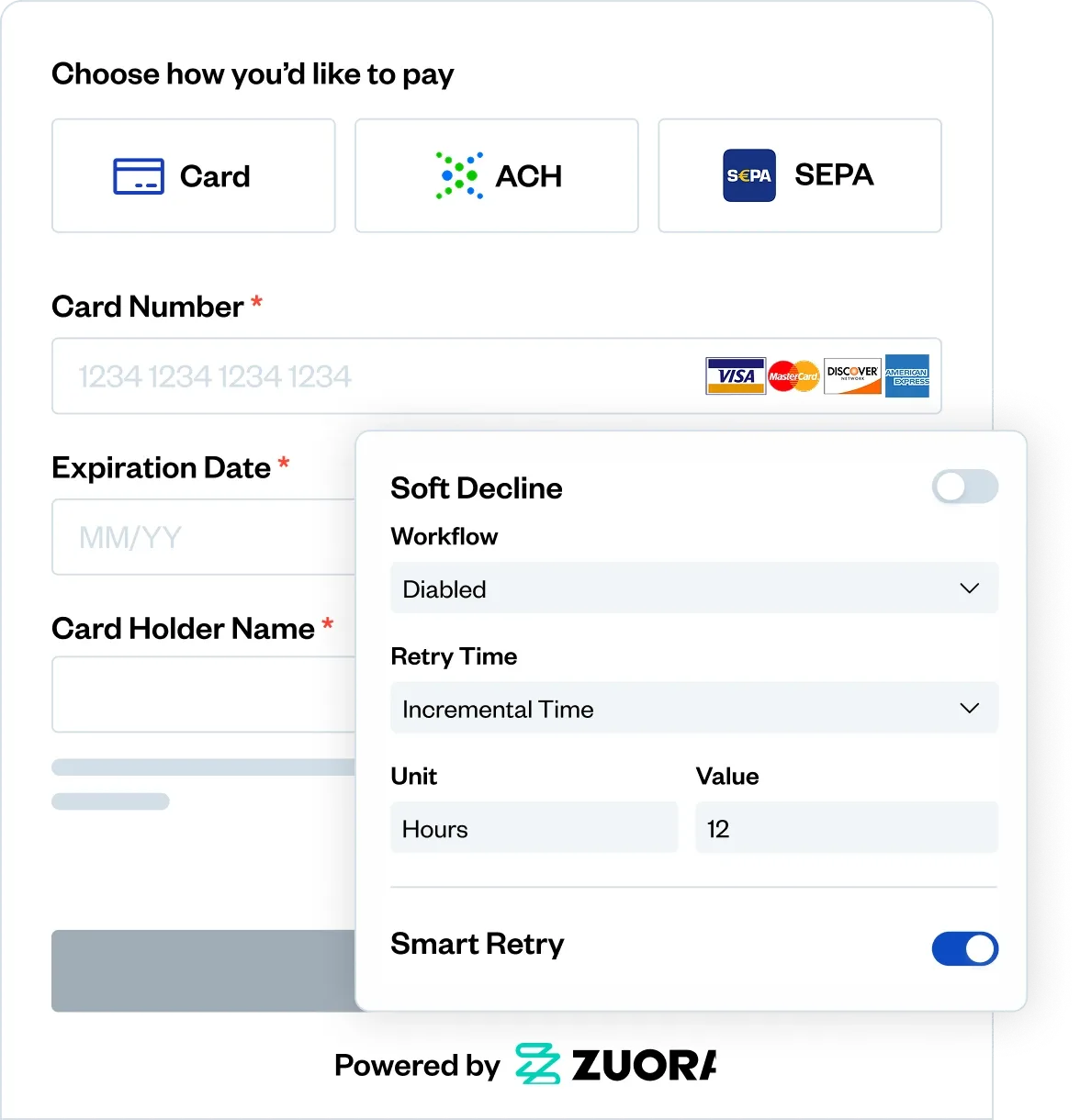
Zuora Billing automates collections, reduces billing errors, and optimizes payment success with smart retries and fraud prevention, helping businesses recover up to 20% more in subscription revenue. [Source]
How does Zuora Billing improve operational efficiency?
Zuora Billing automates invoicing, billing, revenue recognition, and collections, reducing manual effort and errors. Customers like Hudl and Nutanix have saved over 100 hours per month and 552 hours annually, respectively, by automating processes. [Source]
How does Zuora Billing help with compliance and audit readiness?
Zuora Billing automates revenue recognition and reporting, ensuring compliance with ASC 606 and IFRS 15. It provides audit-ready documentation and policy-driven automation for new pricing models. [Source]
How does Zuora Billing support forecasting and scenario planning?
Zuora Billing provides real-time data and integrated systems for accurate forecasting and scenario planning, enabling businesses to make informed strategic decisions. [Source]
Recognition & Analyst Reports
How is Zuora Billing recognized by industry analysts?
Zuora Billing is named a Leader in the 2025 Gartner Magic Quadrant for Recurring Billing Applications, ranked #1 in the ISG Research Subscription Management Buyers Guide, and recognized as a Leader in the 2025 Forrester Wave for Recurring Billing Solutions. [Source]
What awards or rankings has Zuora Billing received?
Zuora Billing earned #1 in Strategy and Management in the MGI Agile Billing Top 50 Buyer’s Guide and is recognized for platform maturity and business model agility in the IDC MarketScape report. [Source]
Migration & Scalability
Can I migrate from another billing system to Zuora Billing?
Yes, Zuora Billing provides APIs, SDKs, and professional services to migrate subscription data, usage records, and invoices from other billing platforms with minimal disruption. [Source]
How does Zuora Billing scale with business growth?
Zuora Billing is designed to handle rapid growth, as demonstrated by customers like Zoom scaling from 10 million to 300 million users. Its architecture supports millions of subscribers and high transaction volumes without performance trade-offs. [Source]