Frequently Asked Questions

Product Overview & E-Invoicing Capabilities

What is Zuora Billing's e-invoicing and tax compliance solution?

Zuora Billing's e-invoicing and tax compliance solution is a comprehensive platform that enables businesses to automate and manage e-invoicing and tax compliance across multiple jurisdictions. It features built-in e-invoicing, configurable templates, accurate tax calculations, and integrations with leading tax vendors like Sovos and Avalara, helping companies meet global regulatory requirements efficiently.

How does Zuora Billing help businesses comply with global e-invoicing mandates?

Zuora Billing simplifies compliance with global e-invoicing mandates by offering integrated capabilities powered by partners like Sovos and Avalara. The platform supports configurable templates to meet country-specific requirements and leverages the PEPPOL network for European and international invoicing, ensuring invoices meet local and international standards.

What are configurable e-invoicing templates in Zuora Billing?

Configurable e-invoicing templates in Zuora Billing allow businesses to customize invoice formats to meet the specific requirements of any country or jurisdiction. This ensures that invoices are compliant with local regulations and can be easily adapted as mandates change.

How does Zuora Billing ensure accurate tax calculations?

Zuora Billing applies accurate and complete tax calculations on invoices based on nexus and jurisdiction, supporting various tax types such as VAT, GST, PST, HST, and sales tax. The platform supports both inclusive and exclusive taxes and enables businesses to export telemetry data for tax preparation or remittance.

What tax management features are included in Zuora Billing?

Zuora Billing includes automated tax calculations, pre-built integrations with leading tax vendors (Sovos, Avalara), built-in Z-Tax for simple taxable charges, and comprehensive tax reporting and analytics. These features help businesses manage complex tax requirements across multiple jurisdictions.

How does Zuora Billing support tax reporting and analytics?

Zuora Billing enables businesses to export telemetry data for tax preparation or remittance and provides comprehensive management reports. This helps organizations maintain accurate records and streamline tax filing processes.

What is the PEPPOL network and how does Zuora Billing use it?

The PEPPOL network is a standardized e-invoicing network used across Europe and internationally. Zuora Billing leverages PEPPOL to streamline invoicing for European and international business, ensuring compliance with cross-border e-invoicing mandates.

Which tax types does Zuora Billing support?

Zuora Billing supports a wide range of tax types, including VAT, GST, PST, HST, and sales tax. The platform can handle both inclusive and exclusive tax scenarios, ensuring flexibility for global operations.

How does Zuora Billing help with changing regulatory mandates?

Zuora Billing's built-in e-invoicing capabilities and configurable templates allow businesses to quickly adapt to changing regulatory mandates. Integrations with Sovos and Avalara ensure that compliance requirements are met as regulations evolve.

Can Zuora Billing be used for international tax compliance?

Yes, Zuora Billing is designed to support international tax compliance by automating tax calculations, supporting multiple tax types, and integrating with global tax vendors. The platform's configurable templates and PEPPOL network support make it suitable for businesses operating across borders.

Features & Capabilities

What integrations does Zuora Billing offer for tax compliance?

Zuora Billing offers pre-built integrations with leading tax vendors such as Sovos and Avalara. These integrations automate complex tax management and ensure compliance with local and international tax regulations.

How does Zuora Billing handle inclusive and exclusive taxes?

Zuora Billing supports both inclusive and exclusive tax scenarios, allowing businesses to apply the correct tax type based on their operational needs and jurisdictional requirements.

What is Z-Tax in Zuora Billing?

Z-Tax is Zuora Billing's built-in tax engine designed to support simple taxable charges. For more complex tax scenarios, Zuora Billing integrates with external tax vendors like Sovos and Avalara.

How does Zuora Billing capture and report e-invoicing data?

Zuora Billing captures e-invoicing data with status and reporting readouts, enabling businesses to monitor compliance and generate reports for regulatory and internal purposes.

Can Zuora Billing export data for tax preparation or remittance?

Yes, Zuora Billing allows businesses to export telemetry data for tax preparation or remittance, streamlining the process of filing taxes and ensuring accurate reporting.

How does Zuora Billing help businesses adapt to evolving customer needs?

Zuora Billing's flexible e-invoicing and tax compliance features enable businesses to quickly adapt to changing customer preferences and regulatory requirements, supporting innovation and growth in the Subscription Economy.

What are the benefits of using Zuora Billing for e-invoicing and tax compliance?

Benefits include simplified compliance with global mandates, automated tax calculations, configurable templates, integration with leading tax vendors, and comprehensive reporting and analytics. These features help businesses reduce manual effort, minimize errors, and ensure regulatory compliance.

How does Zuora Billing support compliance across multiple jurisdictions?

Zuora Billing supports compliance across multiple jurisdictions by offering configurable templates, automated tax calculations, and integrations with global tax vendors. This ensures that businesses can meet the specific requirements of each country or region in which they operate.

What are the main use cases for Zuora Billing's e-invoicing and tax compliance features?

Main use cases include automating e-invoicing for global operations, ensuring compliance with changing tax mandates, supporting multi-jurisdictional tax calculations, and streamlining tax reporting and remittance processes.

Security, Compliance & Certifications

What security and compliance certifications does Zuora Billing have?

Zuora Billing is part of the Zuora platform, which holds certifications including PCI DSS Level 1, SOC 1 Type II, SOC 2 Type II, ISO 27001, ISO 27018, ISO 27701, HIPAA Compliance, and Safe Harbor Compliance. These certifications ensure secure handling of payment and tax data. Learn more.

How does Zuora Billing ensure data security for e-invoicing and tax compliance?

Zuora Billing provides enterprise-grade security with encryption, access control, audit logging, and data-center options in US/EU/APAC. These features safeguard sensitive invoicing and tax data and support compliance with global regulations.

Does Zuora Billing support compliance with local and international tax regulations?

Yes, Zuora Billing is designed to help businesses comply with both local and international tax regulations through automated tax calculations, configurable templates, and integrations with leading tax vendors.

How does Zuora Billing help businesses prepare for audits?

Zuora Billing automates tax calculations, maintains detailed records, and provides comprehensive reporting, making it easier for businesses to prepare for audits and demonstrate compliance with regulatory requirements.

Implementation, Support & Documentation

How long does it take to implement Zuora Billing's e-invoicing and tax compliance features?

Implementation timelines for Zuora Billing typically range from 30 to 90 days, depending on project complexity. Focused scopes can be completed in as little as 30 days, and some integrations can be completed in one day using pre-built connectors. Source.

What support resources are available for Zuora Billing users?

Zuora provides 24x5 live global support, email support, and online ticketing. Premium support options include Technical Account Managers and Enterprise Solution Architects. Training is available through Zuora University, which offers over 500 courses and certifications. Learn more.

Where can I find technical documentation for Zuora Billing's e-invoicing and tax compliance?

Technical documentation for Zuora Billing, including e-invoicing and tax compliance features, is available at the Zuora Knowledge Center and Zuora Developer Portal.

Does Zuora Billing offer APIs for e-invoicing and tax compliance integration?

Yes, Zuora Billing provides both REST and SOAP APIs for integration with external systems, including e-invoicing and tax compliance workflows. API documentation is available at the Zuora Developer Center.

What training resources are available for learning about Zuora Billing's e-invoicing and tax compliance?

Zuora University offers self-paced modules, virtual instructor-led classes, and certifications covering Zuora Billing's e-invoicing and tax compliance features. Access training at Zuora University.

Use Cases, Industries & Customer Success

Which industries benefit most from Zuora Billing's e-invoicing and tax compliance?

Industries such as SaaS, manufacturing, IoT, media, entertainment, retail, and telecommunications benefit from Zuora Billing's e-invoicing and tax compliance features. The platform is designed for businesses operating in the Subscription Economy and those with complex, multi-jurisdictional tax requirements. See case studies.

Can you share a customer success story related to e-invoicing and tax compliance?

Siemens Healthineers used Zuora Billing and Revenue to automate manual processes and support recurring revenue for AI-driven digital health products, streamlining compliance and invoicing. Read the full story.

What business impact can companies expect from using Zuora Billing for e-invoicing and tax compliance?

Companies can expect improved operational efficiency, reduced manual effort, faster compliance with regulatory mandates, and enhanced accuracy in tax calculations and reporting. These benefits help businesses scale globally and reduce compliance risks.

Who are some notable customers using Zuora Billing for e-invoicing and tax compliance?

Notable customers include Siemens Healthineers, Zoom, Box, The Globe and Mail, and Schneider Electric. These organizations use Zuora Billing to manage complex invoicing and tax compliance needs. See more.

What pain points does Zuora Billing address for e-invoicing and tax compliance?

Zuora Billing addresses pain points such as manual tax calculations, compliance with changing mandates, multi-jurisdictional complexity, and the risk of errors in invoicing and reporting. Automation and integration features help businesses overcome these challenges.

How does Zuora Billing compare to other e-invoicing and tax compliance solutions?

Zuora Billing stands out for its flexibility, scalability, and integration capabilities. It supports over 50 pricing models, offers pre-built integrations with leading tax vendors, and is proven to scale with companies like Zoom. Its audit-ready compliance and security certifications make it suitable for enterprises with complex needs.

Is Zuora Billing suitable for businesses preparing for IPO or private equity investment?

Yes, Zuora Billing's automation, compliance, and audit-ready features help businesses establish robust systems and controls, making it easier to prepare for IPOs or private equity investments.

What roles within a company benefit from Zuora Billing's e-invoicing and tax compliance features?

Controllers, revenue operations leads, finance operators, product managers, and enterprise application directors benefit from Zuora Billing's e-invoicing and tax compliance features, as these roles are responsible for ensuring accurate billing, compliance, and financial reporting.

E-Invoicing Software for Global Tax Compliance

Conduct business globally with an e-invoicing platform that helps automate invoice compliance, tax calculations, country-specific templates, and reporting across jurisdictions. Zuora Billing connects e-invoicing and tax workflows directly to recurring billing so finance teams can keep invoices moving as mandates change.

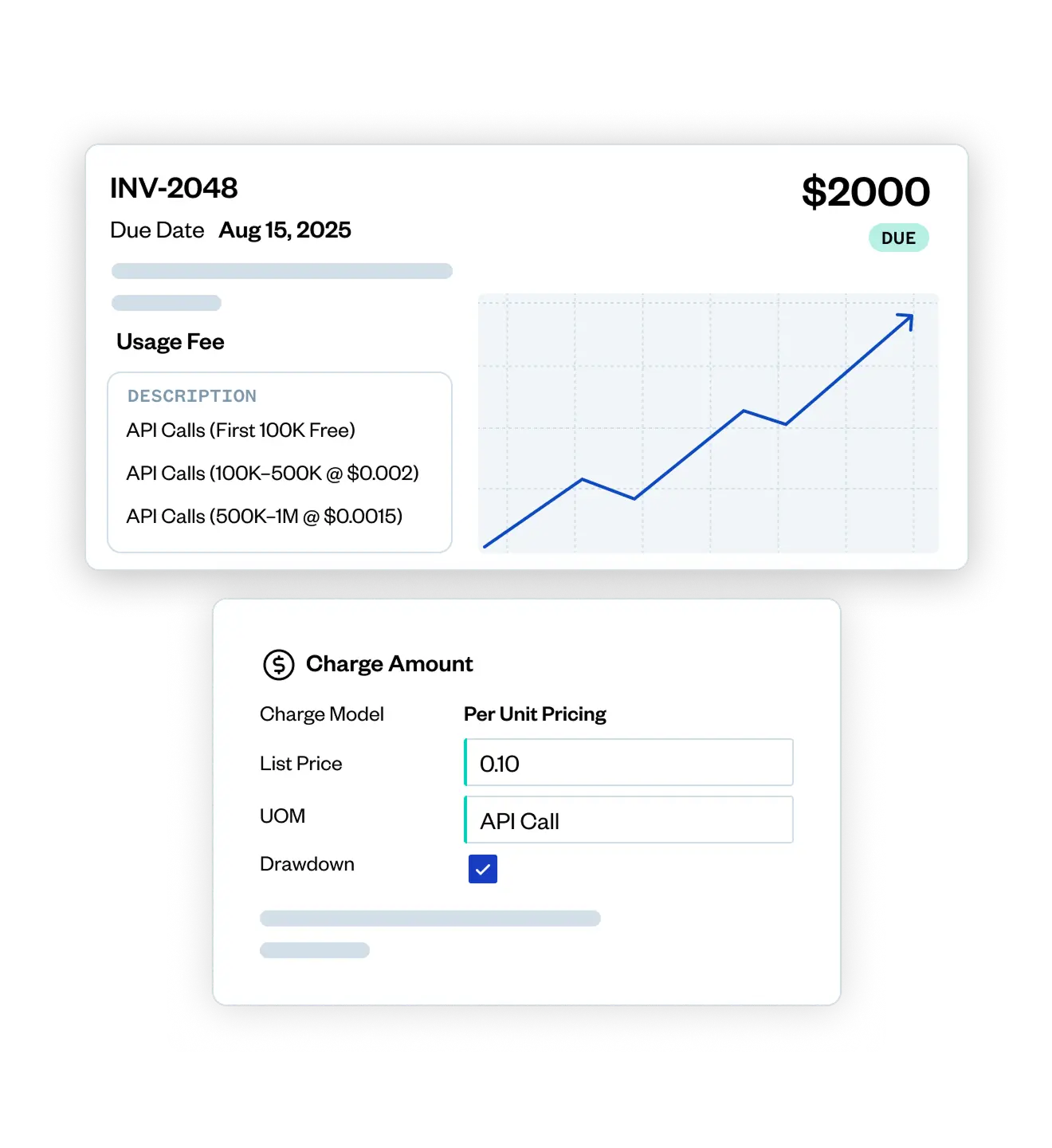
An invoice screen shows a $2000 charge due on Aug 15, 2025, API call usage fees, a line graph, and unit pricing details for API calls.

Trusted by brands Worldwide

Solve e-invoicing mandate complexity before it disrupts billing

As e-invoicing mandates expand, finance and tax teams need invoice data, tax treatment, templates, delivery workflows, and status tracking to stay aligned across every market. Zuora helps connect those workflows inside billing so teams can adapt faster without rebuilding country-by-country processes.

Mandates keep changing

Configure templates and partner-powered workflows to support local requirements as new rules emerge.

Invoice data gets fragmented 

Keep billing, tax, and e-invoicing data connected from the source invoice workflow.

Rejected invoices slow cash flow

Monitor invoice status and exceptions earlier so teams can resolve issues before collections are delayed.

Custom integrations create drag

Reduce manual mapping between billing, tax, and compliance tools with e-invoicing built closer to Zuora Billing.

Global e-invoicing compliance, built into Zuora Billing

Manage e-invoicing requirements, tax calculations, reporting, and invoice templates from the billing workflows your teams already use. Zuora helps businesses reduce manual compliance work, support local invoice requirements, and keep billing operations ready for new mandates.

Partner-powered e-invoicing

Simplify e-invoicing compliance with integrated software capabilities powered by industry-leading partners such as Sovos and Avalara.

Configurable templates

Configure e-invoicing templates by country so invoices can meet local format, field, and submission requirements.

Accurate tax calculations

Apply accurate tax calculations based on nexus, jurisdiction, VAT, GST, PST, HST, and sales tax requirements.

Reporting and status visibility

Export invoice and tax data for preparation, remittance, audit support, management reporting, and invoice status monitoring.

Automate e-invoicing
and tax compliance from billing

Compliant e-invoice generation

Zuora’s built-in e-invoicing software helps businesses create, validate, exchange, and track compliant invoices while reducing manual compliance work. With partner-powered support from Sovos and Avalara, teams can connect e-invoicing workflows to billing and tax processes across regions.

Capture required e-invoicing data, monitor invoice status and reporting readouts, and support country-specific invoice formats. For European and international business, Zuora can help streamline e-invoicing through the PEPPOL network and partner-enabled compliance workflows.

Automate tax calculations alongside e-invoicing so invoices are accurate before they reach customers, tax authorities, or exchange networks. Zuora supports inclusive and exclusive tax handling, common tax types, vendor integrations, and exportable data for tax preparation and remittance.

How the billing-native e-invoicing flow works

Connected devices generate massive amounts of data, but most finance systems are deaf to it.

Automate Every Step “Automation icon symbolizing end-to-end billing and approval automation.

Create invoice data from billing workflows
Use recurring billing, usage charges, credits, amendments, multi-currency charges, and customer data as the source for e-invoicing workflows.

See the Whole Picture Analytics icon representing real-time revenue visibility.

Apply tax treatment before invoice exchange
Connect tax calculation and invoice generation so e-invoices are created with the right commercial and tax context.

Support What’s Next “Infinity" icon symbolizing scalable pricing and evolving business models.
Generate and validate e-invoice data
Use country-specific templates, required fields, and partner-enabled compliance workflows to help invoices meet local requirements.
Support What’s Next “Infinity" icon symbolizing scalable pricing and evolving business models.

Generate and validate e-invoice data
Use country-specific templates, required fields, and partner-enabled compliance workflows to help invoices meet local requirements.

Zuora bridges the gap, We provide an enterprise monetization platform with native usage mediation and rating built to handle the scale, velocity, and complexity of IoT data.

How the billing-native e-invoicing flow works

Revenue growth is not only a sales and marketing outcome. In modern business models, finance helps determine how quickly the business can launch, measure, and scale new offers. Revenue automation gives finance the policy, data, and control layer needed to support growth without slowing the business down.

Create invoice data from billing workflows

Use recurring billing, usage charges, credits, amendments, multi-currency charges, and customer data as the source for e-invoicing workflows.

Apply tax treatment before invoice exchange

Connect tax calculation and invoice generation so e-invoices are created with the right commercial and tax context.

Generate and validate e-invoice data

Use country-specific templates, required fields, and partner-enabled compliance workflows to help invoices meet local requirements.

Exchange invoices through supported networks and partners

Support PEPPOL and government platform connectivity where applicable through qualified partner workflows.

Track status, reporting, and audit data

Monitor invoice status, rejection signals, reporting exports, and audit-ready records closer to the billing workflow.

Replace fragmented e-invoicing processes with a billing-native solution

Once buyers understand the mandate pressure and Zuora’s core capabilities, use this section to explain why e-invoicing should stay close to billing. Zuora helps finance, tax, billing operations, and IT teams reduce rework by keeping source invoice data, tax logic, templates, partner-enabled submission, status tracking, and reporting in one operating model.

Source invoice data stays connected to compliance

Use analytics to understand revenue trends, identify exceptions, and guide pricing decisions.

Fewer handoffs across systems

Keep billing, tax, templates, partner-enabled exchange, status readouts, and reporting aligned instead of moving data through disconnected point tools.

More visibility for finance and tax teams

Monitor acceptance, rejection, reporting, and audit data closer to the billing workflow so exceptions are easier to act on.

A scalable model for recurring revenue

Support subscription, usage-based, and hybrid pricing complexity without rebuilding e-invoicing logic separately for each market.

Partner-powered support for changing e-invoicing mandates

E-invoicing requirements continue to evolve across countries, tax authorities, and exchange networks. Zuora combines billing-native workflows with partner-powered compliance support to help teams keep pace with changing mandates while reducing the operational burden on finance, tax, and IT.


  • Industry-leading partner support from Sovos and Avalara
  • PEPPOL workflows where applicable
  • Country-specific templates and invoice requirements
  • Invoice status readouts and rejection visibility
  • Exportable invoice and tax data for reporting, remittance, and audit support
An invoice screen shows a $2000 charge due on Aug 15, 2025, API call usage fees, a line graph, and unit pricing details for API calls.

Keep e-invoicing compliance connected to billing

Bring e-invoicing, tax, templates, partner-enabled exchange, status tracking, and reporting closer to the billing workflows that create invoice data.

Frequently asked questions

What should enterprises look for in an e-invoicing solution?

Enterprises should look for e-invoicing software that supports relevant country mandates, invoice formats, validation rules, PEPPOL or government platform connectivity, tax calculation, invoice status tracking, audit-ready reporting, and integration with billing and ERP systems.

E-invoicing software supports global tax compliance by helping businesses apply local invoice requirements, validate required fields, exchange structured invoices, track acceptance or rejection, and retain tax and invoice data for reporting, remittance, and audit support.

Zuora can help streamline e-invoicing through the PEPPOL network and partner-enabled compliance workflows. Its built-in e-invoicing capabilities are powered by industry-leading partners such as Sovos and Avalara, helping businesses meet changing requirements across regions.

Zuora connects e-invoicing to billing workflows so invoice data can flow from recurring billing, usage charges, credits, tax calculations, and multi-currency operations into compliance-ready e-invoicing processes.

Yes. E-invoicing software can reduce rejection risk by applying required fields, local formats, validation logic, status tracking, and partner-enabled compliance workflows before or during invoice exchange.

Businesses that operate across jurisdictions, sell to government entities, manage B2B transactions in countries with e-invoicing mandates, or run complex subscription and usage-based billing models can benefit from e-invoicing connected to billing so invoice, tax, compliance, and status data stay aligned.

Finance teams should inventory affected countries, invoice types, tax requirements, billing systems, ERP integrations, and partner connections. They should also choose an e-invoicing platform that can adapt as mandates, formats, and reporting requirements change.