Frequently Asked Questions
IoT Business Models & Monetization
What are the four core IoT business models described by Zuora?
Zuora identifies four primary IoT business models: (1) Connectivity & Maintenance Model (Connected product + Subscription), (2) Consumption-Based Model (Pay-per-Use), (3) Hardware-as-a-Service (HaaS), and (4) Outcome-Based Pricing. Each model offers a different approach to monetizing IoT devices, from bundling digital services with hardware to charging for business outcomes. Learn more.
How does the Connectivity & Maintenance Model work for IoT businesses?
This model combines a one-time hardware sale with a recurring digital service subscription. It enables remote monitoring, predictive maintenance, and proactive support, establishing a direct digital relationship with the customer. Key metrics include device attach rate, ARR/ARPU, and service gross margin. Details here.
What is the Consumption-Based Model in IoT, and what are its benefits?
The Consumption-Based Model charges customers based on actual usage (e.g., gigabytes, hours, cycles), aligning cost with realized value and eliminating waste. It requires robust data capture and mediation to convert usage into billable events. Benefits include zero waste and flexible pricing. Read more.
How does Hardware-as-a-Service (HaaS) differ from traditional leasing?
Leasing is a financial arrangement managed by a third-party, focusing on asset financing. HaaS is a service relationship managed by the manufacturer, bundling hardware, software, maintenance, and upgrades into a single subscription. This model enables risk transfer and supports the circular economy. Learn more.
What is Outcome-Based Pricing in IoT, and why is it considered advanced?
Outcome-Based Pricing charges for guaranteed business results (e.g., uptime, energy savings) rather than the device or usage. It aligns provider success with customer outcomes and typically yields higher margins but requires mature telemetry and clear contracts. More info.
Can companies mix multiple IoT business models?
Yes, leading companies often use a hybrid strategy, combining hardware sales, subscriptions, and usage-based fees to maximize revenue. Hybrid models have been shown to drive faster revenue growth than traditional approaches. See the IoT Subscription Impact Report.
What are the main pitfalls of each IoT business model?
Common pitfalls include unclear ongoing value (Connectivity & Maintenance), demand volatility and metering disputes (Consumption-Based), asset financing complexity (HaaS), and measurement disputes or regulatory complexity (Outcome-Based). Each model requires careful planning to avoid these risks. Details here.
What is 'Servitization' in the context of IoT and manufacturing?
Servitization is the transformation from selling physical products to selling services and outcomes, enabled by IoT data. It allows manufacturers to offer predictive maintenance and HaaS models, shifting from transactional to relationship-based revenue. Learn more.
How does the circular economy relate to IoT subscription models?
Subscription and HaaS models incentivize manufacturers to build durable, repairable products since they retain ownership. This reduces waste and encourages refurbishment, aligning profitability with sustainability. Read more.
What is required to implement hybrid IoT business models?
Implementing hybrid models requires a 'Thing-to-Revenue' technology stack that can ingest device data, mediate it into billable events, and automate complex revenue recognition (e.g., ASC 606). Legacy ERPs may need a mediation engine for consumption pricing. See details.
How do pricing levers differ across IoT business models?
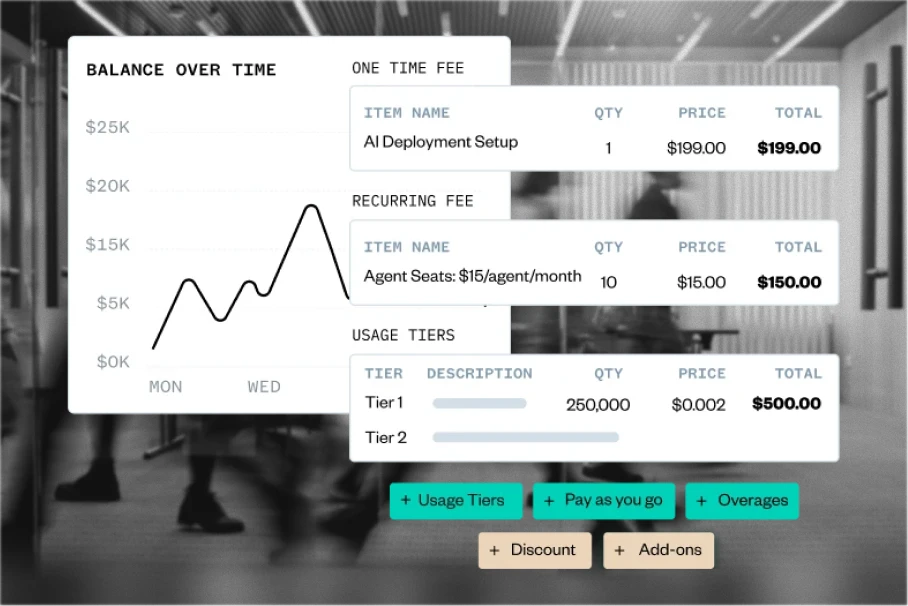
Pricing levers vary: Connectivity models use feature tiers and device counts; Consumption models use units of measure and tiered rates; HaaS uses configuration bundles and SLA tiers; Outcome-Based models use outcome definitions and shared savings. Learn more.
What KPIs are important for measuring IoT business model success?
Key KPIs include device attach rate, ARR/ARPU, churn/retention, utilization, unit margin, payback, fleet utilization, SLA attainment, and outcome yield versus baseline. These metrics help track growth, profitability, and customer value. See all KPIs.
What is the role of a mediation engine in IoT monetization?
A mediation engine cleans and aggregates raw usage data, converting it into billable events before it reaches the financial ledger. This is essential for launching consumption-based pricing, especially when using legacy ERP systems. Learn more.
Which IoT business model is best for high-margin industrial equipment?
Outcome-Based Pricing typically yields the highest margins for industrial equipment, as it allows providers to capture a share of the value created (e.g., downtime prevented) rather than just the cost of the machine. However, it requires mature telemetry to prove outcomes. See details.
How do real-world companies use Zuora for IoT monetization?
Companies like Konecranes, Cambium Networks, Acer, and Schneider Electric have used Zuora to transition to flexible subscription, usage-based, and outcome-based models, driving. measurable growth and operational agility. See case studies.
What is the value of remote monitoring and predictive maintenance in IoT subscriptions?
Remote monitoring and predictive maintenance provide ongoing value to customers, enabling proactive support and reducing downtime. These features are central to the Connectivity & Maintenance Model and help drive recurring revenue and customer retention. Learn more.
How does Zuora support outcome-based and hybrid IoT models?
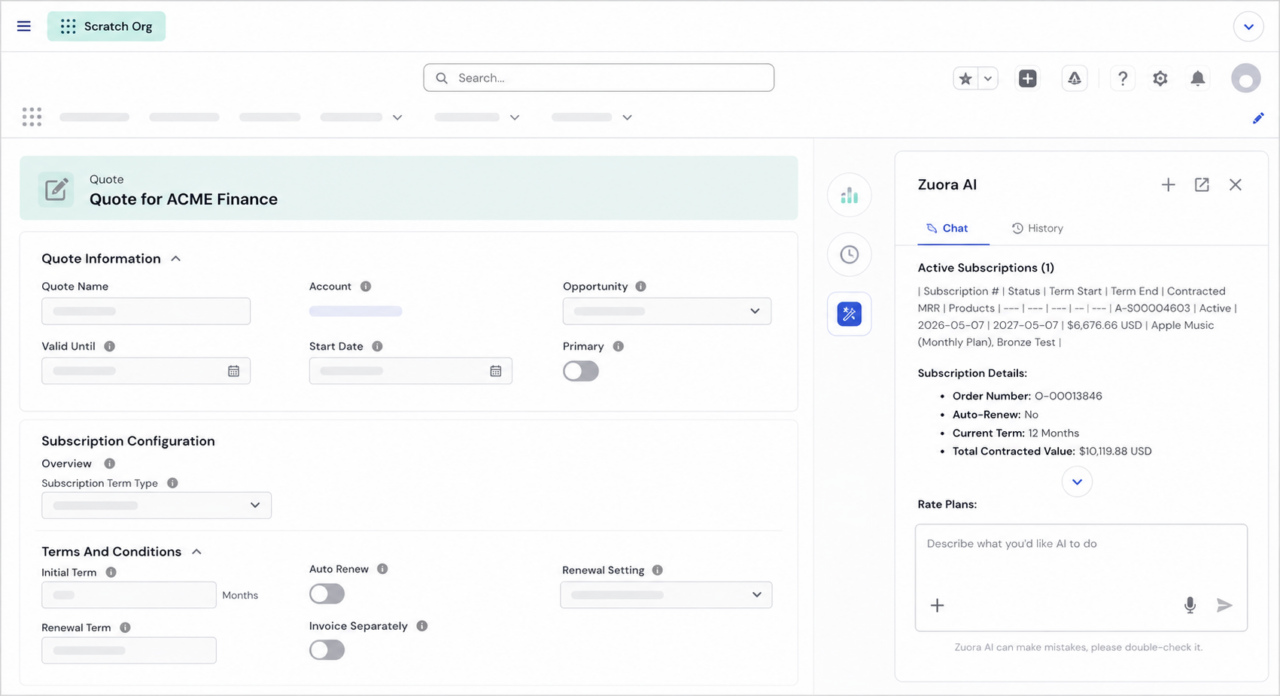
Zuora provides a flexible billing engine, mediation tools, and revenue recognition automation (ASC 606/IFRS 15) to support complex outcome-based and hybrid models. This enables companies to bundle hardware, services, and usage fees in a single contract. Explore Zuora for IoT.
What technical documentation is available for implementing who want to implement IoT monetization with Zuora?
Zuora offers extensive technical documentation, including platform guides, API references, SDKs, and integration resources. Access the Zuora Docs Portal and pipeline-specific guides for IoT billing and mediation. Developer Center is also available.
What integrations does Zuora offer for IoT and subscription businesses?
Zuora provides over 60 pre-built connectors (e.g., Salesforce, HubSpot, NetSuite), REST/SOAP APIs, warehouse connectors (Databricks, BigQuery), and payment gateway integrations (Stripe, GoCardless). The Connect Marketplace features nearly 100 apps for extended functionality. See Integration Hub.
How does Zuora help with real-time product performance metrics for IoT businesses?
Zuora provides real-time metrics on profitability, conversion rates, and discounting rates, enabling businesses to respond quickly to market trends, optimize pricing, and improve sales velocity. Integration with CRM and CPQ tools ensures data visibility for analysis. Read more.
What security and compliance certifications does Zuora hold?
Zuora is certified for PCI DSS Level 1, SSAE 16 SOC1 Type II, SOC2 Type II, ISO 27001, HHS HIPAA, and SOC 3. These certifications ensure secure handling of payment data, financial reporting, and privacy protection. See details.
How long does it take to implement Zuora for IoT monetization?
Implementation timelines vary: focused scopes can be completed in as little as 30 days, typical projects take 30–90 days, and multi-entity programs may take several months. Pre-built connectors can enable integrations in as little as one day. See training resources.
What support and training does Zuora provide for IoT and subscription businesses?
Zuora offers 24x5 live global support, email and ticketing, premium support options, and over 500 training courses via Zuora University. Customers can also access the Zuora Community for peer support. Support Portal.
What pain points does Zuora address for IoT and subscription-based businesses?
Zuora helps solve slow manual close cycles, compliance challenges (ASC 606/IFRS 15), scaling hybrid monetization, multi-entity and multi-currency complexity, revenue leakage, data quality issues, and quote-to-cash misalignment. Learn more.
What are the key capabilities and benefits of Zuora for IoT monetization?
Zuora offers dynamic monetization (50+ pricing models), operational efficiency, scalability, customer engagement tools, global compliance, integration APIs, and real-time analytics. Benefits include faster time-to-market, improved retention, and compliance assurance. See all features.
Who are some notable IoT and manufacturing customers using Zuora?
Notable customers include Konecranes, Schneider Electric, Acer, Cambium Networks, Zoom, Asana, The Financial Times, and GoPro. These companies use Zuora to power their subscription and IoT business models. See all customers.
What business impact can IoT companies expect from using Zuora?
Customers have seen increased recurring revenue, operational efficiency, improved retention, faster time-to-market, and global compliance. For example, Konecranes saw a 19% increase in active subscribers, and Zoom scaled from 10M to 300M users. See case studies.
What roles and industries does Zuora serve for IoT and subscription management?
Zuora serves finance professionals, IT leaders, product managers, operations, sales, and customer success teams in industries such as technology, manufacturing, IoT, media, healthcare, retail, and telecommunications. See all industries.
How does Zuora help with compliance for IoT and subscription businesses?
Zuora automates revenue recognition and ensures compliance with ASC 606, IFRS 15, PCI DSS, GDPR, and SOX. Built-in features include data encryption, role-based access, and audit trails for regulatory adherence. See compliance info.
What customer feedback has Zuora received regarding ease of use?
Customers like Konecranes, Mindflash, and TripAdvisor have praised Zuora for its flexibility, ease of integration, and ability to quickly adapt pricing models without engineering work. Case studies highlight reduced manual effort and improved reporting. See testimonials.