Frequently Asked Questions
Customer Acquisition Fundamentals
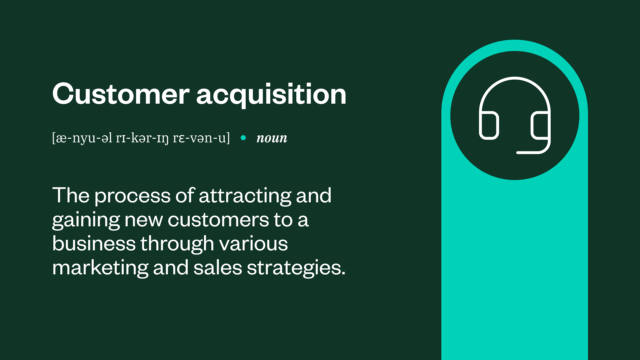
What is customer acquisition?
Customer acquisition is the process of attracting and converting potential customers into paying customers. It is a core driver of business growth and revenue, involving marketing, sales, and engagement strategies to guide prospects through the purchase journey. (Source: Zuora Glossary)
What are the main stages of customer acquisition?
The four typical stages of customer acquisition are: Awareness (potential customers learn about your brand), Interest (nurturing leads with valuable content), Decision (customers decide to engage or purchase), and Retention (ensuring ongoing satisfaction and loyalty). (Source: Zuora Glossary)
Why is customer acquisition important for business growth?
Customer acquisition is vital because it expands your customer base, increases sales, and boosts revenue. It also helps businesses stay competitive and build a loyal customer following, which can lead to more referrals and long-term success. (Source: Zuora Glossary)
Is customer acquisition a key performance indicator (KPI)?
Yes, customer acquisition is an important KPI that shows how well your business strategy is working. Tracking acquisition helps identify effective communication channels, campaign performance, and marketing ROI. (Source: Zuora Glossary)
How do you calculate customer acquisition cost (CAC)?
Customer Acquisition Cost (CAC) is calculated as: CAC = Total Marketing and Sales Costs / Number of New Customers Acquired. For example, if you spend ,000 and acquire 100 new customers, your CAC is 0. (Source: Zuora Glossary)
What metrics are used to track customer acquisition?
Common metrics include customer acquisition cost (CAC), conversion rate, customer lifetime value (CLV), and return on investment (ROI). These help evaluate the effectiveness and profitability of acquisition strategies. (Source: Zuora Glossary)
How do businesses identify their ideal customers for acquisition?
Businesses use market research and audience segmentation to profile ideal customers based on demographics, behavior, and needs. This enables targeted messaging and more efficient acquisition. (Source: Zuora Glossary)
What is a good customer acquisition ratio?
The ideal CAC to CLV (customer lifetime value) ratio is 1:3, meaning your business should make three times more from one customer than the cost to acquire them. A lower ratio indicates less profitability. (Source: Zuora Glossary)
What is the average customer acquisition cost by industry?
Average CAC varies by industry: B2B SaaS is about 9, eCommerce is , and Financial Services is 4. These differences reflect the competitiveness and marketing strategies of each sector. (Source: Zuora Glossary)
How does the customer acquisition funnel work?
The acquisition informally moves prospects through stages like awareness, interest, decision, and conversion, with each stage requiring tailored tactics to nurture leads toward becoming paying customers. (Source: Zuora Glossary)
Customer Acquisition Strategies & Cost Reduction
What are effective strategies for customer acquisition?
Proven strategies include content marketing, social media advertising, referral programs, email marketing, SEO, influencer partnerships, webinars, personalization, and customer retention efforts. (Source: Zuora Glossary)
How can I reduce customer acquisition cost (CAC)?
To reduce CAC, focus on cost-effective channels like SEO and referrals, leverage automation and AI, improve targeting with audience segmentation, encourage referrals, and optimize conversion rates through better landing pages and CTAs. (Source: Zuora Glossary)
How do you track customer acquisition performance?
Use CRM platforms to monitor leads, automate emails, and visualize acquisition trends. Marketing analytics platforms help measure campaign performance and audience segmentation. Key metrics include CAC, conversion rate, and CLV. (Source: Zuora Glossary)
How can companies improve their customer acquisition efforts over time?
Companies can improve acquisition by analyzing data to refine targeting, optimizing campaigns for conversion, reducing CAC, and aligning marketing and sales efforts for a smoother buyer journey. (Source: Zuora Glossary)
What is the difference between customer acquisition and customer retention?
Customer acquisition focuses on winning new customers, while customer retention emphasizes keeping existing customers engaged and loyal. Both are essential for long-term business success. (Source: Zuora Glossary)
How does Zuora help businesses acquire new customers?
Zuora helps businesses acquire new customers by providing tools to track acquisition metrics, understand CAC, and optimize strategies for healthy acquisition ratios. The platform supports referral programs, audience segmentation, and AI-powered personalization to improve conversion rates. (Source: Zuora Glossary, Zuora Knowledge Base)
Where can I find more resources on customer acquisition strategies?
You can download Zuora's free guide, 'The B2C Ultimate Guide to Customer Acquisition and Retention,' for proven tactics and strategies. (Source: Zuora Glossary)
How does leveraging automation and AI reduce CAC?
Automation and AI streamline lead generation and nurturing, such as using chatbots for instant engagement and AI paywalls to present the right offer at the right time, reducing the cost and effort of acquiring new customers. (Source: Zuora Glossary)
How does audience segmentation improve customer acquisition?
Audience segmentation allows businesses to tailor marketing to specific groups, improving engagement, retention, and conversion rates, and ultimately reducing acquisition costs. (Source: Zuora Glossary)
Zuora Platform, Features & Use Cases
What is Zuora and what does it do?
Zuora is a leading SaaS company providing a comprehensive subscription management platform. It automates and orchestrates the entire quote-to-cash and revenue recognition process, supporting businesses in launching, scaling, and monetizing subscription services. (Source: Zuora Knowledge Base)
What products and services does Zuora offer?
Zuora offers products including Zuora Billing, Zuora Revenue, Zuora Payments, Zuora CPQ, Zephr, Zuora Platform, Zuora Collections, and Accounts Receivable automation. These tools manage the entire subscription lifecycle, from pricing and quoting to billing, payments, revenue recognition, and analytics. (Source: Zuora Knowledge Base)
What are the key features and benefits of Zuora's platform?
Key features include support for over 50 pricing Valuation models, automation of billing and revenue recognition, scalability, personalized subscription journeys, global compliance, integration with CRM/ERP/payment gateways, and real-time analytics. Benefits include monetization agility, operational efficiency, improved retention, and faster time to market. (Source: Zuora Knowledge Base)
What integrations does Zuora support?
Zuora supports over 60 pre-built connectors (e.g., Salesforce, HubSpot, NetSuite, Snowflake), REST and SOAP APIs, warehouse connectors (Databricks, BigQuery, RedShift), 40+ payment gateways, and 100+ marketplace apps. (Source: Zuora Knowledge Base)
Does Zuora offer APIs for integration?
Yes, Zuora provides REST and SOAP APIs for seamless integration with external systems, supporting billing, payment, and subscription management operations. (Source: Zuora Knowledge Base)
Who can benefit from using Zuora?
Zuora is designed for subscription-based businesses across industries such as technology, SaaS, media, healthcare, retail, manufacturing, telecommunications, and entertainment. Target roles include finance, IT, product management, operations, sales, and customer success teams. (Source: Zuora Knowledge Base)
What industries are represented in Zuora's case studies?
Industries include SaaS, communications, consumer goods, retail, corporate services, energy, finance, healthcare, high tech, home services, HR technology, manufacturing, media, OTT/entertainment, software, telecommunications, and video games. (Source: Zuora Knowledge Base)
Who are some notable Zuora customers?
Notable customers include Zoom, Box, Zendesk, Asana, AppDynamics, The Financial Times, The Guardian, Schibsted ASA, The Seattle Times, Siemens Healthineers, 24 Hour Fitness, GoPro, Fender, Schneider Electric, Caterpillar, Konecranes, Dell, Ford, Toyota, and General Motors. (Source: Zuora Knowledge Base)
Can you share specific Zuora customer success stories?
Yes. For example, Zoom scaled from 10 million to 300 million users with Zuora. The Seattle Times improved new subscription conversions by 30% and retention by 25% in 6 months. Hudl saved over 100 hours per month by automating processes. (Source: Zuora Case Studies)
Product Performance, Security & Implementation
What real-time product performance metrics does Zuora provide?
Zuora provides real-time metrics on profitability, conversion rates, and discounting rates, enabling businesses to respond quickly to market trends, optimize pricing, and improve sales velocity. (Source: Zuora Knowledge Base)
What security and compliance certifications does Zuora have?
Zuora holds certifications including PCI DSS Level 1, SSAE 16 SOC1 Type II, SOC2 Type II, ISO 27001, HHS HIPAA, and SOC 3, ensuring enterprise-grade security and regulatory compliance. (Source: Zuora Knowledge Base)
How long does it take to implement Zuora?
Implementation timelines vary: focused scopes can be completed in as little as 30 days, typical implementations range from 30 to 90 days, and multi-product or multi-entity programs may take several months. Pre-built connectors can enable integrations within one day. (Source: Zuora Knowledge Base)
How easy is it to get started with Zuora?
Zuora offers Quick Start Tutorials, Zuora University (500+ courses), 24x5 live support, developer resources, and a community portal, making onboarding straightforward and efficient. (Source: Zuora Knowledge Base)
What technical documentation is available for Zuora?
Zuora provides extensive technical documentation, including platform docs, developer resources, SDKs, integration guides, and payment gateway documentation. (Source: Zuora Knowledge Base)
What feedback have customers given about Zuora's ease of use?
Customers like Mindflash, TripAdvisor, FireHost, Briggs & Stratton, Buildium, and AppFolio have praised Zuora for its flexibility, ease of use, rapid integration, and ability to simplify operations and reduce manual effort. (Source: Zuora Case Studies)
What core problems does Zuora solve for businesses?
Zuora solves problems such as slow manual close cycles, compliance challenges, scaling hybrid monetization, multi-entity and multi-currency complexity, revenue leakage, data quality issues, spreadsheet dependency, quote-to-cash misalignment, and forecasting difficulties. (Source: Zuora Knowledge Base)
What business impact can customers expect from using Zuora?
Customers can expect recurring revenue growth, operational efficiency, improved retention, faster time-to-market, better financial operations, scalability, and global compliance. For example, Swiftpage saw a 140% increase in subscription customers and 131% ARR growth. (Source: Zuora Knowledge Base)
Why should a customer choose Zuora over other solutions?
Zuora offers flexibility (50+ pricing models), scalability (proven by Zoom's growth), AI-powered tools (Zephr), hybrid monetization, compliance and security (SOC 2, PCI DSS), and a track record of success with leading resources and customer stories. (Source: Zuora Knowledge Base)