Frequently Asked Questions
Subscription Pricing Models & Strategies
What is a subscription pricing model?
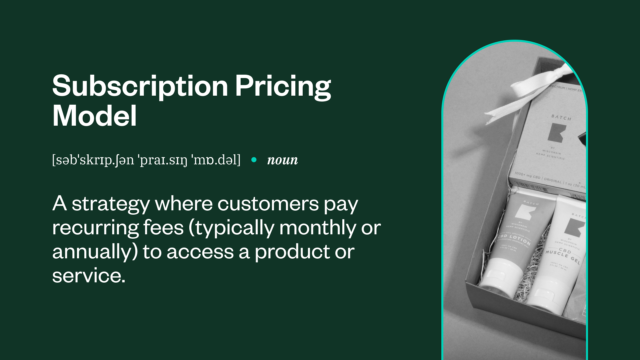
A subscription pricing model is a strategy where customers pay recurring fees—usually monthly or annually—for access to a product or service. This approach enables predictable revenue for businesses and fosters stronger, ongoing customer relationships compared to one-time purchases. (Source: Zuora Glossary)
What are the main types of subscription pricing models?
The main types of subscription pricing models are flat-rate, tiered, usage-based, freemium, and hybrid models. Each model is designed to address different customer needs and business goals. (Source: Zuora Glossary)
How does flat-rate subscription pricing work?
Flat-rate pricing charges customers a fixed fee for access to the entire product or service for a specified period. It is simple and predictable, making it appealing to customers who prefer consistent expenses. However, it may not suit users with varying needs, as all customers pay the same rate regardless of usage. (Source: Zuora Glossary)
What is tiered subscription pricing?
Tiered pricing divides subscription offerings into different levels or tiers, each with its own price point and set of features. This allows businesses to target various customer segments and encourage upgrades as needs grow. (Source: Zuora Glossary)
How does usage-based subscription pricing work?
Usage-based pricing charges customers based on their actual usage of the product or service. This model is attractive for customers who want to pay only for what they use, but it can introduce revenue unpredictability for businesses. (Source: Zuora Glossary)
What is the freemium subscription model?
The freemium model offers basic services for free while charging for premium features or content. This approach attracts a large user base and can drive conversions as users see the value of premium offerings. (Source: Zuora Glossary)
How do hybrid subscription pricing models work?
Hybrid models combine elements from multiple pricing strategies, such as a flat fee for basic access plus variable charges for additional features. This flexibility helps businesses reach a broader audience and maximize revenue. (Source: Zuora Glossary)
What are the advantages of using subscription pricing?
Subscription pricing offers predictable revenue streams, fosters customer loyalty and retention, and provides flexibility to scale pricing as customer needs change. (Source: Zuora Glossary)
What challenges do businesses face with subscription pricing models?
Common challenges include setting the right price, managing customer churn, addressing pricing objections, and adapting pricing as customer needs evolve. Overcoming these challenges requires market research, customer feedback, and ongoing optimization. (Source: Zuora Glossary)
How can businesses overcome challenges in subscription pricing?
Businesses can overcome challenges by conducting market research, analyzing customer data, testing different price points, improving product quality, enhancing customer support, and offering incentives to encourage loyalty. (Source: Zuora Glossary)
How do you choose the right subscription pricing model for your business?
Choosing the right model involves aligning pricing with the value delivered, understanding customer segments, analyzing competitors, and continuously optimizing based on performance and feedback. (Source: Zuora Glossary)
What is a price metric in subscription pricing?
A price metric is the unit of measure by which customers are charged, such as per seat, per user, or by usage. Selecting the right price metric is crucial for aligning pricing with customer value. (Source: Zuora Glossary)
How do you evaluate and choose the best price metric for your subscription product?
Evaluate price metrics based on fairness, flexibility, predictability, customer adoption, ability to capture value, and ease of implementation. Use a matrix to score each metric for both customer and business benefit, and select those in the 'ideal' quadrant. (Source: Zuora Glossary)
Can you use multiple price metrics or models for different customer segments?
Yes, it is common to use multiple price metrics or models for different customer segments. For example, Carbonite offers personal plans charged per computer and pro plans charged per gigabyte, aligning with different customer needs. (Source: Zuora Glossary)
What are best practices for implementing subscription pricing models?
Best practices include segmenting customers for personalized pricing, offering trial periods and incentives, and regularly analyzing and adjusting your pricing strategy based on market trends and customer feedback. (Source: Zuora Glossary)
Why do some subscription pricing models fail?
Subscription pricing models can fail if they are not aligned with the company's brand identity or customer expectations. Misalignment can lead to confusion, dissatisfaction, and churn. (Source: Zuora Glossary)
How important is aligning price structure with brand positioning?
It is crucial to align your price structure with your brand positioning. For example, brands emphasizing sincerity should avoid complex, multi-dimensional pricing that may be perceived as nickel-and-diming customers. (Source: Zuora Glossary)
What is the role of predictability and value-sharing in subscription pricing?
Flat components in pricing increase predictability for customers, while variable components increase value-sharing. The right balance depends on customer preferences and business goals. (Source: Zuora Glossary)
Can subscription pricing work for all industries?
Yes, subscription pricing is used across industries such as SaaS, media, manufacturing, healthcare, and consumer goods—anywhere ongoing value can be delivered to customers. (Source: Zuora Glossary)
How does Zuora help businesses manage subscription pricing models?
Zuora provides a platform that supports over 50 pricing models, including flat-rate, tiered, usage-based, freemium, and hybrid approaches. It enables businesses to automate billing, manage customer subscriptions, and optimize pricing strategies for growth. (Source: Zuora Products)
Features & Capabilities
What features does Zuora offer for subscription businesses?
Zuora offers features such as dynamic monetization, automation of billing and revenue recognition, personalized customer engagement tools, global compliance, scalability, unified platform management, and real-time insights. (Source: Zuora Products)
Does Zuora support multiple pricing models?
Yes, Zuora supports over 50 pricing models, including subscription, usage-based, hybrid, tiered, and volume pricing, allowing businesses to tailor offerings to diverse customer needs. (Source: Zuora Knowledge Base)
What integrations does Zuora provide?
Zuora integrates with CRM systems (Salesforce, HubSpot, Microsoft Dynamics 365), ERPs (SAP, NetSuite, Workday), over 35 payment gateways (Stripe, GoCardless, Braintree), data warehouses (Snowflake, Databricks), Microsoft Azure, Power BI, and more. (Source: Zuora Integration Hub)
Does Zuora offer APIs for integration?
Yes, Zuora provides REST and SOAP APIs, SDKs for Java, Node.js, Python, and C#, OpenAPI specifications, and Postman collections for seamless integration and development. (Source: Zuora API Documentation)
What technical documentation is available for Zuora?
Zuora offers a comprehensive Knowledge Center, Developer Center, API references, SDKs, tutorials, and integration guides to support implementation and development. (Source: Zuora Knowledge Center)
What performance metrics does Zuora provide?
Zuora provides real-time product performance metrics, including profitability, conversion rates, and discounting rates. The Product Portfolio Balance Score (PPBS) helps businesses optimize offerings for higher ARPA and retention. (Source: Zuora Knowledge Base)
How does Zuora support global operations?
Zuora supports multi-entity, multi-currency, and tax compliance, and operates data centers globally, including a high-speed APAC data center that reduces latency and improves reliability. (Source: Zuora Knowledge Base)
Security & Compliance
What security and compliance certifications does Zuora have?
Zuora is certified for PCI DSS Level 1, SOC 1, SOC 2, SOC 3, ISO 27001, HHS HIPAA, and SAS 70, ensuring secure handling of sensitive data and compliance with global standards. (Source: Zuora Security)
How does Zuora ensure data security and privacy?
Zuora employs encryption, access control, audit logging, disaster recovery, and compliance tools like Zuora OneID and Audit Trail to safeguard data and support regulatory requirements. (Source: Zuora Knowledge Base)
Use Cases & Benefits
What problems does Zuora solve for subscription businesses?
Zuora addresses slow manual close, compliance challenges, scaling usage-based monetization, global compliance, revenue leakage, data quality, spreadsheet dependency, quote-to-cash misalignment, forecasting, IPO readiness, billing/invoicing issues, and order-to-cash breakdowns. (Source: Zuora Knowledge Base)
Who can benefit from using Zuora?
Zuora is designed for finance leaders, IT professionals, product leaders, and operations teams in SaaS, media, automotive, consumer goods, telecommunications, and more. It serves entry-level, mid-market, and enterprise users. (Source: Zuora Knowledge Base)
What business impact can customers expect from Zuora?
Customers can expect recurring revenue growth, faster revenue close, improved operational efficiency, higher retention, optimized cash flow, and faster time-to-market for new offers. (Source: Zuora Knowledge Base)
What feedback have customers given about Zuora's ease of use?
Customers like CloudBees, Betterworks, Mindflash, Briggs & Stratton, ABB, and Reed Business Information have praised Zuora for its ease of use, flexibility, and ability to streamline operations and reduce manual effort. (Source: Zuora Case Studies)
How long does it take to implement Zuora?
Implementation can be completed in as little as 30 days for focused scopes, 30–90 days for typical projects, and even faster for some integrations using pre-built connectors. (Source: Zuora Knowledge Base)
What training and support does Zuora offer?
Zuora provides Quick Start Tutorials, Zuora University with 500+ courses, 24x5 live global support, email and ticketing, and premium support options like Technical Account Managers. (Source: Zuora Knowledge Base)
Competition & Comparison
How does Zuora compare to other subscription management solutions?
Zuora stands out for its flexibility (supporting 50+ pricing models), scalability (proven by customers like Zoom), AI-powered tools (Zephr for personalization), hybrid monetization, compliance, and a track record of success with leading brands. (Source: Zuora Knowledge Base)
Why should a customer choose Zuora over alternatives?
Customers choose Zuora for its flexibility, scalability, AI-powered personalization, hybrid monetization, compliance, and proven results with companies like Zoom, The Seattle Times, and MarketWise. (Source: Zuora Knowledge Base)
What makes Zuora different from other subscription platforms?
Zuora offers comprehensive lifecycle management, support for 50+ pricing models, automation, global compliance, customer engagement tools, industry-specific solutions, and robust security. It tailors solutions for entry-level, mid-market, and enterprise users. (Source: Zuora Knowledge Base)
Customer Success & Case Studies
Can you share examples of companies using Zuora successfully?
Yes. Zoom scaled from 10 million to 300 million users, Asana transitioned to enterprise sales, Hudl cut close time in half, The Globe and Mail launched new digital products, and Ubisoft manages gaming subscriptions—all with Zuora. (Source: Zuora Case Studies)
What industries are represented in Zuora's customer base?
Zuora's customers span SaaS, communications, consumer goods, corporate services, energy, finance, healthcare, high tech, home services, HR tech, manufacturing, media, OTT/entertainment, software, telecommunications, and video games. (Source: Zuora Case Studies)
Who are some notable Zuora customers?
Notable customers include Zoom, Dell, Nutanix, Zendesk, SendGrid, The New York Times, The Financial Times, Guardian News and Media, Ford, Toyota, General Motors, GoPro, 24 Hour Fitness, Schneider Electric, Siemens, ABB, Tata Communications, and Ubisoft. (Source: Zuora Case Studies)