Frequently Asked Questions

CPQ Fundamentals & Product Information

What is CPQ software and how does it work?

CPQ stands for Configure, Price, Quote. CPQ software helps businesses automate the configuration of complex products, determine accurate pricing based on various factors, and generate professional quotes for customers. It integrates with CRM and ERP systems to enable customer self-service and streamlines the sales process by reducing errors and accelerating the sales cycle. (Source: Zuora Glossary)

What are the main features of CPQ software?

Key features of CPQ software include automated quote generation, speed and agility in quoting, scalability, native CRM integration, customization and flexibility for different pricing models, user-friendly interfaces, transparent pricing and ROI, industry expertise, comprehensive support and training, robust security and compliance, and a commitment to innovation. (Source: Zuora Glossary)

How does Zuora CPQ differ from traditional CPQ solutions?

Zuora CPQ is purpose-built for quoting any combination of subscriptions, products, and services for the entire subscriber lifecycle. It offers deep CRM integration, a flexible product catalog, and supports complex contract modifications, making it ideal for subscription-based and hybrid business models. (Source: Zuora Glossary, Knowledge Base)

What types of businesses benefit most from CPQ software?

CPQ software is especially valuable for businesses with high-complexity configurable products, multi-channel sales, high-volume quoting, or those experiencing reduced sales performance due to manual quoting processes. Industries such as manufacturing, technology, automotive, healthcare, financial services, telecommunications, and software & IT commonly benefit from CPQ solutions. (Source: Zuora Glossary)

How does CPQ software support subscription-based businesses?

CPQ software simplifies subscription management by automating renewals, upgrades, downgrades, and pricing adjustments. It enables tracking of renewal dates, supports upsells and cross-sells, and ensures accurate pricing changes, making it easier to manage complex subscription lifecycles. (Source: Zuora Glossary)

Can CPQ software handle global pricing and multiple currencies?

Yes, some CPQ vendors, including Zuora CPQ, support global pricing and multiple currencies, enabling businesses to operate internationally and manage complex pricing structures. (Source: Zuora Glossary, Knowledge Base)

Is CPQ software scalable for growing businesses?

Yes, most CPQ solutions, including Zuora CPQ, are designed to be scalable and suitable for businesses of all sizes, from startups to large enterprises. Their modular approach and integration capabilities allow them to grow with your business. (Source: Zuora Glossary)

Does CPQ software support mobile access?

Yes, most CPQ vendors support mobile access and offer mobile apps, allowing sales teams to generate quotes and manage deals on the go. (Source: Zuora Glossary)

Can CPQ software generate customized proposals and contracts?

Yes, CPQ software can generate customized proposals and contracts tailored to customer requirements, ensuring accuracy and compliance with company policies. (Source: Zuora Glossary)

Is CPQ part of ERP or CRM systems?

CPQ can be part of both ERP and CRM systems. ERP systems may include CPQ modules for finance, HR, inventory, and sales, while CRM systems often integrate CPQ to enable sales teams to create accurate quotes based on predefined rules. (Source: Zuora Glossary)

Features & Capabilities

How does Zuora CPQ integrate with other business systems?

Zuora CPQ integrates with CRM, ERP, billing, and payment systems to provide a seamless quote-to-cash process. It supports native CRM integration, deep bidirectional data sync, and can connect with e-commerce platforms and provisioning systems. (Source: Zuora Glossary, Knowledge Base)

What integrations does Zuora offer for CPQ and other products?

Zuora provides over 60 pre-built connectors via its Integration Hub, including Salesforce, HubSpot, NetSuite, and Snowflake. It supports REST and SOAP APIs, warehouse connectors (Databricks, BigQuery, RedShift), 40+ payment gateways, and 30+ Zephr extensions. The Connect Marketplace features nearly 100 apps for extended functionality. (Source: Knowledge Base)

Does Zuora CPQ support real-time product performance metrics?

Yes, Zuora CPQ provides real-time product performance metrics, including profitability, conversion rates, and discounting rates. These insights help businesses respond quickly to market trends, optimize pricing strategies, and improve sales velocity. (Source: Knowledge Base)

What technical documentation is available for Zuora CPQ?

Zuora offers comprehensive technical documentation, including platform docs, developer resources, API references, SDK documentation, and integration guides. These resources are available at docs.zuora.com and developer.zuora.com. (Source: Knowledge Base)

Does Zuora CPQ offer APIs for integration?

Yes, Zuora provides REST and SOAP APIs for seamless integration with external systems. Developers can access API references, guides, and SDKs through the Zuora Developer Center. (Source: Knowledge Base)

How does Zuora CPQ help improve the sales process?

Zuora CPQ streamlines administrative tasks, enables fast and accurate quoting, maintains sales momentum, expedites deal approvals, ensures compliance and audit readiness, and supports guided selling. These features help sales teams focus on selling and close deals faster. (Source: Zuora Glossary)

What reporting and analytics capabilities does Zuora CPQ provide?

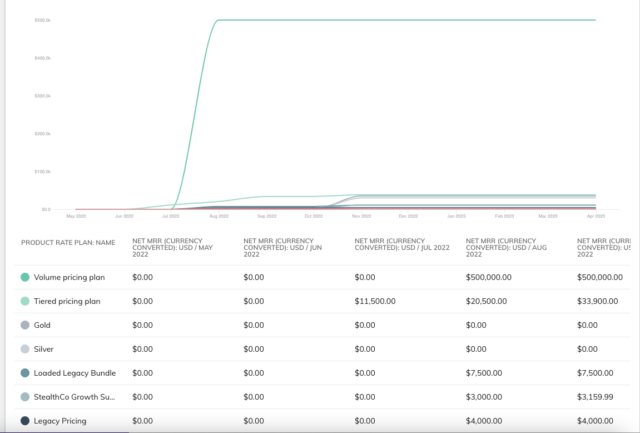
Zuora CPQ offers real-time reporting and analytics, allowing users to monitor performance, trends, and sales metrics such as Monthly Net MRR by rate plan. These insights help optimize sales strategies and product offerings. (Source: Zuora Glossary)

Does Zuora CPQ support electronic signatures and automated provisioning?

Yes, Zuora CPQ can integrate with electronic signature software for remote contract signing and with provisioning systems to automate service delivery based on contract terms. (Source: Zuora Glossary)

What support and training resources are available for Zuora CPQ?

Zuora offers extensive training through Zuora University (500+ courses), Quick Start Tutorials, 24x5 live global support, email and ticketing, and a community portal for peer support. Premium support options are also available. (Source: Knowledge Base)

Implementation, Pricing & ROI

How long does it take to implement Zuora CPQ?

Implementation timelines vary: focused scopes can be completed in as little as 30 days, typical implementations range from 30 to 90 days, and multi-product or multi-entity programs may take several months. Pre-built connectors can enable integrations within one day. (Source: Knowledge Base)

How easy is it to get started with Zuora CPQ?

Zuora CPQ is designed for straightforward onboarding, with resources like Quick Start Tutorials, Zuora University, developer guides, and 24x5 support. Customers can leverage community forums and premium support for additional help. (Source: Knowledge Base)

What is the cost of implementing a CPQ system?

There is no unified cost for implementing a CPQ system. Pricing varies across vendors and depends on licensing, implementation, and ongoing maintenance. It is important to compare features and pricing structures to ensure the best value. (Source: Zuora Glossary)

How does Zuora CPQ deliver ROI?

Zuora CPQ delivers ROI by automating quoting, reducing manual errors, accelerating sales cycles, improving quote accuracy, and enabling rapid pricing and packaging iterations. These efficiencies lead to increased revenue and reduced operational costs. (Source: Zuora Glossary, Knowledge Base)

What KPIs should be tracked when implementing CPQ?

Key KPIs include time spent per lead, churn rate, win rate, turnaround time, quote accuracy, and renewal rate. Tracking these metrics helps measure the success and impact of CPQ implementation. (Source: Zuora Glossary)

Security, Compliance & Trust

What security and compliance certifications does Zuora hold?

Zuora holds several certifications, including PCI DSS Level 1, SSAE 16 SOC1 Type II, SOC2 Type II, ISO 27001, HHS HIPAA, and SOC 3. These certifications validate Zuora's commitment to data protection and regulatory compliance. (Source: Knowledge Base)

How does Zuora CPQ ensure data security and privacy?

Zuora CPQ employs enterprise-grade security measures such as data encryption, role-based access controls, audit trails, and regular audits. The platform is designed to simplify compliance with regulations like GDPR, PCI DSS, and SOX. (Source: Knowledge Base)

How does Zuora support global compliance for CPQ users?

Zuora supports global compliance by enabling multi-currency and tax compliance, helping businesses operate across regions with different regulatory requirements. Built-in compliance features simplify adherence to standards like ASC 606, IFRS 15, and GDPR. (Source: Knowledge Base)

Use Cases, Pain Points & Success Stories

What common pain points does Zuora CPQ solve?

Zuora CPQ addresses slow, manual quoting and reconciliation processes, compliance challenges, scaling of usage-based and hybrid monetization, multi-entity and multi-currency operations, revenue leakage, data quality issues, and misalignment between quoting and billing systems. (Source: Knowledge Base)

Who is the target audience for Zuora CPQ?

Zuora CPQ is designed for finance professionals, IT leaders, product managers, operations teams, and sales/customer success teams in industries such as technology, SaaS, media, healthcare, manufacturing, telecommunications, and more. (Source: Knowledge Base)

What business impact can customers expect from Zuora CPQ?

Customers can expect recurring revenue growth, improved operational efficiency, higher customer retention, faster time-to-market, streamlined financial operations, and global compliance. Case studies show results like 140% increase in subscription customers and 131% ARR growth. (Source: Knowledge Base)

Can you share specific case studies or success stories for Zuora CPQ?

Yes, companies like Zoom scaled from 10 million to 300 million users, The Financial Times grew digital subscriptions, and Asana reduced SSP analysis time by over 90% using Zuora. See more at Zuora's Customer Case Studies. (Source: Knowledge Base)

What feedback have customers given about Zuora CPQ's ease of use?

Customers like Mindflash, TripAdvisor, FireHost, Briggs & Stratton, Buildium, and AppFolio have praised Zuora for its flexibility, ease of use, rapid implementation, and ability to reduce manual workloads and improve team morale. (Source: Knowledge Base)

What industries are represented in Zuora's CPQ case studies?

Industries include SaaS, communications, consumer goods, energy, finance, healthcare, high tech, home services, HR technology, manufacturing, media, OTT/entertainment, software, telecommunications, and video games. (Source: Knowledge Base)

Who are some notable customers using Zuora CPQ?

Notable customers include Zoom, Box, Zendesk, Asana, AppDynamics, The Financial Times, The Guardian, Schibsted ASA, The Seattle Times, Siemens Healthineers, GoPro, Fender, Schneider Electric, Caterpillar, Konecranes, Dell, Ford, Toyota, and General Motors. (Source: Knowledge Base)

Competition & Comparison

How does Zuora CPQ compare to other CPQ solutions?

Zuora CPQ is unique in its ability to quote any combination of subscriptions, products, and services for the entire subscriber lifecycle. It offers deep CRM integration, a flexible product catalog, and supports complex contract modifications, making it ideal for subscription-based and hybrid business models. (Source: Zuora Glossary, Knowledge Base)

Why should a customer choose Zuora CPQ over competitors?

Customers choose Zuora CPQ for its flexibility (supporting 50+ pricing models), scalability (proven by customers like Zoom), AI-powered tools, hybrid monetization, compliance and security certifications, and a track record of success with leading brands. (Source: Knowledge Base)

Glossary Hub / What is CPQ (Configure, Price, Quote) and Its Meaning

What is CPQ (Configure, Price, Quote) and Its Meaning

A person with curly hair and glasses stands smiling in a modern office, holding a tablet.

Perhaps you’ve heard of configure, price, quote (CPQ) software, but haven’t implemented it into your business. Or, maybe you just want to learn more about CPQ and the solutions available. This guide will explore everything you need to know about CPQ software.

Effective CPQ software should be able to handle complex contract structures, allow finance to invoice and recognize revenue accurately, and manage subscription modifications. It should provide the needed flexibility and guardrails for sellers to close deals rapidly.

Let’s explore how CPQ software has evolved to meet the demands of modern business and the benefits it can deliver to SaaS companies.


TL;DR

  • CPQ software (Configure, Price, Quote) helps sales teams quickly and accurately configure products or services, generate optimized pricing, and produce professional quotes for customers.

  • It streamlines complex pricing, discounts, and product rules, reducing errors and accelerating the sales cycle.

  • CPQ integrates with CRM and quote-to-cash systems to ensure consistent pricing and smoother handoffs from sales to billing.

  • By automating configuration and pricing, CPQ boosts sales efficiency, improves customer experience, and supports revenue growth—especially in businesses with complex offerings.

What is CPQ?

CPQ definition: Configure, Price, Quote

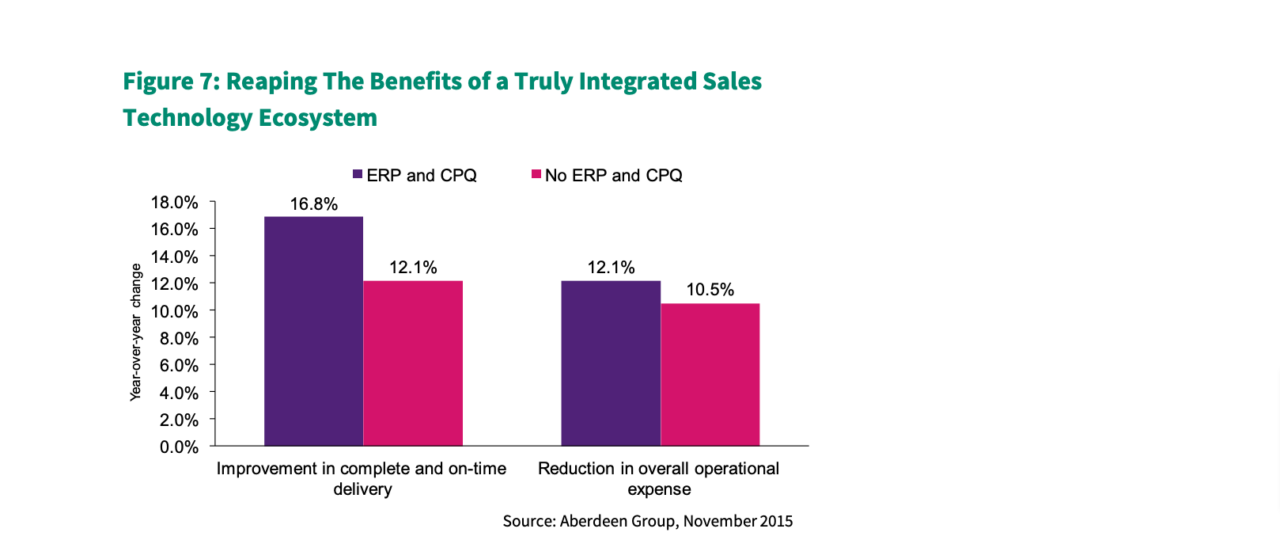
CPQ stands for configure, price, quote. CPQ technology helps businesses streamline their sales process by automating the configuration of complex products, determining accurate pricing based on various factors, and generating customer quotes. It integrates with native CRM and ERP to enable customer self-serve.

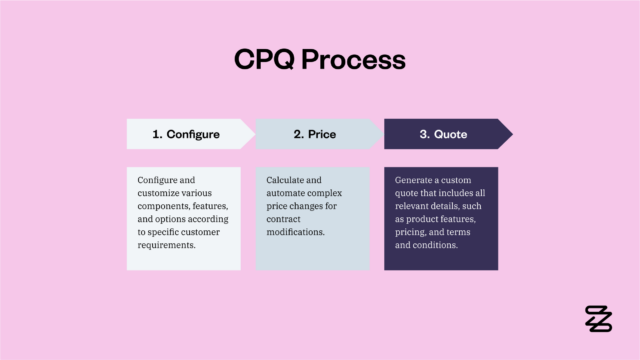
But what exactly does that mean for modern businesses? Let’s break down the core components of the CPQ process:

Flowchart of CPQ Process: 1. Configure - customize options. 2. Price - calculate changes. 3. Quote - create detailed quote.

Configure 

During the sales process, CPQ tools enable users to choose and customize various components, features, and options according to specific customer requirements.

For instance, suppose you’re a customer looking to purchase a computer. You have specific requirements regarding processor speed, memory capacity, storage options, and graphics capabilities.

A CPQ solution provides a user-friendly interface to configure your ideal computer system. You start by selecting the base model, and then you can customize it by choosing the processor, memory, storage, graphics card, and any other desired features.

As you make each selection, the CPQ software ensures that the chosen components are compatible with valid options for your chosen base model.

It also provides real-time feedback, displaying the updated price and specifications of the configured system.

Price 

CPQ software automates the pricing process, combining recurring or subscription, usage-based, and one-time pricing models in complex hybrid methods such as consumption-based, prepaid, drawdown, or minimum commit plus flat fees. The power of CPQ is clear when calculating complex price changes for contract modifications.

Quote 

Once the product has been configured and priced, CPQ software generates a custom quote that includes all relevant details, such as product features, pricing, and terms and conditions.

CPQ guardrails ensure that quotes are accurate, comply with company rules, and follow required internal approval processes before being sent to the customer for review and approval.

Main CPQ features

Before you choose any CPQ platform, there are certain essential features the right platform for your business must have. Here are the things you need from a CPQ platform:

Completely automate the sales process

Arguably, the primary function of a CPQ is to provide an easy and fast quote–generating tool. If a CPQ still requires manual labor to generate quotes, it’s not flexible enough. Keep searching for a more suitable solution.

Speed

Have you heard about the sales reps that take days to generate quotes? When customers ask for a pricing proposal, they want it fast. You need a CPQ that enables sales agility. Choose a CPQ solution that allows sales agility by providing a fast and efficient quoting experience. The system should quickly guide sales reps to the right set of products and prices, eliminating the need to sift through extensive SKUs.

Scalability

As your business grows, you need a platform to handle your increasing workloads and demands without impacting your performance. A scalable CPQ saves you from costly, disruptive system upgrades and migration—factors such as the number of users, products, and pricing configurations the platform can support tell you how scalable the vendor is.

Native CRM integration

Sales ops work with different tools depending on your business models and requirements. So, the CPQ platform must integrate with CRM and ERP to facilitate seamless data transmission. This offers the following benefits:

  • Sales and finance team to get detailed insights into customer data, deal history, and pricing information. They can track customer interactions, analyze the sales pipeline, and make data-driven decisions.

  • Facilitates effective management of prepaid drawdowns, subscriptions, and amendments, ensuring accurate and timely execution.

Customization and flexibility

Consider a CPQ solution that allows your sales team to structure deals to satisfy customers and accommodate various pricing models (bundles, recurring, usage, promos, etc.). Such a solution should enable your sales team to sell, price, and execute renewal according to their preferences.

The solution should also support different price packages in different ways (bundles; one-time, recurring, usage; promos; different options for different channels). Each business has its unique product configurations, pricing models, or approval workflows requiring customization options and specific requirements.

Great user experience

A great CPQ is intuitive, user-friendly, and enables fast quoting for your sales teams. The CPQ platform with great user experience includes guided selling, dynamic pricing, and a visually appealing interface.

Pricing and ROI

Watch out for CPQ tools with hidden fees. Some CPQ solutions have low initial costs, but you incur other fees to use certain features as you scale. Before you commit, determine their pricing structure, implementation costs, licensing fees, and ongoing maintenance expenses. Compare the features and functionality different platforms offer to ensure you get the best value for your investment.

Industry expertise

A vendor with industry expertise is likely to have a CPQ solution with the needed features and components that align with your business needs. However, a lack of industry expertise often results in a CPQ solution with inadequate customizations and configuration capabilities.

Support and training

As you explore CPQ solutions, you may need help at times. Choose a responsive vendor that offers comprehensive training assistance and effective customer support when needed.

Security and compliance

What are the vendor security measures and data protection capabilities? Great CPQ vendors comply with industry regulations and standards to safeguard sensitive customer and pricing information.

References and reviews

Do they have past customers? Ask for reviews from past customers and existing customers of the CPQ platform. Asking for references from those in your industry can go a long way to helping you choose a good or bad vendor. Ensure you gather valuable insights into the platform’s performance, reliability, and customer satisfaction.

Future roadmap

Innovation is key. Consider the vendor’s future roadmap and commitment to innovation. A forward-thinking CPQ platform will continually enhance its features and functionality, keeping up with evolving market trends and technology advancements.

When should you use CPQ software?

CPQ software proves valuable in various scenarios, particularly where traditional CRM systems struggle. It makes the quoting process exceptionally fast and easy.

A CPQ is particularly useful if your company has:

High-complexity configurable products

CPQ software shines when handling products that offer numerous customization options, variations, and interdependencies. Its systems are specifically designed to tackle the challenges posed by product complexity. Companies can use CPQ to simplify and automate customizing and pricing these complex products.

Multi-channel sales

When a company operates through multiple sales channels, such as direct sales, resellers, and e-commerce platforms, it can be challenging to keep track of all the moving parts. Salespeople face many challenges, such as inconsistent pricing, fragmented customer data, channel conflicts, and inventory management challenges.

CPQ tools help them tackle these challenges by:

  • Providing a centralized platform to ensure pricing and quoting consistency across these channels.

  • Integrating with various systems to ensure real-time inventory visibility and streamline order management.

High-volume quoting

As companies scale, requests for quotes (and the sales team’s workload) increase. CPQ comes to the rescue by automating various aspects of the quoting process, reducing the time and effort required to create each quote. This enables sales teams to scale more efficiently, even when faced with a high volume of quoting tasks.

Reduced sales performance

If your sales team’s performance is suffering even with an influx of leads, you might need a CPQ tool to make their workflow more efficient.

With a solid CPQ tool, your sales team can focus more on selling and less on generating quotes. This will improve their overall performance and drive more revenue.

Zuora CPQ allows you to configure quotes across the customer lifecycle, from new sign-ups to upsells to renewals, and ensure all key metrics and downstream billing are accurately captured.

How to implement CPQ

Now that you have an idea of what CPQ is and how you should use it, let’s go through some steps to help you implement CPQ into your business.

Determine goals: Before beginning the CPQ implementation process, think about your goals around some important KPIs:

  • Time spent per lead

  • Churn rate

  • Win rate

  • Turnaround time

  • Quote accuracy 

  • Renewal rate

Focus on top CPQ features: CPQ features are well worth the investment, but you also don’t want to overwhelm your team with too much to implement at once. Pick the features that are most important to your sales goals with qualities and components, such as:

  • Flexibility

  • Scalability

  • Support

  • Integration

  • Ease of use

  • Reporting

Pick an all-star team: Assemble a project team to keep the process moving. You’ll want to chat with your CPQ implementation partner to determine the best strategy for setup and recruit top performers to ensure the setup goes smoothly.

Optimize the quote-to-cash process: To successfully implement CPQ, your quote-to-cash process must be in check. Conduct an assessment to determine if any changes need to be made to your process.

Dive into data management: CPQ software is meant to help your sales team work more efficiently with the correct data in front of them to create accurate quotes. Your data may be located in different spreadsheets and other platforms, so you’ll want to organize and move it into one place for efficiency.

Document the process: Keep the sales process moving by documenting any training. Document the following to help you with the quoting process:

  • Added products

  • Approvals

  • Signed documents

  • Closed wins

  • Renewals

Establish post-implementation support: Stay in contact with your implementation partner to avoid delays and keep the sales process moving along efficiently. New software takes time to learn, so asking questions early on will help speed up the process.

Measure success: Now that you’ve implemented your CPQ software, look at your sales performance, CPQ data, and any process improvements to see what went well and what to improve on.

How can CPQ help improve the sales process?

Good CPQ tools can do much to improve the sales process. Sales reps only spend 35% of their time engaging with prospective buyers and the rest on administrative tasks. Having the correct software can allow sales reps to spend more time connecting with clients.

Here are other specific ways using a CPQ tool can boost your sales process:

Sell more quickly

Research shows that 50-90% of the buyer’s journey is finished before the customer talks with a sales representative. CPQ systems speed up the sales cycle and increase revenue by reducing time waste. This means that sales teams can focus on closing deals faster. Here’s how CPQ achieves this:

  1. Maximize client interaction to reduce wasted time: CPQ solutions streamline time-consuming administrative tasks by providing a straightforward, error-proof process for configuring and pricing products or services.

  2. Build sales momentum: CPQ helps maintain momentum by enabling quick response times when prospects request quotes or information. Providing relevant materials quickly keeps prospects engaged, which is crucial as market conditions and customer needs can change rapidly.

Delays in the sales cycle create opportunities for agile competitors to seize prospects’ attention. CPQ solutions simplify the sales cycle, reducing delays and ensuring a continuous flow. This reduces the risk of lost prospects and increases profits.

Streamline the approval-deal process

The B2B sales cycle is notoriously long and involves several decision-makers. Integrating CPQ into your sales process can improve and shorten the deal-approval process for operational efficiency.

The following CPQ features expedite approvals, enhance collaboration, and ensure efficient operations:

  • Automatic approval notifications: Many CPQ tools notify stakeholders and decision-makers when a deal reaches the approval stages. This eliminates the delay caused by manual communication.

  • Comprehensive deal details: CPQ presents comprehensive deal details such as pricing and specific terms and conditions on one screen or in concise emails, facilitating informed decision-making.

  • Deal-approval visibility: CPQ tools support transparency by tracking approval progress, which enables effective communication and prevents delays.

  • Compliance and audit readiness: CPQ software provides sales teams with a detailed audit trail, which can be invaluable for scrutiny and regulatory oversight. It also allows sales teams to evaluate the decision-making process, showing who, when, and why a decision was made.

Related guide: How to bridge the gap between sales and finance

Enhance sales with accurate branded proposals and quotes

Creating accurate proposals or quotes with corporate branding and personalization can improve your business sales. One of the top three things that encourages consumers to pay more for a more expensive product is if it conveys brand reputation and trustworthiness (17%). Nearly half of consumers (44%) are also more loyal to a brand with a good reputation and trustworthiness.

For many salespeople, a quote and proposal are all about accuracy — they care little about how aesthetically pleasing the documents are to their clients.

This could lead to seemingly small, but reputation-damaging errors in customer-facing documents, such as outdated or low-resolution logos and images, misspellings, inconsistent adherence to brand guidelines, and amateurish layouts.

But with the right CPQ solution, you can access a comprehensive document tool tailored to your brand compliance. This tool enables your salespeople to provide customers with accurate quotes or proposals and visually appealing documents that present your brand as it is.

Enable guided selling

CPQ systems automatically simplify customer needs by examining them through simple, user-friendly questions. Once the customer enters their response, the CPQ intelligently presents the seller with suitable choices.

This method follows a well-defined logic connection between a customer’s needs and product selections.

Here’s why it is useful:

  • Selling is initiated purely by relying on customer-centric questions rather than product knowledge — leading to more conversion.

  • It also facilitates onboarding and minimizes the cost of training new salespeople since salespeople don’t need to memorize an extensive list of product names and codes.

  • It leaves almost zero room for wrong product selection.

Ensure error-free orders

One of the biggest selling points of CPQ is that it ensures error-free orders. A CPQ eliminates the need for manual orders. For example, it integrates with the CRM system, allowing sales teams to access customer information directly. It also configures the accurate product so that feasible product combinations are presented to customers, eliminating the risk of errors in the order.

Simplify subscription management

With CPQ subscription-based revenue, companies can manage their customer subscription without going through the pains of manual processes.

CPQ systems effortlessly enable tracking of customer renewal dates, adjustment of pricing based on different subscription tiers, and handling upgrades and downgrades.

It also supports renewals, up-sells, and cross-sells, increasing revenue and profits. This makes it easier for businesses to identify opportunities to offer additional services or upgrade subscription plans.

CPQ software accurately calculates pricing adjustments. It can then send instructions to supporting systems to remove or alter MACD (Move, Add, Change, Delete) records, ensuring accurate pricing changes and updates.

These features allow businesses to minimize errors and provide a streamlined subscription management process.

What to look for in CPQ solutions

There are several important things to look for when choosing a CPQ solution for your business.

System integrations: A good CPQ solution should easily integrate with ERPs, CRMs, and other systems.

Easy communications: Part of an efficient sales process is being able to communicate with internal and external members of your team. Your CPQ solution should have a central location to coordinate with everyone involved.

Custom quotes: Product quotes are not a one-size-fits-all. Your CPQ software should allow you to make adjustments to pricing quickly and easily.

Intuitive platform: A software like this should make your sales process easier. It should be accessible to all team members involved without extensive training.

Scalability: As your business evolves, the CPQ tool of your choice should scale with it. Look for a solution that will easily adapt to workload and other changes.

Cloud delivery: Cloud-based software will enable all team members to access the system from anywhere.

Reporting: Reporting features help you monitor performance, trends, and sales.

Platform assistance: Even experienced platform users will have questions now and then. Ensuring your solution has a support team to walk you through any hurdles will reduce confusion.

How CPQ tools integrate with your modern tech stack

The right CPQ software can unify sales, revOps, and finance into a streamlined process integrated with the rest of your tech stack. The most common integrations and downstream operations of CPQ are:

Billing/payments solutions

CPQ should integrate with a business’s billing and payment systems to avoid manually re-keying orders into the accounting systems. While most CPQs can send a new order contract to a billing system, many struggle to amend an existing contract.

That requires CPQ to pull data from the billing system, modify it within the CPQ tool, and push it back to billing after approvals. Zuora CPQ is the only quoting software purpose-built for quoting any combination of subscriptions, products, and services for the entire subscriber lifecycle.

Related: How CPQ supports complex contract modifications and drives NPS

CRM

Leading CPQs integrate natively and deeply with CRM, with a bidirectional data sync deep enough to handle complex upgrades and midterm changes. Simplifying the sales process in CRM, sellers quote on a single screen in their CRM tool with Zuora CPQ.

Product catalog

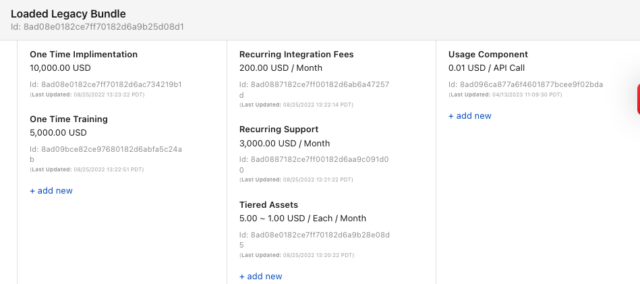
CPQ software is only as strong as the integrated product catalog. Many SaaS businesses lack the tools to support contract terms on the contract such as ramps, start dates, and renewals. They cannot construct complex recurring products with multiple rates plans and elements such as one-time fees, usage-based fees, and tiered pricing in their product catalog.

Zuora boasts an incredibly flexible and powerful product catalog that is purpose-built to handle modern business.

Real-time metrics

Good CPQ tools provide rich real-time reports where you can slice and dice data into powerful views like Monthly Net MRR by rate plan to see what plans are performing best.

Electronic signature

CPQ software often includes or integrates with electronic signature software, enabling customers to sign contracts and close deals remotely.

Provisioning

CPQ software can integrate with your provisioning system to automate provisioning according to your contracts. This is particularly important in a contract with multiple time-based terms requiring multiple provisioning steps.

Customer communications

Besides initiating provisioning, CPQ software can kick off customer communications, such as welcome emails and onboarding materials, earning higher customer satisfaction and retention.

Custom workflows

Last-mile custom workflows can replace manual engineering and efforts, enabling businesses to tailor their sales processes to their specific needs and requirements.

When and why should startups consider adopting a CPQ solution?

CPQ is often the first opportunity for startups to connect the silos between sales and finance. Once startups establish product market fit and are ready to scale, they should consider CPQ to scale and achieve the following goals.

Scale enterprise/assisted sales

Successful B2B and Product-Led Growth (PLG) startups often move upstream to grow revenue, increase contract sizes and increase their customer base. To transition successfully, startups should turn to CPQ software to standardize deals, implement guardrails for sales, manage complex deals, and operationalize approval processes.

Iterate pricing and packaging

To capture more market share, increase revenue, and hone in on optimal pricing, startups need the flexibility to iterate and refine pricing regularly. Openview recommends that SaaS companies assess pricing for improvement opportunities at least annually.

For many startups, the tech debt to iterate pricing and packaging for sales or product-led sales is too great. Zuora’s product catalog and Zuora CPQ enable business users to iterate and launch pricing and packaging rapidly to stay competitive.

Automate the quote-to-cash process

At scale, startups struggle with time-consuming and error-prone manual processes for quoting, invoicing, and payments.

Automating the quote-to-cash process with Zuora CPQ helps reduce errors, improve accuracy, and speed up sales while freeing finance teams to focus on more strategic activities.

Standardize with key hires

Many startups wait until experienced sales and finance leaders are hired to standardize the sales and finance processes. However, adopting a CPQ solution early on can expedite the standardization process and provide a solid foundation for future growth.

Enhance customer experience

Most startups have a lean team, and providing customer experience can be daunting. CPQ software improves startups’ sales experience by enabling them to create standardized deals, streamlined approval processes, and accurate pricing and packaging. Startups can deliver a frictionless and satisfying experience, improving customer satisfaction and retention.

Related: Why startups should consider CPQ

Zuora CPQ helps your business to quote quickly and efficiently. It is the only quoting software created to quote any combination of products, subscriptions, and services for the whole subscriber lifecycle. To learn more, take a tour and speak with an expert today.

FAQ about CPQ

Can CPQ integrate with e-commerce platforms for online sales?

Yes, CPQ software with e-commerce management integrates with e-commerce platforms. Here are a few CPQ solutions with e-commerce capability:

Zuora CPQ: Our CPQ solution works with many platforms, from modern e-commerce platforms like Bigcommerce to online meeting platforms like Zoom. Zuora CPQ lets you set up dynamic pricing for different services at breakneck speed.

PandaDoc: This is a SaaS platform with over 50,000 users that enables users to create, easily manage, and e-sign documents. Its payment features aim to reduce average payment time and fast close.

Cincom CPQ: Cincom CPQ integrates with popular e-commerce platforms, including Magento and Shopify, to provide a seamless product and pricing information flow.

PROS Smart CPQ: PROS Smart CPQ integrates with e-commerce platforms, empowering businesses to deliver personalized and dynamic pricing and quoting customer experiences.

QuoteWerks: This leading CPQ solution enables you to search and build quotes on many platforms. It works with ecommerce, vendor and distribution, accounting, and payment gateway platforms.

Related: Best CPQ software with ecommerce Management

CPQ across industries

CPQ is used across a range of industries. It’s quite common among businesses that sell complex products or services specifically in the manufacturing industry due to its complex product and services configurations –– but it’s also used in others.

The industries listed below can implement CPQ in order to streamline their sales process, enhance their customer experience, and grow their revenue:

  1. Manufacturing

  2. Technology

  3. Automotive

  4. Human Resources

  5. Construction and Engineering

  6. Business Services

  7. Healthcare

  8. Financial Services

  9. Telecommunications

  10. Software & IT

  11. Computer & Networking Security

  12. Food and Beverage

  13. Logistics and Supply Chain

  14. Marketing and Advertising

  15. eLearning

Is CPQ scalable and suitable for businesses of different sizes?

Yes, most CPQ solutions are scalable. Due to their flexibility, modular approach, integration capabilities and scalable infrastructure, most CPQ solutions are designed to be scalable and suitable for businesses of different sizes.

Whether you’re a small startup, a mid-size business, or a large enterprise, most CPQ vendors can meet your specific business needs and scale as your company grows.

Can CPQ handle global pricing and multiple currencies?

Yes, some CPQ vendors, including the Zuora CPQ platform, can support global pricing and multiple currencies.

Related: How do I handle multi-currency in Zuora

Does CPQ support mobile access or have a mobile app?

Yes, most CPQ vendors support mobile access and have mobile apps.

Can CPQ generate customized proposals and contracts based on customer requirements?

Yes, aside from fast quoting, the oft-touted function of a CPQ is to generate customized proposals and contracts tailored toward customers’ needs.

What is the cost of implementing a CPQ system, including licensing, implementation, and ongoing maintenance?

There’s no unified cost or fee for implementing a CPQ system. Pricing varies across different vendors.

Is CPQ part of ERP?

Yes, CPQ can be part of an ERP system.

ERP systems may include finance, HR, inventory management, CRM, and CPQ modules/integrations. This streamlines the data flow process between various departments, such as sales and pricing.

Is CPQ part of CRM?

Yes, CPQ is often considered a part of CRM. It provides a unified solution that equips sales teams with tools to create quotes quickly and accurately based on predefined rules.