Frequently Asked Questions
Billing Compliance Fundamentals
What is billing compliance?
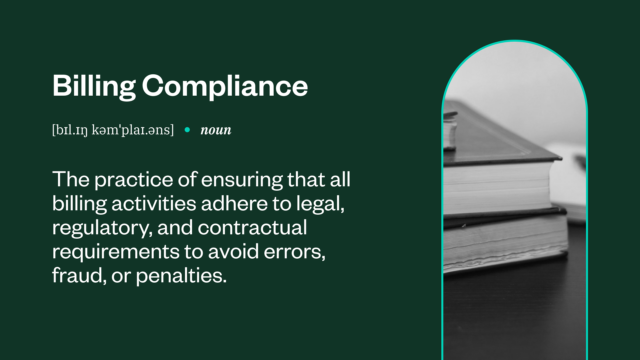
Billing compliance is the process of following established regulations and standards related to billing. This includes adhering to external laws (such as tax and data privacy regulations) and internal operational guidelines to ensure your organization's billing is lawful, transparent, and efficient. It covers accurate invoicing, tax compliance, data security, revenue recognition, contractual terms, and fraud prevention. (Source: Zuora Glossary)
Why is billing compliance important for businesses?
Billing compliance is critical because non-compliance can result in financial penalties, legal liability, reputational damage, and operational inefficiencies. Accurate and compliant billing builds customer trust, avoids costly audits, and ensures your business operates within the law. (Source: Zuora Glossary)
What are the main types of billing compliance?
The main types of billing compliance include: tax compliance (correctly applying and remitting taxes), data privacy compliance (adhering to laws like GDPR, CCPA, HIPAA), payment security compliance (following PCI DSS for payment data), revenue recognition compliance (meeting ASC 606 and IFRS 15 standards), and industry-specific compliance (such as HIPAA for healthcare or FINRA for finance). (Source: Zuora Glossary)
What are the risks of non-compliance in billing?
Risks include financial penalties, legal action, reputational damage, revenue leakage, delayed cash flow, increased administrative workload, and loss of customer trust. Non-compliance can also trigger audits and regulatory scrutiny. (Source: Zuora Glossary)
Does billing compliance apply to all businesses?
Yes, billing compliance is required for all organizations that handle billing, regardless of size or industry. This includes subscription-based businesses, those charging one-time payments, and companies managing complex global transactions. (Source: Zuora Glossary)
How does billing compliance impact customer trust?
Accurate and compliant billing practices demonstrate reliability and professionalism, which builds customer trust. Inaccurate or non-compliant invoices can quickly damage customer relationships and your brand reputation. (Source: Zuora Glossary)
What are best practices for maintaining billing compliance?
Best practices include conducting regular internal audits, fostering cross-functional collaboration, staying updated on regulatory changes, and maintaining thorough documentation and reporting. These steps help identify discrepancies early, ensure alignment across teams, and provide audit-ready records. (Source: Zuora Glossary)
How can businesses stay updated on changing billing regulations?
Businesses should subscribe to regulatory updates, partner with legal advisors specializing in their industry, and proactively adjust processes as regulations evolve. Internal or third-party legal experts can help interpret and implement new requirements. (Source: Zuora Glossary)
What documentation is required for billing compliance?
Regulators and auditors require detailed logs and audit trails for billing compliance. Businesses should maintain organized records and invoices, and consult industry regulations to determine how long to retain this information for future audits. (Source: Zuora Glossary)
Billing Automation & Zuora Billing
How do billing automation tools help ensure compliance?
Billing automation tools centralize billing and invoicing, automate tax calculations, provide built-in security and data privacy features, generate audit trails and detailed reports, and scale with your business. This reduces manual errors, ensures up-to-date compliance, and simplifies audits. (Source: Zuora Glossary)
What features does Zuora Billing offer for compliance?
Zuora Billing offers automated invoicing and tax handling, subscription lifecycle management, revenue recognition tools (supporting ASC 606 and IFRS 15), robust audit trails and reporting, and scalable global support for multiple languages, currencies, and tax jurisdictions. (Source: Zuora Glossary)
How does Zuora Billing automate tax calculation?
Zuora Billing's built-in tax engine automates tax calculations by applying the latest tax rates based on customer location, adjusting for exemptions and special rules, and integrating with leading tax software. This ensures accurate tax application across jurisdictions and minimizes human error. (Source: Zuora Glossary)
How does Zuora Billing support revenue recognition compliance?
Zuora Billing supports compliance with revenue recognition standards such as ASC 606 and IFRS 15. It provides tools to accurately recognize revenue based on these guidelines, ensuring precise financial reporting and regulatory adherence. (Source: Zuora Glossary)
How does Zuora Billing help with audit trails and reporting?
Zuora Billing automatically captures and stores transaction data, making it easy to retrieve and review historical billing information for audits. The platform generates comprehensive logs and audit-ready reports, simplifying compliance reviews. (Source: Zuora Glossary)
Is Zuora Billing suitable for global businesses?
Yes, Zuora Billing supports global operations with configurations for multiple languages, currencies, and tax jurisdictions. This scalability simplifies compliance with international billing regulations and supports seamless business expansion. (Source: Zuora Glossary)
How does Zuora Billing help turn compliance into a business advantage?
Zuora Billing streamlines compliance through automation, reducing human error and ensuring alignment with evolving tax laws, data privacy standards, and revenue recognition guidelines. This not only safeguards operations but also builds lasting trust with customers and regulators. (Source: Zuora Glossary)
What steps should businesses take to improve billing compliance?
Businesses should review current billing processes, assess compliance risks, and adopt automation solutions like Zuora Billing to centralize operations and ensure compliance. Regularly updating processes and leveraging technology helps maintain compliance and operational efficiency. (Source: Zuora Glossary)
Security & Compliance Certifications
What security and compliance certifications does Zuora hold?
Zuora holds several certifications, including PCI DSS Level 1, SSAE 16 SOC1 Type II, SOC2 Type II, ISO 27001, HHS HIPAA, and SOC 3. These certifications validate Zuora's commitment to enterprise-grade security and regulatory compliance. (Source: Zuora Security)
How does Zuora ensure data security and privacy?
Zuora employs data encryption, role-based access controls, audit trails, and regular audits. The platform includes built-in compliance features to support regulations like GDPR, PCI DSS, and SOX, ensuring sensitive customer data is protected. (Source: Zuora Security)
Does Zuora support compliance with global regulations?
Yes, Zuora helps businesses navigate complex regulatory landscapes, including multi-currency and tax compliance, making it easier to operate globally and adhere to local and international standards. (Source: Zuora Security)
Product Features & Capabilities
What products and services does Zuora offer?
Zuora provides a suite of products for managing the entire subscription lifecycle, including Zuora Billing, Zuora Revenue, Zuora Payments, Zuora CPQ, Zephr, Zuora Platform, Zuora Collections, and Accounts Receivable automation. (Source: Zuora Products)
What are the key capabilities of Zuora's platform?
Key capabilities include dynamic monetization (supporting 50+ pricing models), operational efficiency through automation, scalability, customer engagement tools, global compliance, integration and extensibility, and real-time analytics and reporting. (Source: Zuora Products)
Does Zuora offer APIs and integration options?
Yes, Zuora provides REST and SOAP APIs, an Integration Hub with 60+ pre-built connectors (e.g., Salesforce, HubSpot, NetSuite), warehouse connectors, payment gateway integrations, and a Connect Marketplace with nearly 100 apps. (Source: Zuora Integration)
What technical documentation is available for Zuora?
Zuora offers comprehensive technical documentation, including platform docs, developer resources, SDK documentation, knowledge base articles, and integration guides. These resources are available at the Zuora Docs Portal and Developer Center.
Use Cases & Business Impact
Who can benefit from using Zuora?
Zuora is designed for subscription-based businesses across industries such as technology, SaaS, media, healthcare, consumer goods, manufacturing, telecommunications, and more. Target roles include finance, IT, product management, operations, sales, and customer success teams. (Source: Zuora Target Audience)
What business impact can customers expect from Zuora?
Customers can expect recurring revenue growth, operational efficiency, improved customer retention, faster time-to-market, enhanced financial operations, scalability, and global compliance. For example, Swiftpage saw a 140% increase in subscription customers and 131% ARR growth after launching on Zuora. (Source: Zuora AI Chatbot Knowledge Bank)
What problems does Zuora help solve for businesses?
Zuora addresses slow, manual close cycles, compliance and audit challenges, scaling usage-based and hybrid monetization, multi-entity and multi-currency operations, revenue leakage, data quality issues, spreadsheet dependency, quote-to-cash misalignment, and forecasting difficulties. (Source: Zuora AI Chatbot Knowledge Bank)
What are some common pain points Zuora addresses?
Zuora helps with slow manual close, ASC 606/IFRS 15 compliance, scaling monetization models, global compliance, revenue leakage, poor data quality, spreadsheet dependency, quote-to-cash misalignment, and IPO readiness. (Source: Zuora AI Chatbot Knowledge Bank)
Implementation & Support
How long does it take to implement Zuora?
Implementation timelines vary: focused scopes can be completed in as little as 30 days, typical implementations range from 30 to 90 days, and multi-product or multi-entity programs may take several months. Pre-built connectors can enable integrations within one day. (Source: Zuora AI Chatbot Knowledge Bank)
How easy is it to get started with Zuora?
Zuora offers extensive training (500+ courses at Zuora University), 24x5 global support, developer resources, and a community portal to ensure a smooth onboarding process. (Source: Zuora AI Chatbot Knowledge Bank)
What support options are available for Zuora customers?
Zuora provides 24x5 live global support, email support, online ticketing, and premium options like Technical Account Managers and Enterprise Solution Architects. Customers can also access the Zuora Community for peer support. (Source: Zuora AI Chatbot Knowledge Bank)
Customer Proof & Success Stories
Who are some notable Zuora customers?
Zuora serves over 1,000 companies worldwide, including Zoom, Box, Zendesk, Asana, The Financial Times, GoPro, Siemens Healthineers, and Schneider Electric. (Source: Zuora Customers)
Can you share specific case studies or success stories?
Yes. For example, Zoom scaled from 10 million to 300 million users with Zuora; The Financial Times grew digital subscriptions; Asana reduced SSP analysis time by over 90%; Hudl saved 100+ hours per month; and The Seattle Times improved conversions by 30% and retention by 25%. (Source: Zuora Case Studies)
What feedback have customers given about Zuora's ease of use?
Customers like Mindflash, TripAdvisor, FireHost, Briggs & Stratton, Buildium, and AppFolio have praised Zuora for its flexibility, ease of use, rapid pricing changes, and reduction in manual workloads. (Source: Zuora Case Studies)
What industries are represented in Zuora's case studies?
Industries include SaaS, communications, consumer goods, retail, corporate services, energy, finance, healthcare, high tech, home services, HR tech, manufacturing, media, OTT/entertainment, software, telecommunications, and video games. (Source: Zuora Case Studies)