Frequently Asked Questions

Freemium Business Model Fundamentals

What is the freemium business model?

The freemium business model offers a basic version of a product or service for free, while charging for advanced or premium features. This approach aims to attract a large user base and convert a portion of those users into paying customers. It is widely used in software, mobile apps, and digital services to lower barriers to adoption, build brand awareness, and reduce customer acquisition costs. (source)

How does the freemium model differ from a free trial?

In a freemium model, users can access a basic version of the product indefinitely, with the option to upgrade for more features. In contrast, a free trial provides access to the full or limited product for a set period, after which users must pay to continue. Freemium focuses on long-term engagement, while free trials create urgency for conversion. (source)

What are the main pros of the freemium business model?

The main advantages include rapid user acquisition at low cost, increased brand awareness, and the generation of high-quality leads who are already interested in your product. The model is especially effective for products with network effects or those seeking to build a large user base quickly. (source)

What are the main cons of the freemium business model?

Potential drawbacks include low conversion rates from free to paid users, risk of cannibalizing paid business if the free version is too generous, ongoing costs to support free users, and possible brand devaluation if users perceive the product as low value due to its free tier. (source)

How does the freemium model make money?

The freemium model generates revenue primarily through upgrades from free users to paid subscriptions. Additional revenue can come from advertising in the free version or partnerships and affiliate income. (source)

Why is freemium so successful for SaaS and digital products?

Freemium lowers the barrier to entry, allowing users to try a product without financial commitment. This encourages widespread adoption and builds trust, increasing the likelihood of conversion to paid subscriptions as users seek enhanced features. (source)

Can a freemium model lead to brand devaluation?

Yes, offering a free version can sometimes lead to perceived brand devaluation, where customers may associate the brand with lower quality. To counteract this, businesses should clearly communicate the value of premium features, maintain high standards for the free version, and showcase success stories from paying customers. (source)

Is Google a freemium company?

Yes, Google uses the freemium model for many services. For example, Google Drive offers free storage up to a limit, with paid upgrades for more space. Google Workspace provides basic features for free and charges for advanced collaboration tools. (source)

Is Amazon a freemium model?

Amazon does not primarily operate as a freemium model, but it incorporates elements of this approach in some services, such as offering a free trial of Prime membership. Most core Amazon services use traditional subscription or pay-per-use models. (source)

Does freemium still work in 2024?

Yes, the freemium model continues to be effective, especially in SaaS, mobile apps, and online services. However, its success depends on execution, user experience, and ongoing innovation to maintain conversion rates and user interest. (source)

Best Practices & Conversion Strategies

What are best practices for implementing a freemium model?

Best practices include clearly defining product limitations between free and premium tiers, ensuring the free version is valuable but not too generous, regularly measuring user engagement and conversion rates, and continuously optimizing based on data and feedback. (source)

How can I increase conversion rates from free to paid users?

Strategies include making the paid version clearly worth the upgrade, allowing free users to experience premium features temporarily, providing excellent customer support, using data to nurture leads, and making the upgrade process seamless. (source)

What is a typical conversion rate for freemium models?

Conversion rates for freemium models typically fall between 2-5% on average, though this can vary widely depending on the product and execution. (source)

How should I set limitations for the free version?

Limitations should be chosen to entice users to upgrade without making the free version unusable. Common approaches include restricting advanced features, usage limits, or support options, while ensuring the free tier still delivers real value. (source)

How can I measure the success of a freemium model?

Success can be measured using KPIs such as user acquisition rates, conversion rates, user engagement levels (DAU/MAU), churn rate, customer lifetime value (CLV), and overall revenue growth. (source)

What are common pitfalls to avoid with freemium?

Common pitfalls include making the free version too generous, failing to communicate the value of premium features, not tracking the right metrics, and underestimating the cost of supporting free users. (source)

How can I use data to improve freemium conversions?

Analyze which features free users value most, track engagement and churn, and use this data to create targeted lead nurturing campaigns that highlight the benefits of upgrading. Continuous measurement and iteration are key. (source)

What role does customer support play in freemium success?

Excellent customer support for free users can increase satisfaction and the likelihood of upgrading. Every interaction is an opportunity to build trust and demonstrate value. (source)

How can I make it easy for users to upgrade from free to paid?

Ensure the upgrade process is seamless, with pre-filled forms and minimal steps. Offer flexible pricing plans and highlight the benefits of upgrading at key moments in the user journey. (source)

Industry Examples & Use Cases

What are some examples of SaaS companies using the freemium model?

Spotify, Zoom, and Evernote are leading SaaS companies that use the freemium model. Spotify offers free streaming with ads and limitations, Zoom provides free virtual meetings with time and participant limits, and Evernote offers basic note-taking with restrictions on storage and device sync. (source)

How did Zoom use the freemium model to scale its business?

Zoom allowed users to host free meetings with time and participant limits, encouraging upgrades for more capacity. This approach helped Zoom scale from 10 million to 300 million users, as detailed in their Zuora case study.

What industries commonly use the freemium model?

The freemium model is prevalent in SaaS, mobile apps, online games, educational platforms, and digital media. It is especially effective for products with network effects or those seeking rapid user base growth. (source)

What percentage of mobile app developers use the freemium model?

According to a recent survey of 400 mobile app developers, 54% reported using the freemium model, and 33% said it generated the most revenue for their business. (source)

How does Zuora support companies using the freemium model?

Zuora provides flexible billing, subscription management, and monetization tools that allow companies to design, deploy, and iterate on freemium pricing and packaging. Zuora Billing, for example, enables rapid experimentation with pricing strategies. (source)

What are the key metrics for tracking freemium success?

Key metrics include user acquisition rates, conversion rates, user engagement (DAU/MAU), churn rate, customer lifetime value (CLV), and overall revenue growth. (source)

How can I experiment with freemium and free trial offers?

You can test both approaches by offering a freemium version for a period, then switching to a free trial, or running concurring experiments to see which converts more users. Continuous testing helps determine the best fit for your business. (source)

What is the impact of network effects in freemium models?

Network effects can amplify the value of a product as more users join, making the freemium model especially powerful for platforms where user interaction increases overall value, such as social apps or collaboration tools. (source)

How does advertising fit into the freemium model?

Some companies monetize their free tier by including ads, generating revenue from ad placements while encouraging users to upgrade to an ad-free premium version. (source)

Zuora Platform, Features & Technical Capabilities

What products and services does Zuora offer for subscription businesses?

Zuora offers a suite of products including Zuora Billing, Zuora Revenue, Zuora Payments, Zuora CPQ, Zephr, Zuora Platform, Zuora Collections, and Accounts Receivable. These tools help manage the entire subscription lifecycle, from pricing and quoting to billing, payments, revenue recognition, and analytics. (source)

What integrations does Zuora support?

Zuora provides over 60 pre-built connectors (e.g., Salesforce, HubSpot, NetSuite, Snowflake), REST and SOAP APIs, warehouse connectors (Databricks, BigQuery, RedShift), 40+ payment gateways (Stripe, GoCardless), Zephr extensions, and a marketplace with nearly 100 apps. (source)

Does Zuora offer APIs for integration?

Yes, Zuora offers both REST and SOAP APIs for integration with external systems, supporting billing, payment, and subscription management operations. Developer resources and documentation are available at the Zuora Developer Center.

What technical documentation is available for Zuora?

Zuora provides comprehensive technical documentation, including platform docs, API references, SDK guides, and integration tutorials. Resources are available at the Zuora Docs Portal and Developer Center.

How long does it take to implement Zuora?

Implementation timelines vary: focused scopes can be completed in as little as 30 days, typical projects take 30–90 days, and multi-product or multi-entity programs may take several months. Pre-built connectors can enable integrations in as little as one day. (source)

What support and training resources does Zuora provide?

Zuora offers Quick Start Tutorials, Zuora University (500+ courses), 24x5 live global support, email and ticketing, premium support options, and a community portal for peer engagement. (source)

What security and compliance certifications does Zuora hold?

Zuora is certified for PCI DSS Level 1, SSAE 16 SOC1 Type II, SOC2 Type II, ISO 27001, HHS HIPAA, and SOC 3, ensuring enterprise-grade security and compliance for subscription businesses. (source)

How does Zuora help with global compliance and multi-currency operations?

Zuora supports multi-entity, multi-currency, and tax compliance, enabling businesses to operate globally and adhere to regional regulations. (source)

What types of companies and roles benefit from Zuora?

Zuora is designed for subscription-based businesses across industries such as SaaS, media, healthcare, manufacturing outright, and more. Target roles include finance professionals, IT leaders, product managers, operations teams, and sales/customer success teams. (source)

What are the core problems Zuora solves for subscription businesses?

Zuora addresses slow manual close cycles, compliance and audit readiness, scaling hybrid monetization, global compliance, revenue leakage, data quality, spreadsheet dependency, quote-to-cash misalignment, and forecasting challenges. (source)

What business impact can customers expect from using Zuora?

Customers can expect recurring revenue growth, operational efficiency, improved customer retention, faster time-to-market, enhanced financial operations, scalability, and global compliance. Case studies show results like 140% increase in subscription customers (Swiftpage) and 552 hours saved annually (Nutanix). (source)

Who are some notable Zuora customers?

Zuora serves over 1,000 companies worldwide, including Zoom, Box, Zendesk, Asana, The Financial Times, GoPro, Siemens Healthineers, and Schneider Electric. (source)

What feedback have customers given about Zuora's ease of use?

Customers like Mindflash, TripAdvisor, FireHost, Briggs & Stratton, Buildium, and AppFolio have praised Zuora for its flexibility, ease of use, rapid pricing changes, and improved reporting and subscription management. (source)

What are the key capabilities and benefits of Zuora's platform?

Zuora supports over 50 pricing models, automates billing and revenue recognition, scales to whatever user base, enables personalized subscription journeys, ensures global compliance, and provides real-time analytics and AI-driven insights. (source)

Why should a company choose Zuora for subscription management?

Zuora offers flexibility (50+ pricing models), scalability (proven by Zoom's growth), AI-powered tools (Zephr), hybrid monetization, compliance and security (SOC 2, PCI DSS), and a track record of success with leading brands. (source)

Glossary Hub / Freemium: Definition, Best Practices, Benefits and Examples

Freemium: Definition, Best Practices, Benefits and Examples

Black and white photo of a bustling train station interior with travelers and arrival/departure boards.

TL;DR

  • The freemium business model offers a basic version of a product or service for free while charging for advanced or premium features, aiming to attract a large user base and convert a portion into paying customers.

  • It’s widely used in software, mobile apps, and digital services to lower barriers to adoption, build brand awareness, and reduce customer acquisition costs.

  • Success depends on delivering real value in the free tier while creating compelling reasons for users to upgrade to paid plans.

  • The model can drive growth and revenue when executed well but requires careful balancing of free vs. premium offerings and ongoing optimization.

What is Freemium?

Freemium is a business model that allows companies to offer their products and services for free, with the expectation that a certain percentage of users will upgrade to paid subscriptions. 

The freemium model is prevalent across various industries, particularly in software and digital services. For example, many SaaS companies like Mailchimp utilize the freemium business model, offering free trials or basic versions of their software, allowing users to experience the service before deciding to upgrade. Similarly, mobile apps, online games, and educational platforms frequently use this model to build user bases, foster brand loyalty, and generate revenue through subscriptions or in-app purchases.

Unlike traditional pricing strategies that require upfront payment, the freemium model removes entry barriers, facilitating higher user acquisition rates. However, the challenge lies in converting free users into paying customers, necessitating businesses to design their offerings and upsell strategies thoughtfully.

By offering a freemium version of your service, you also can reduce your customer acquisition costs and build brand awareness for relatively cheap. The free trial is hidden in plain sight, and it’s why so many brands are now adopting this model; people feel they’re in control of how little or how much they want to engage.

Because it’s so malleable to the subscriber’s interests, freemium has a high adoption rate, so there’s no surprise that it’s become quite a popular business model for subscription-based businesses. According to a recent survey of 400 mobile app developers, 54% reported using the freemium model and 33% said that this method generated the most revenue for their business.

There’s plenty of nuance within freemium pricing based on its sheer impact due to its conversion rate. Of course, you’re right to wonder: Will the freemium business model generate similar or better results for your subscription-based business?

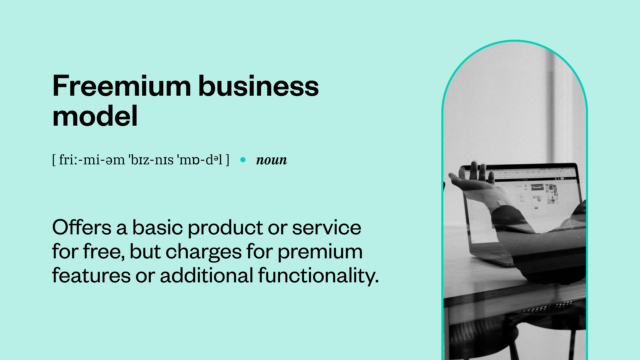
Definition of "Freemium business model" with an image of a person Offers a basic product or service for free, but charges for premium features or additional functionality.

Pros and Cons of the Freemium Business Model

The freemium business model can be a great way to grow your business at a much faster pace. This is one of those customer acquisition models that can make a serious impact – if done correctly. But it may not be the right method for your current business goals. The freemium business model lives within the details and if you can keep luring people to upgrade their services. So, let’s look at the major pros and cons before you decide.

Pros of the Freemium Business Model

  • Acquire many users quickly and less costly.

    Since there’s no barrier to entry (i.e., users don’t have to pay anything upfront), you can get your products and services into the hands of as many people as possible. This is beneficial for companies that have a network effect, as the more users they have, the more valuable their product becomes. This is also beneficial for startups because it can get a lot of users interested fast because people love a free trial, especially when it doesn’t feel like one.

  • Build brand awareness.
    If people are using and enjoying your product for free, they’re likely to tell their friends and family about it. This increased brand awareness can help you acquire even more users at no cost. Again, just look at how Fortnite took off, the parent company, Epic Games is now worth thirty-two billion dollars – with a B. And they did it all with a freemium pricing model.

  • Generate high-quality leads.
    You don’t have to wonder if the people who sign up for your freemium version are interested in your business – you know they are. Freemium users are to convert to paid subscribers than other leads. This, of course, is only true if you take a strategic approach to conversion.

Cons of the Freemium Business Model

  • Some freemium users won’t upgrade. If your free version is too good or not good enough, some people may never feel the need to upgrade to the paid version. You also can’t always predict when a lead might upgrade since there’s no time limit on your freemium offer. Sometimes, we download apps, and they never land with us and next thing you know, that app is deleted from the phone.

  • A free version may cannibalize your paid business. Some people who would’ve been willing to pay for your product may instead opt to only use the free version. This issue becomes particularly true if your free version is too good.

  • Free versions are not free to maintain. If you hope to convert non-paying users, you still have to offer them high-quality support and cover all the operational costs. With too many freemium users and not enough paid subscribers, this can quickly become a financial nightmare. There needs to be a series of checks and balances when it comes to the freemium pricing structure where it’s attractive to jump on board, but also needs to have a distinct line of where the freemium ends and the paid begins.

  • Risk devaluing your brand.
    Some people may think that because you offer a free version, your product or service is not worth paying for. You’ll have to put more effort into proving that the real value of your product comes from subscribing to the paid version.

Best Practices for Implementing a Freemium Model

Successfully implementing a freemium business model requires careful planning and execution. One of the first steps is defining product limitations effectively. Clearly delineating the features available in the free version versus the premium offering helps manage user expectations and guide potential customers toward upgraded plans. Limitations should be strategically chosen to entice users to experience the value of the premium features without overwhelming them with restrictions.

Creating value in the free offering is essential. This means ensuring that the free version is not only functional but also valuable enough that users feel compelled to engage with it regularly. By focusing on user experience and providing essential features, businesses can cultivate a loyal user base that sees the worth in transitioning to a paid plan. Consider incorporating educational resources or community support to further enhance the value of the free offering.

Measuring success and adjusting strategies is critical in fine-tuning a freemium model. Regularly analyzing user engagement, conversion rates, and feedback can provide insights into what is working and what is not. This data-driven approach allows businesses to make informed decisions, whether that means refining features, adjusting pricing strategies, or enhancing the overall user experience. Continuous improvement is key to sustaining growth and maximizing conversions in a freemium business model.

How to Convert Freemium Users to Paid Subscribers?

Despite the potential risks, the freemium model can be a great way to grow your business. But you should know upfront that the conversion rate typically falls somewhere between 2-5% on average. Not every business can be Trello or Fortnite, so keep those numbers in mind. Not every writer will release a best seller, but if the framework is there, there’s a potential for greater successes with the freemium model. If you’re considering this model for your company, it’s a great way to earn customer acquisition. Here are a few strategies to increase your chances of converting free users to paid subscribers.

If you’re considering this model for your company, here are a few strategies to increase your chances of converting free users to paid subscribers.

Ensure your paid version is worth paying for.
The following strategies are worth exploring if you have covered this first. Does your product or service solve a real problem in the market? Does your messaging communicate how your business solves that problem? If your answers to these questions are not a resounding “Yes!”, spend more time working on those things before offering a freemium plan.

Make sure the free version is valuable, but not too valuable.
You want people to benefit from using the free version of your service, but you also want them to see the value in upgrading to the paid version. Your freemium should be functional and practical but have limited features. Make sure you’re also regularly communicating to free users how their experience with your service would be better by upgrading.

Let users experience one or more premium features.
Your free users may only really understand what they’re missing out on once they can try some of your premium features. Consider offering them the option to use one or more of your most valuable premium features for a limited time. There needs to be a clear line where customers can see what they’re missing out on against the basic version.

Provide excellent customer support.
Free users are like paid customers. And every interaction with your customer support team will influence how likely they are to continue using your product and whether they decide to upgrade to a paid version. Every customer touch point counts. Remember that.

Use data to strategically nurture your free users.
Which features do your free users value the most? Is their way of using your service different from your paid subscribers? Collect data to find out. Then, use that data to create a relevant lead nurturing campaign highlighting how your paid version increases the value of those features. There’s a lot to learn from the data, especially where people are converting or if there’s churn. Pay attention to what’s working, but more importantly, if something isn’t.

Make it easy to upgrade to a paid version.
Your freemium users shouldn’t have to start at square one when upgrading. No one likes jumping through hoops. For one, ensure their information gets pre-filled into their sign-up form when upgrading. It would be best if you also offered attractive pricing plans to users who may need more time to fully commit to the most premium version of your service. Everything should be handled with a click. The Software as a Service (Saas) model works for many companies, which is why their adoption is so high.

3 Examples of SaaS Companies Using the Freemium Model

Here are 3 examples of subscription-based SaaS companies that have successfully used the freemium model to gain paid subscribers.

Spotify

Spotify is an audio streaming service that everyone’s heard of. It’s also one of the best examples of a business that offers a valuable freemium version while making the premium version appealing.

Free users of Spotify’s streaming platform have access to all the same audio content as paid subscribers. But, unlike paid subscribers, free users will frequently have their experience with the app interrupted by ads, which generate revenue for Spotify. Free users also can only skip a limited number of songs per hour, which becomes a frequent reminder of the limits of a free account. If you’re trying to listen to Prince’s Greatest Hits, you don’t want to be disturbed in the middle of “Little Red Corvette” with an ad for car insurance.

These limitations are minor inconveniences to the user, but over time they work to convince the free subscriber that upgrading to a premium plan is worth the money. As a result, Spotify has one of the best freemium conversion rates at 46.6% and just about everyone uses it as their go-to for music streaming.

Zoom

With many people working remotely, Zoom has become another popular example of the freemium business model. Anyone can create a Zoom account and use its virtual meeting platform for free. But, of course, there’s a catch.

If an organization needs to conduct virtual meetings longer than 40 minutes and with 100 participants, they’ll need to upgrade to one of Zoom’s paid plans. And since these meetings have become the norm, some businesses see the value in signing up for a paid subscription and converting.

Learn how Zoom scaled users 30X in less than 6 months with Zuora. 

Evernote

Evernote is an app that offers free users a virtual storage space to store notes, images, audio files, web page clippings, PDFs, and more. It’s another example of a freemium offer that is valuable but not so valuable that users won’t see the value in subscribing to a paid plan.

For free users, there are limitations to what they can store, how many devices they can sync to, and their options for customer support. But, once users sign up for a premium version of Evernote, they no longer worry about these limitations and enjoy a range of additional features.

Freemium vs. Free Trial

If you’re still not sure about the freemium business model, consider offering a free trial of your service instead.

With a free trial, users can use your product for free (with limited or full features) but only for a limited time. And with that time limit, you can create a sense of urgency that converts users more quickly than freemium users. But, on the other hand, that limited-time offer might also not give users enough time to understand the full value of your product.

So, which one is better? A freemium offer or a free trial?

The answer: it depends on your business, your product, and your goals. If you need help determining which is right for you, try experimenting with both approaches to see what works best for your business.

Try offering a freemium version for a month and then switch to a free trial next month. Or you might present both simultaneously and see which one converts more users to paid subscribers.

There’s no right or wrong answer here if you experiment and choose the one that converts the most.

With Zuora Billing, you can quickly design, deploy, and iterate on pricing and packaging to remain competitive and deliver the most value to your customers.

How can I measure the success of a freemium model?

Measuring the success of a freemium model involves analyzing several key performance indicators (KPIs) that provide insights into user behavior and business health. Here are some critical metrics to consider:

`1. User Acquisition Rates: Track the number of new users signing up for the free version. A high acquisition rate indicates effective marketing and product-market fit. Monitoring this metric over time helps assess whether your strategies are driving growth.

  1. Conversion Rates: Measure the percentage of free users who upgrade to paid subscriptions. This is often the most telling indicator of your freemium model’s success. A low conversion rate may signal that users don’t see enough value in the premium offering or that your pricing strategy needs adjustment.

  2. User Engagement Levels: Analyze how actively users are engaging with the free version. Metrics such as daily or monthly active users (DAU/MAU), session length, and feature usage can provide insights into user satisfaction and product value. High engagement often correlates with a greater likelihood of conversion.

  3. Churn Rate: Monitor the rate at which paying customers cancel their subscriptions. A high churn rate can indicate dissatisfaction with the product or better options available elsewhere, signaling the need for improvement in both free and paid offerings.

  4. Customer Lifetime Value (CLV): Calculate the average revenue generated from a customer over their entire relationship with your business. Understanding CLV helps you determine how much you can invest in acquiring new users while maintaining profitability.

  5. Overall Revenue Growth: Ultimately, the success of a freemium model should reflect in your revenue. Track both the revenue generated from paid subscriptions and any additional income from ads or partnerships associated with the free version. An upward trend in overall revenue is a positive sign.

Freemium FAQs

How does the freemium model make money?

The freemium model generates revenue primarily through upgrades from free users to paid subscriptions. Companies often monetize the free version by offering additional features, functionalities, or services that enhance the user experience. Additionally, some businesses may include advertising in their free offerings, generating revenue from ad placements, or partner with other companies to earn affiliate income.

Is Google freemium?

Yes, Google employs a freemium model for many of its services. For instance, Google Drive offers free storage up to a certain limit, after which users can pay for additional space. Other services, like Google Workspace, provide basic functionalities for free, while charging for advanced features and collaboration tools. This model allows Google to attract a large user base while monetizing premium features.

Why is freemium so successful?

Freemium is successful because it lowers the barrier to entry for users, allowing them to try a product without financial commitment. This strategy encourages widespread adoption, as users are more likely to explore free offerings. Additionally, by providing value through the free version, companies can build trust and rapport with users, increasing the likelihood of conversions to paid subscriptions as users seek enhanced features or capabilities.

Is Amazon a freemium model?

While Amazon does not primarily operate as a freemium model, it incorporates elements of this approach in certain services. For example, Amazon offers a free trial of its Prime membership, allowing users to experience benefits like free shipping and access to Prime Video for a limited time. However, most of Amazon’s core services operate on a traditional subscription or pay-per-use model rather than a freemium structure.

Does freemium still work?

Yes, the freemium model still works, but its effectiveness depends on the industry and execution. Many successful SaaS companies, mobile apps, and online services continue to thrive using this approach. However, businesses must innovate and continuously adapt their strategies to maintain user interest and conversion rates in an increasingly competitive landscape. Factors such as user experience, feature differentiation, and effective marketing play critical roles in the model’s ongoing success.

Can a freemium model lead to brand devaluation?

Yes, offering a free version can sometimes lead to perceived brand devaluation, where customers may associate the brand with lower quality due to its free offerings. This perception can stem from several factors:

  • Quality Perception: When users encounter a free version, they might question the value of the premium offering, assuming that if something is free, it lacks quality or is not worth paying for. This can undermine the brand’s reputation, particularly in competitive markets where perceived value is crucial.

  • Market Saturation: In industries where many companies adopt the freemium model, users may become desensitized to free offerings. This saturation can make it harder for a brand to stand out, potentially leading consumers to view all freemium products as equivalent, regardless of actual quality.

  • Inconsistent Messaging: If a brand fails to clearly communicate the value proposition of its premium version compared to the free version, users might not understand what they gain by upgrading. This lack of clarity can diminish the perceived exclusivity and desirability of the paid offering.

To counteract the risk of brand devaluation, businesses should take proactive steps:

  • Clearly Communicate Value: Ensure that marketing materials, onboarding processes, and customer interactions emphasize the unique benefits of the premium version. Highlight features that are exclusive to paying subscribers and articulate the problems they solve.

  • Maintain High Standards: Even the free version should provide a quality experience. If users enjoy the free product, they may be more inclined to upgrade, viewing the brand as credible and valuable.

  • Create Distinct Upgrade Paths: Consider offering tiered subscription plans that provide different levels of value, making it clear that each upgrade comes with additional benefits. This helps users see the tangible advantages of moving from free to paid.

  • Leverage Testimonials and Case Studies: Showcase success stories from paying customers to illustrate the real-world benefits of the premium offering. User-generated content and testimonials can enhance credibility and influence perceptions.

Next, check out the basic equation behind successful saas business models.