Visma case study

A small, blurry icon resembling a web browser window with two circular buttons in the top left corner.Software and technology

“What used to take days can now be done in minutes.”

— Emanuela Balough, Solution Architect, Visma

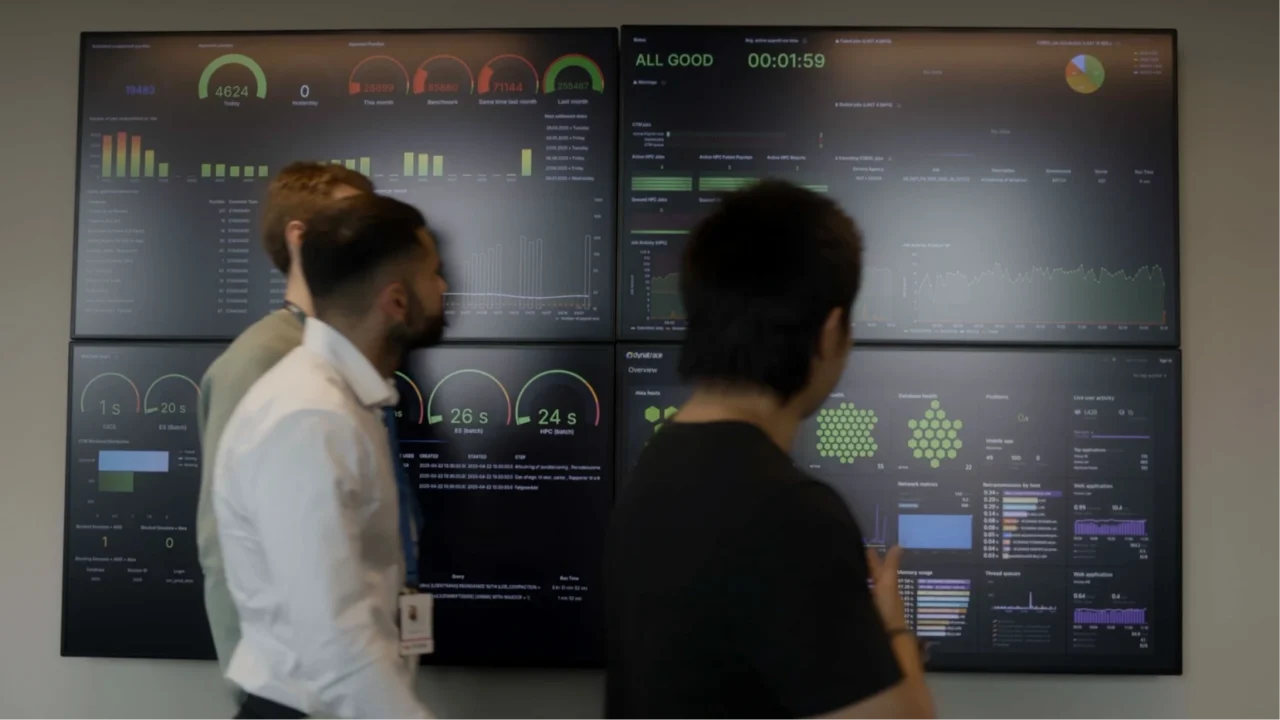
Photo of an Telemetry dashboard

About

Visma is a leading provider of mission-critical business software across Europe, supporting a broad portfolio of companies with solutions for finance, payroll, HR, and business operations.

Operating across multiple business units and entities, Visma manages complex billing and finance workflows that require fast, accurate reporting and validation across large volumes of subscription and financial data.

Industry:

Software and technology

01 

The Challenge

Visma’s finance and billing teams work in a complex multi-entity environment where reporting, validation, and operational analysis often require comparing data across business units, accounting periods, and multiple Zuora objects.

Many of the workflows the team depended on required pulling several reports, combining the data manually, and validating the results before work could move forward. In some cases, the reports they needed were not possible to build directly in the Zuora UI.

02

The Solution

Visma began using Zuora MCP alongside reusable AI skills designed around real operational use cases, including multi-object reporting, journal run validation, subscription analysis, order creation workflows, solution design generation, and invoice template conversion.

Together, MCP and AI skills gave the team a faster way to bring data across multiple objects and entities into a single usable view, while preserving human oversight when clarification was needed.

03 

The Benefits

  • Faster reporting and analysis across multi-entity environments.
  • Less manual work combining data from multiple reports and objects.
  • Easier validation across business units, journal runs, and accounting periods.
  • Greater confidence through human-in-the-loop clarification instead of guesswork.
  • More team capacity to focus on analysis and decision-making instead of data assembly.

“What used to take days can now be done in minutes.”

Emanuela Balough
Solution Architect, Visma

From manual assembly to faster multi-entity analysis

Visma uses Zuora to support billing, finance, and subscription operations across multiple business units. For Emanuela Balough, Solution Architect, that means working across implementations, integrations, troubleshooting, and the operational workflows that keep those businesses running.

That breadth of responsibility makes reporting complexity especially visible. Multi-entity work introduces more variables into every operational question. Teams need to validate data across business units, compare journal and subscription information, and make sure results line up across accounting periods and workflows.

“One of the main reasons we wanted to test MCP was multi-entity,” Balough said. “We spend a lot of time validating information across business units. MCP helps us bring that information together much faster.”

Before MCP, some of that work required extracting several separate reports and stitching them together manually.

“We had reports where we needed to extract three separate reports and manually combine them just to get the view we needed,” Balough said.

For Visma, the opportunity was not simply easier access to data. It was reducing the time and effort required to assemble the right data quickly enough to support day-to-day decisions.

Building reusable workflows with MCP and AI skills

Balough’s team adopted Zuora MCP alongside reusable AI skills built around practical finance and billing workflows.

The skills focused on areas that were particularly difficult or time-consuming to handle manually, including multi-object reporting and analysis, journal run validation, subscription analysis, order creation workflows, solution design generation, and invoice template conversion.

Rather than treating MCP as a one-off automation layer, Visma incorporated it into a broader workflow strategy. The AI skills helped standardize the logic behind recurring tasks, while MCP helped execute and structure the work in a way that matched Visma’s operational needs.

One of the most valuable capabilities was the ability to bring multiple Zuora objects together in a single report.

“MCP gives you the possibility to bring multiple objects together in one report,” Balough said. “That was amazing because many of those reports were not possible to create directly from the UI.”

Instead of assembling information by hand across separate reports, the team could work from a more complete and usable view from the start.

Speed matters, but trust matters too

For Visma, the value of MCP was not only speed. It was also confidence in the way the system worked.

The team valued that MCP would surface questions when information was incomplete and ask for clarification rather than make assumptions.

“When it doesn’t know something, it asks,” Balough said. “It’s not hallucinating. That gives us confidence in the results.”

That human-in-the-loop behavior became one of the most important parts of the experience. Rather than replacing finance judgment, MCP helped the team get to better outputs faster while keeping people in control of the final result.

“It’s like having your own assistant,” Balough said. “I can let MCP do its job while I’m working on something else.”

From days to minutes

The biggest gains showed up in reporting and financial analysis workflows.

One workflow that previously required multiple reports and substantial manual assembly can now be completed in minutes. Another that involved comparing journal runs and financial information across business units is now far easier to manage because the necessary data can be brought together in one place.

“What used to take days can now be done in minutes,” Balough said.

That time savings creates room for more valuable work. Subscription analysis tasks that once consumed a large portion of the workday have been reduced significantly, and the team can now work in parallel on other priorities while MCP continues the analysis.

A more scalable operating model

For Visma, the value of MCP goes beyond efficiency alone.

By pairing Zuora MCP with reusable AI skills, the team created a more scalable way to operate across a complex multi-entity environment. Reporting is faster, validation is more reliable, and information that once required manual reconciliation can now be assembled into a usable view much more quickly.

That combination of speed and confidence is what stands out most.

Instead of spending hours stitching together data from multiple sources, Visma’s teams can focus on interpreting results, supporting the business, and moving work forward. For organizations managing finance operations across multiple entities, that is the difference between working around complexity and working through it.

photo of Visma HQ

FEATURED ARTICLES

Point Wild logo

Point Wild

“The flexibility of the system and the breadth of use cases it’s been able to handle have been the best for us.” — Micha...

read case study

Black rightward arrow on a white background.

Zuora

“Cash application is one of those finance processes where accuracy, control, and speed all matter at once. For Zuora, this was about more than...

read case study

Black rightward arrow on a white background.

ZOLL Data Systems

“Now everything’s in one place—the customer’s invoices, notes, payment history—all in front of you.” — Sandy King, Director of...

read case study

Black rightward arrow on a white background.