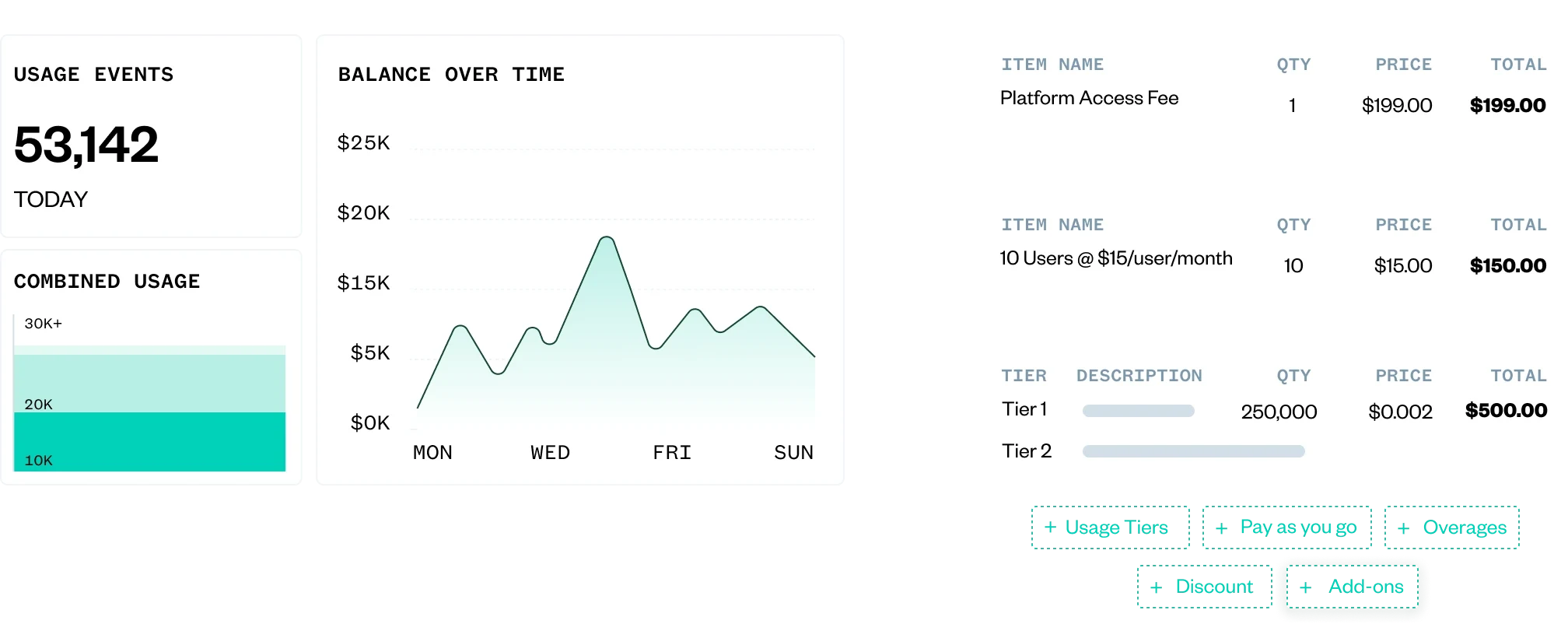
What we mean by usage plus commitments
Usage pricing on its own sounds easy: count what the customer used, multiply by the rate, send the invoice.
The trouble starts when usage is combined with a commitment. For example, a customer might agree to a quarterly minimum and if their usage falls short, they still pay that minimum. If it goes over, they pay overage. Halfway through the year, the customer might upgrade their plan to accommodate higher usage.
None of this is unusual; it’s how a lot of B2B contracts look now, but it’s also where many billing systems fall short and create additional manual work.
What it looks like when the system can't express the contract
The finance teams we talk to often describe a similar pattern:
- Invoices are calculated outside the system, then typed back in
- Some quarterly invoices go out weeks late because one contract needed a manual true-up
- Nobody can say for sure whether a billing error came from the system, the process or the data
- Reporting can’t separate commitment revenue from overage revenue, because the system never knew the difference
Finance teams often tell us that most of their contracts are standard, a per-account usage charge with a quarterly minimum, yet invoices from last quarter still aren’t done. So something is obviously broken, but where?
Why it breaks
A minimum commitment isn’t a price, it’s a rule that sits across charges and across time. To bill it correctly, a system has to know:
- Which charges count toward the commitment
- The period the commitment covers, which may not match the billing period
- What happens when the contract changes mid-period
- How to show the customer what they used, what they owe and why
- How to hand revenue recognition the right split between committed and variable amounts
Systems built for flat subscriptions usually don’t have a place for those rules, so the rules end up in spreadsheets.
What good looks like
In a billing platform built to handle these types of contracts, a commitment is configured, not calculated, meaning you define the minimum, the eligible charges, and the true-up behavior just once in the product catalog. Usage is rated as it arrives, the invoice shows usage, the minimum, and any shortfall or overage on separate lines. Every line traces back to the raw usage record, so a disputed charge can easily be explained to the customer.
Zuora Billing supports minimum commitments, prepaid drawdown, tiered and volume pricing, and overages as standard charge models. And because Billing and Zuora Revenue share one transaction record, the split between committed and variable revenue carries straight into recognition.
A quick self-check
Pull one contract with a minimum commitment and an amendment. Ask your team to explain last quarter’s invoice line by line, from the system alone. If they need a spreadsheet to do it, the contract is living outside your billing system.
Next step: read the ultimate guide to usage-based pricing.