Revenue recognition software built for compliance across any pricing model
Transform complex multi-element contracts into audit-ready revenue schedules. Sync your CRM, billing, and ERP data into one clear workflow to shorten close times and ensure a clean, frictionless GL handoff.
Trusted by enterprise finance teams processing $300B+ in compliant revenue annually.
Ranked #1 in Product and Strategy in Automated Revenue Management
Zuora recognized as a Leader in the 2025 Forrester Wave: Recurring Billing Solutions
Keep revenue moving as your business evolves
Automate rev rec for any mix of selling models
Real time close
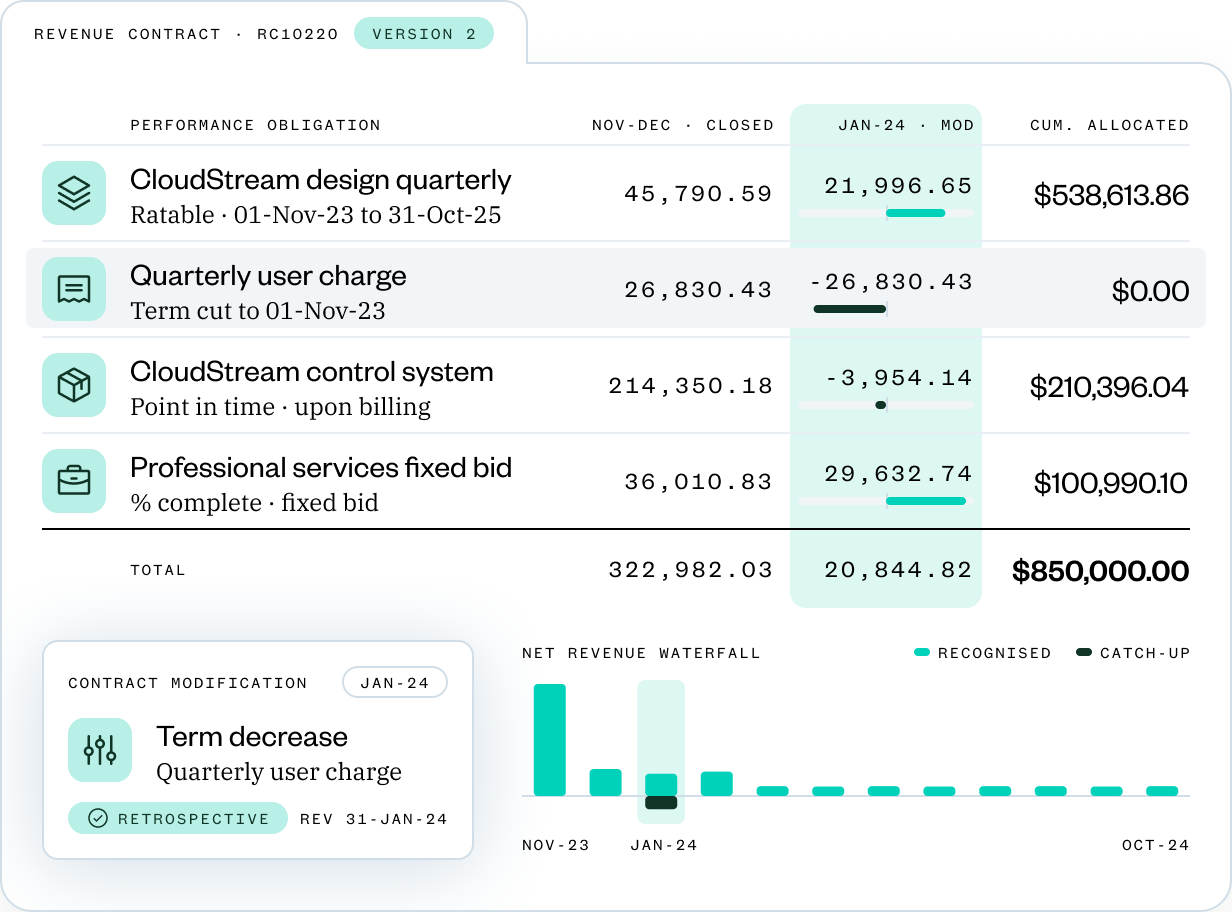
Audit ready contract modifications accounting
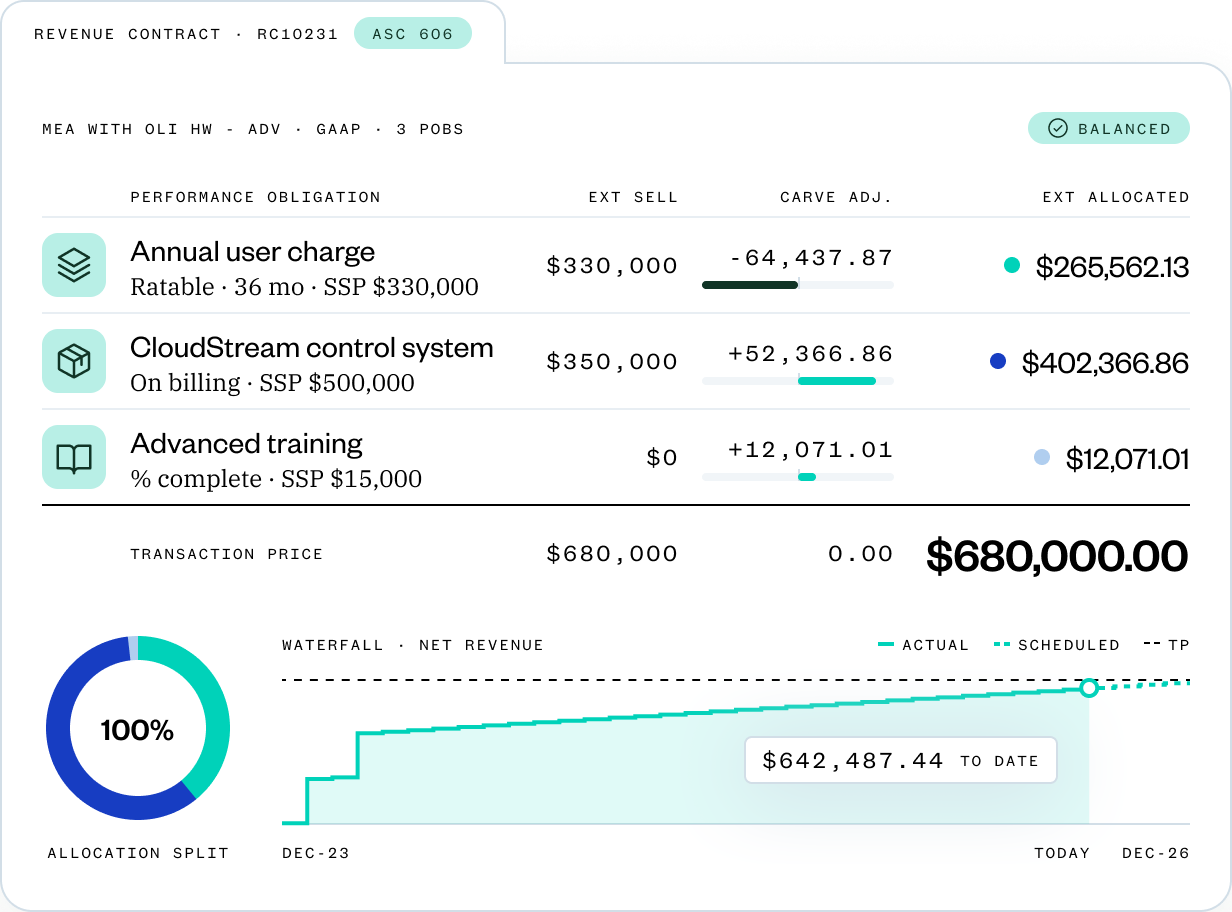
Apply configurable allocation rules to handle complex, multi-element arrangements consistently.
Apply configurable allocation rules to handle complex, multi-element arrangements consistently.
Apply configurable allocation rules to handle complex, multi-element arrangements consistently.
Automate rev rec for any mix of selling models
Apply configurable allocation rules to handle complex, multi-element arrangements consistently.
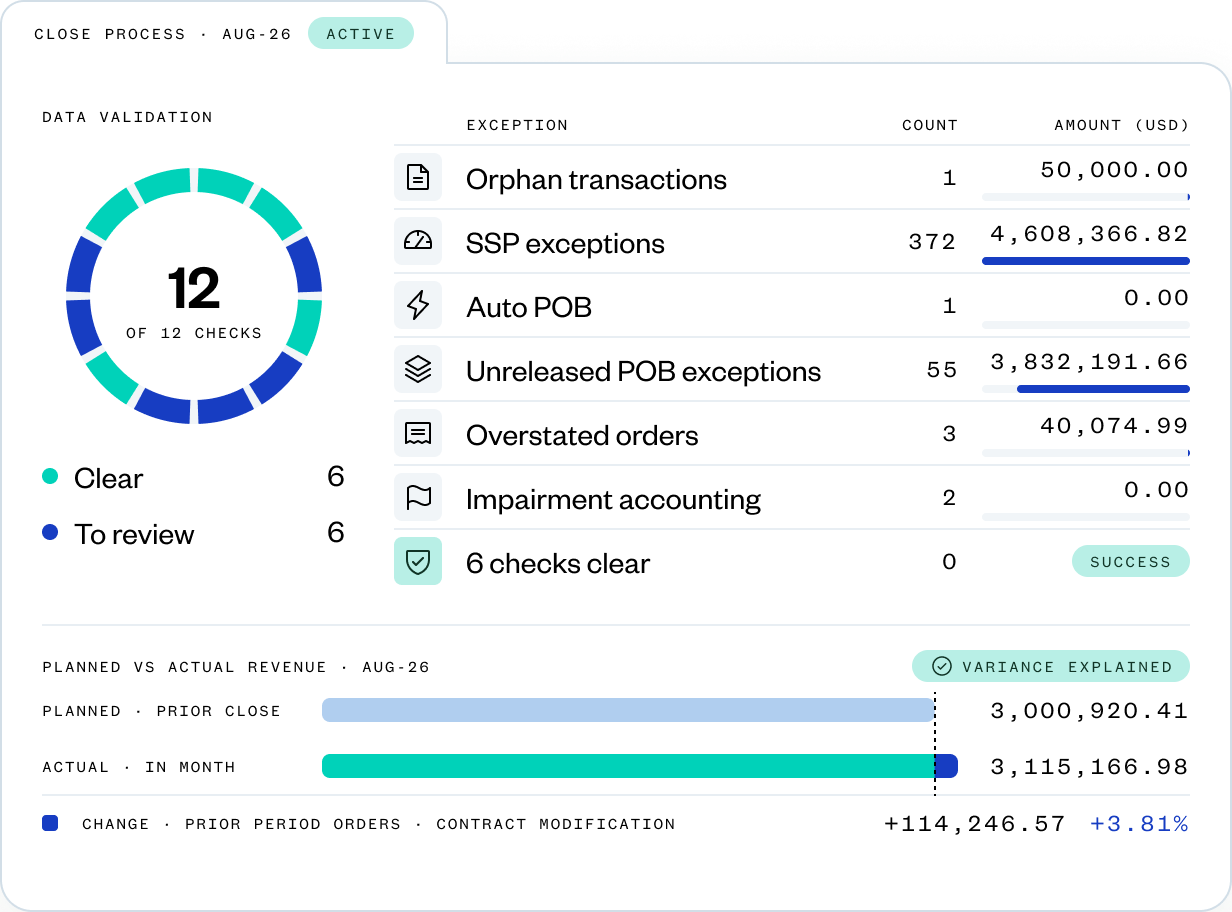
Real time close
Zuora Revenue ingests contract events in real time to turn close week from a manual bottleneck into a fast, predictable review process.
Audit ready contract modifications accounting
Automatically evaluate mid-term modifications, apply proper ASC 606/IFRS 15 treatments, and update active revenue schedules instantly.
HOW ZUORA FITS INTO YOUR TECH STACK
Automate the 5 Steps of ASC 606/IFRS 15
Standardize your revenue accounting policies across all pricing structures, contract changes, and billing streams.
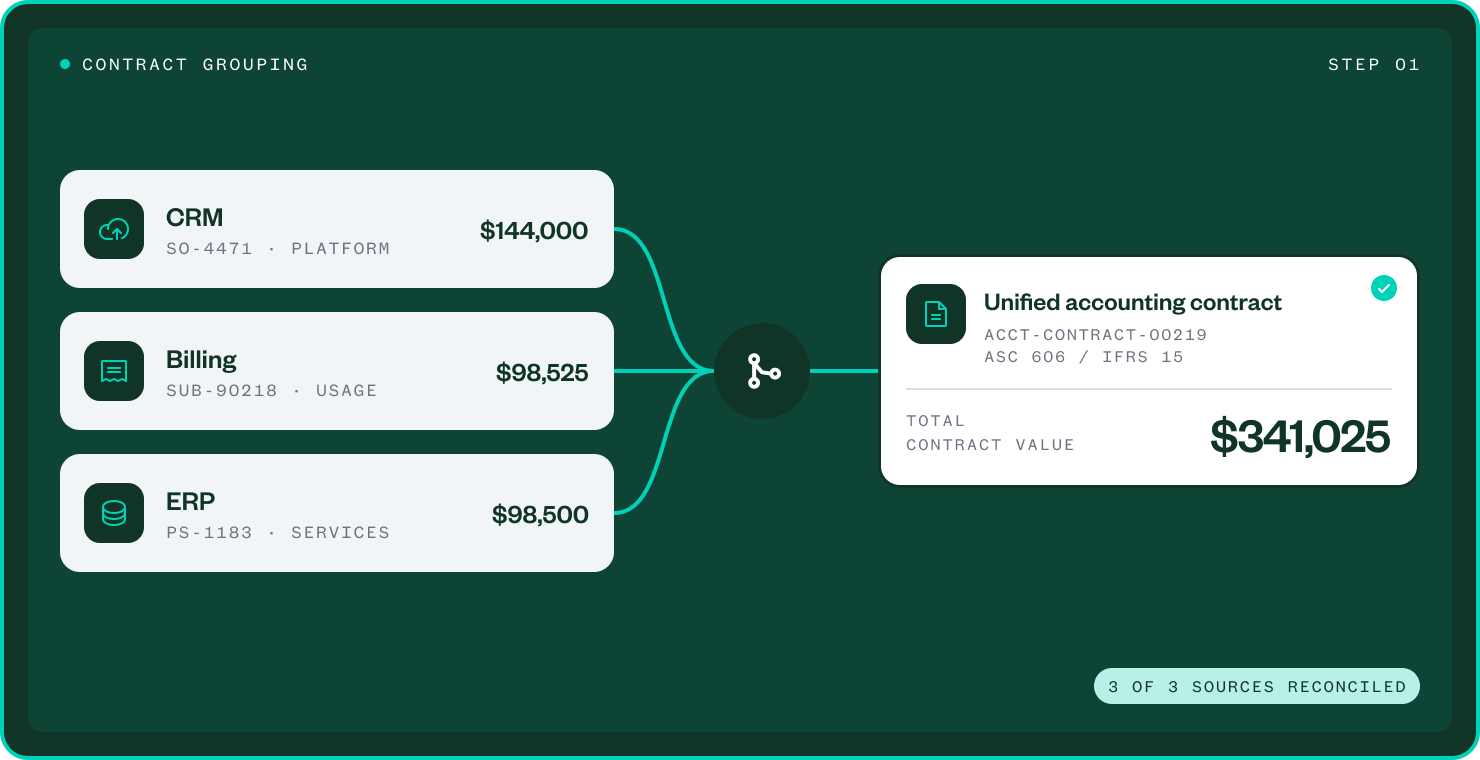
Zuora Revenue brings related orders, amendments, and renewals together into a single contract and applies modifications as they happen. Your contract view always reflects the real deal.
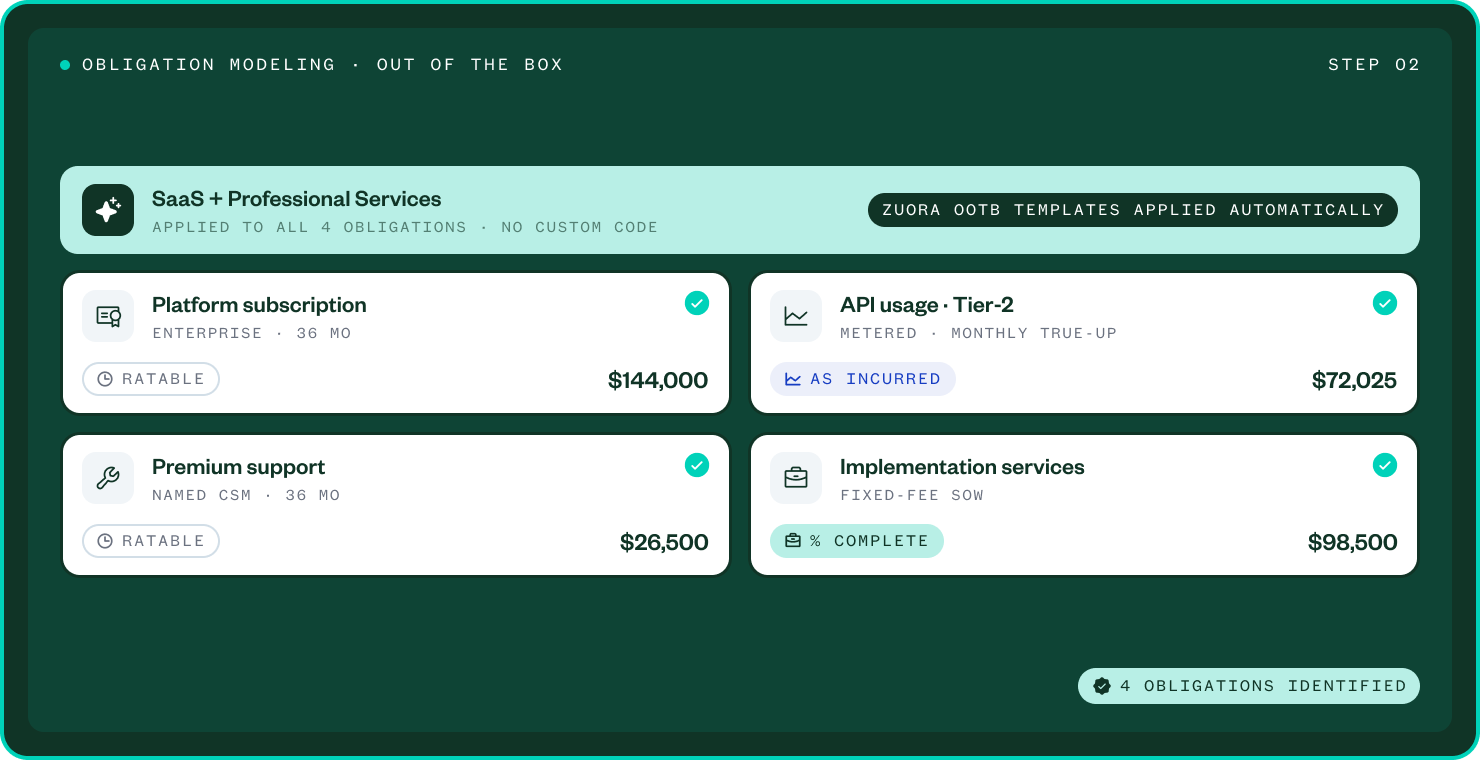
Rule-based templates split bundles into distinct deliverables, such as licenses, services, support, and usage. Each one is tracked on its own, with no manual spreadsheets.
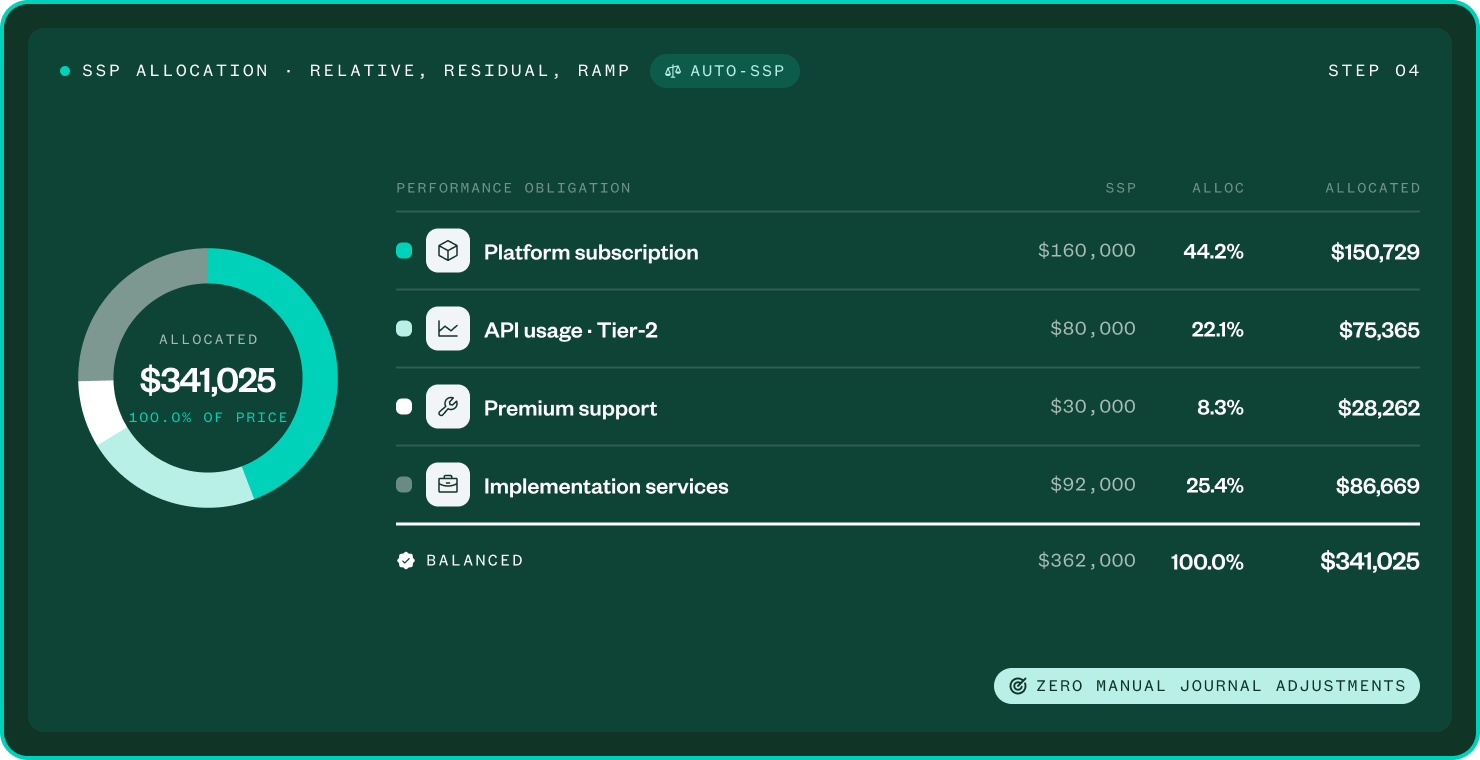
Standalone selling prices are maintained centrally, and the price is allocated across obligations on a relative basis. Allocations recalculate automatically when contracts change, so every obligation carries its fair share.
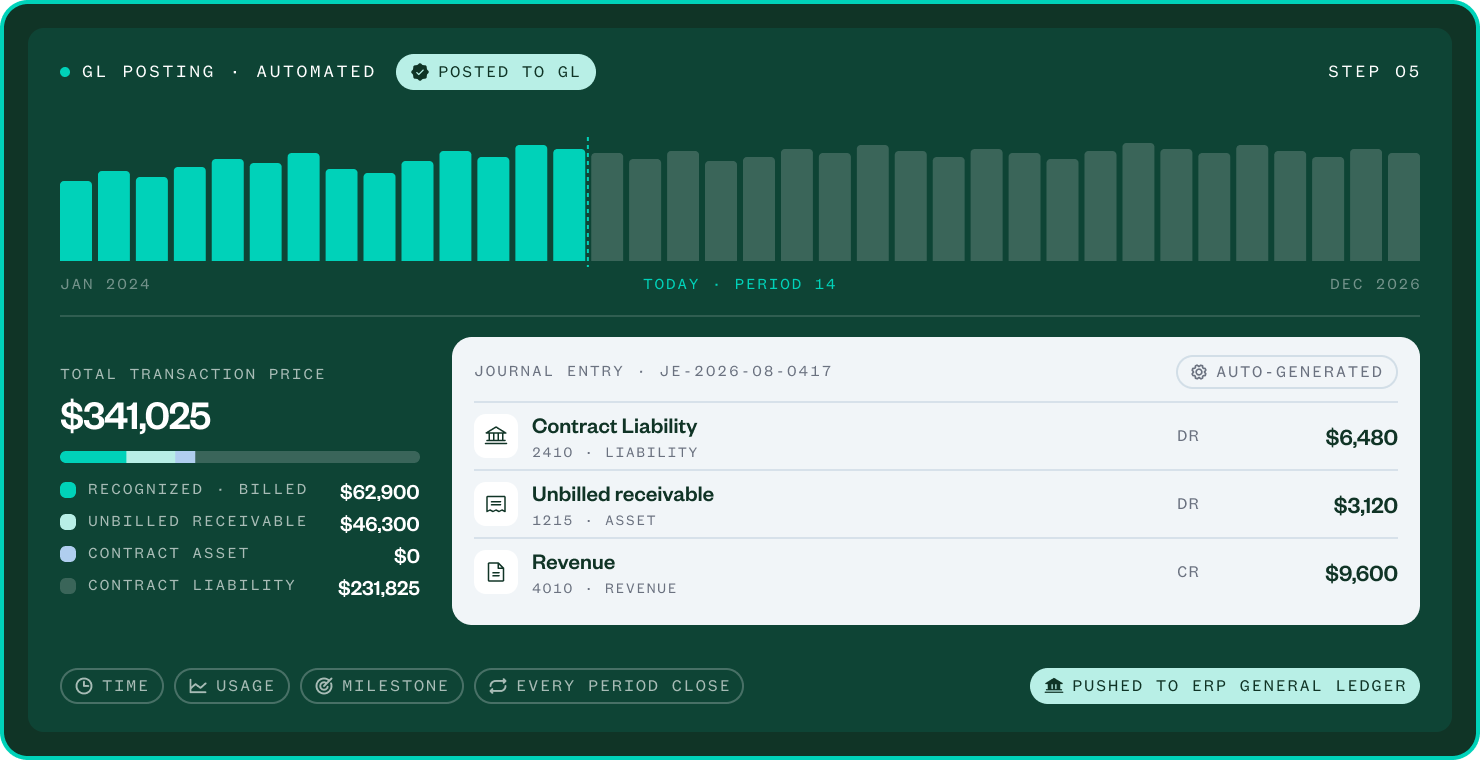
Revenue is recognized over time, at a point in time, or on an event, based on how each obligation is satisfied. Schedules, journal entries, and a complete audit trail are generated for you.
Revenue is recognized over time, at a point in time, or on an event, based on how each obligation is satisfied. Schedules, journal entries, and a complete audit trail are generated for you.
“When midnight hits, we’re booked. The revenue team now gets clean data instantly, not five days later. What used to be a fire drill at quarter close is now a non-event.”
Ron Clegg, VP Revenue Office, BMC Software
Read the case study
“Having an automated audit trail where revenue reports more efficiently tie out to our financial reporting saves a lot of time pulling audit support. It lets the team focus on projects that move the business forward.”
Ryan Gruhlke, Controller, Hireology
Read the case study
“Before Zuora, our finance teams were constantly buried in manual tasks: managing complex contracts, reconciling disparate data, correcting billing errors. The automation Zuora brought has liberated them to focus on strategic analysis and optimization. We’ve seen our automated workflow tasks double”
Sid Sanghvi, Head of Finance Business Applications, Asana
Read the case study
“Accelerating our close from 12 days to 5 didn’t happen overnight—it required building real trust in the platform. Now, the team has complete confidence that we’ll get the right numbers straight from production the first time, which really speaks to the power of our revenue engine.”
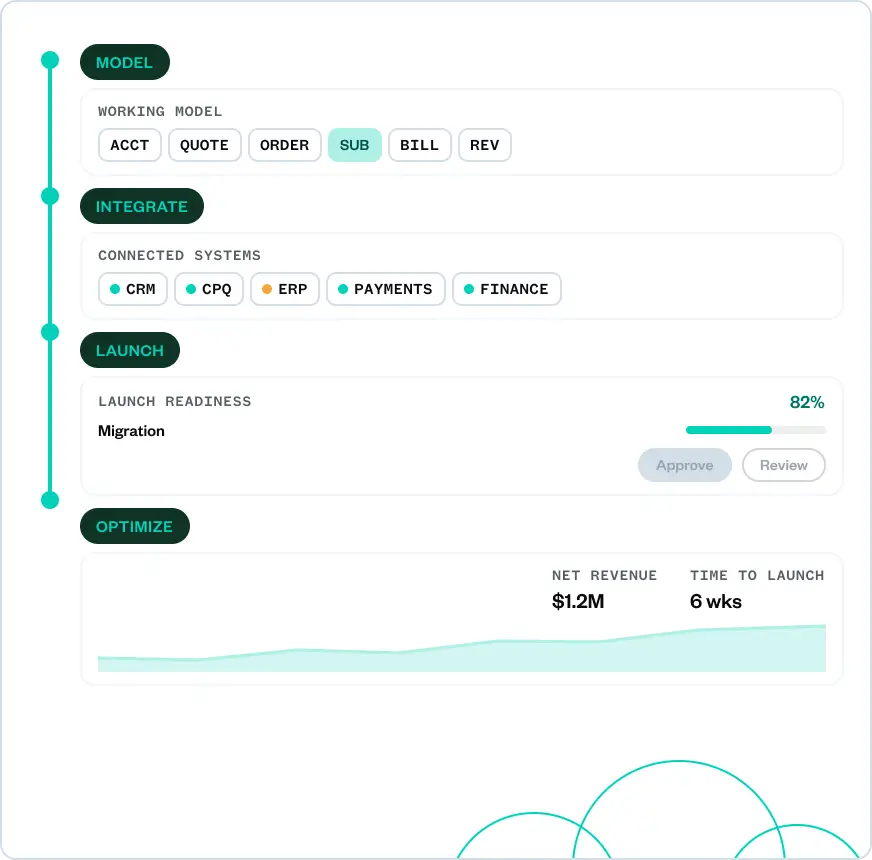
Milo is the implementation agent built for enterprise quote-to-cash, turning your products, contracts, pricing, billing rules, and revenue policies into a working model of your unique business—helping teams launch faster with Zuora experts in the loop and keep adapting after go-live.
Bring new products and pricing to market without waiting through months of implementation.
Zuora Revenue automates revenue recognition for complex business models. It helps finance teams recognize, reconcile, and analyze revenue, with configurable policies and reporting to support the period-close process.
Does Zuora Revenue support ASC 606 and IFRS 15?
Zuora Revenue helps teams apply revenue policies under U.S. GAAP, including ASC 606, and IFRS 15. Teams can configure accounting policies to reflect their revenue-management requirements.
What types of revenue can Zuora Revenue handle?
Zuora Revenue supports revenue recognition for subscriptions, products, and usage-based services. Configurable rules help teams apply their accounting policies as offerings and business models evolve.
How does Zuora Revenue automate revenue recognition?
Based on configured rules, Zuora Revenue can group transaction lines into revenue contracts, identify performance obligations, calculate allocations, and release revenue based on uploaded revenue events or automated revenue actions. Exceptions can still require review or handling by finance.
Can we configure Zuora Revenue to match our accounting policies?
Yes. Teams can configure policies and rules for areas such as contract grouping and modifications, performance obligations, variable consideration, standalone selling price, data validation, approvals, and period close.
How does Zuora Revenue work with our existing finance systems?
Transaction data—such as contracts and invoices—can be loaded from upstream systems. Zuora Revenue can create accounting journal entries for transfer to a general ledger; the required data flows and configuration depend on your implementation.
What does revenue recognition mean?
Revenue recognition is the accounting process for determining when and how much revenue to record as a business transfers promised goods or services to customers. The timing may differ from when the business invoices or receives payment.
What are the five steps of revenue recognition under ASC 606?
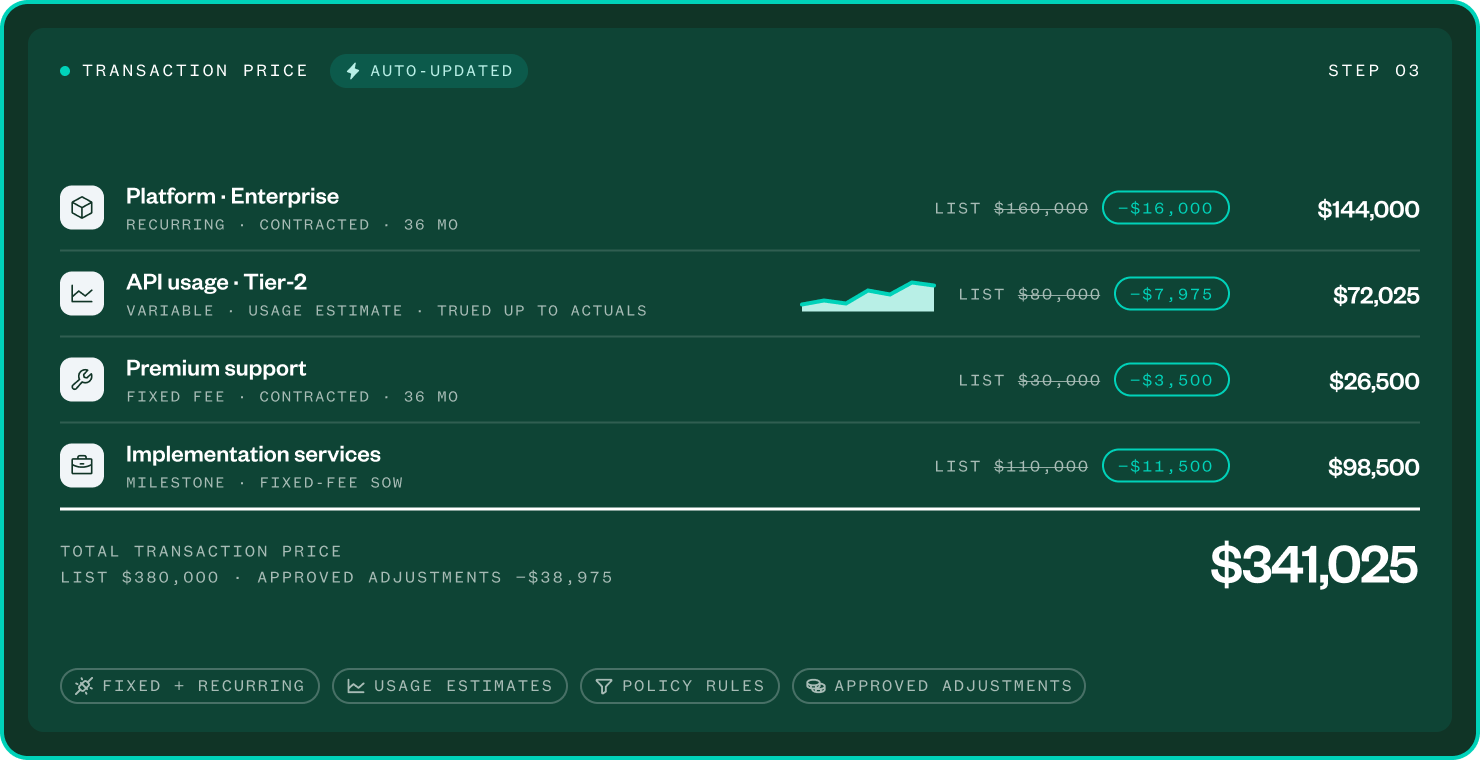
The five steps are: identify the contract; identify the performance obligations; determine the transaction price; allocate the transaction price to the performance obligations; and recognize revenue as each obligation is satisfied.
How does Zuora Revenue account for contract changes?
Contract changes may affect performance obligations, transaction price, and revenue timing. Zuora Revenue lets teams configure contract-modification rules and apply them to revenue processing; the accounting treatment depends on the contract terms and the company’s policies.
How does revenue recognition software compare with spreadsheets or ERP revenue modules?
Spreadsheets and ERP revenue modules may work for some processes, but complex allocations, frequent contract changes, and growing transaction volumes can make consistency and traceability harder to maintain. A dedicated revenue solution applies configured rules and supports a more repeatable process; fit depends on each company’s needs and systems.
Bring your challenge. We’ll walk through it in Zuora.
Have a contract, usage model, or close scenario that’s causing headaches for you team? Book a working session, and we’ll walk through how that exact pattern behaves in Zuora—from quote to invoice to revenue.