There’s a moment in Succession‘s final season when a tech billionaire is buying a legacy media company, and the heir to that company asks him what he plans to do with their crown jewel news network. His answer, delivered with genuine confusion about why she’s even asking: “I don’t know yet. Strip it, sell it, whatever makes sense.”
She’s horrified—this is her family’s legacy, built over decades. He’s baffled by her reaction. To him, this is just an acquisition, and the details will be worked out later.
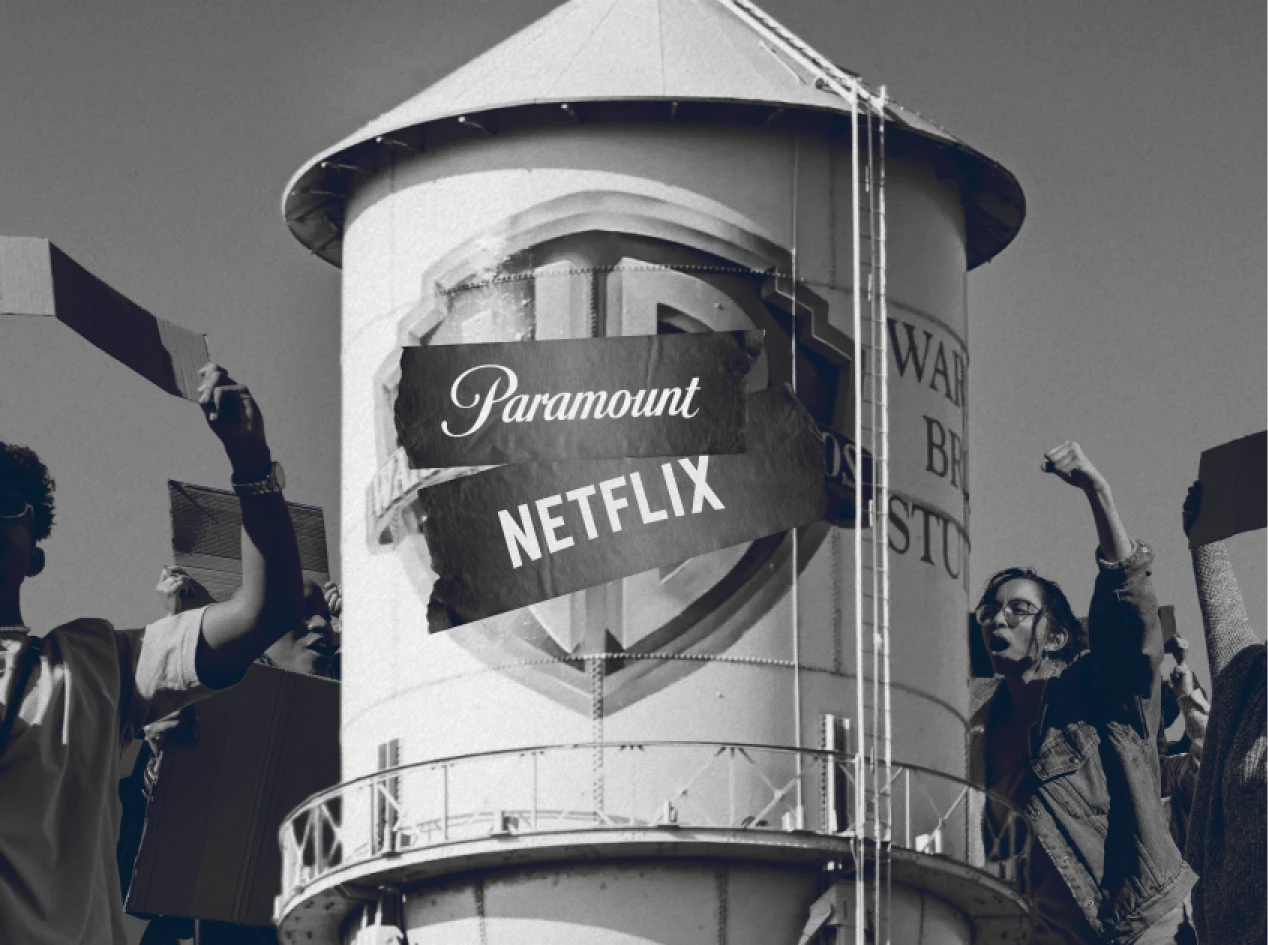
That disconnect kept playing in my head as I watched the Warner Bros. acquisition saga unfold. Netflix announces an $83 billion deal. Paramount counters with a hostile $108 billion bid. Wall Street analysts debate antitrust implications. Hollywood unions sound alarms.
And somewhere in all of this, 450 million subscribers are left wondering: “What exactly happens to us?”
The Trust Tax of M&A Theater
Everyone’s debating IP libraries, market share, and whether consolidation kills theatrical releases. Those are legitimate concerns. But here’s what’s missing from the conversation: the implicit contract between these companies and their subscribers is about to be rewritten, and no one is asking for subscriber input.
Netflix claims bundling HBO Max will “benefit consumers by lowering costs.” Paramount promises to release 30+ films annually to theaters. These are reassurances, not commitments. And in subscription businesses, that gap between reassurance and commitment is where trust goes to die.
A monthly charge isn’t just a payment method—it’s permission. Permission to keep showing up in someone’s life, in their budget, in their credit card statement. That permission is built on trust, and successful subscription companies understand this. Companies that fail see subscriptions as a revenue optimization problem. “How much can we charge? How much can we bundle? How sticky can we make cancellation?” They’re trying to engineer retention rather than earn it.
Right now, both Netflix and Paramount are focused on their own scoreboard: scale, market dominance, and content library depth. They’ve stopped tracking the score that actually matters: whether subscribers still trust this relationship is worth it. You can have the biggest content library in the world, but if subscribers feel like you’ve broken the original deal, no content catalog will save you. Trust doesn’t work like Friends in syndication—you can’t earn it once and collect residuals forever.
What “Enhanced Viewing Options” Actually Means
Let’s decode the corporate language both companies are using. When Netflix talks about “optimizing plans for consumers” and “enhancing viewing options,” what they’re really saying is: “We’re going to restructure pricing, and we think you’ll accept it because we’ll have more content.”
But more content isn’t the same as better value. HBO subscribers didn’t choose HBO Max because they wanted the world’s most extensive content library. They chose it because HBO represents a specific curatorial philosophy and quality bar. That’s brand equity built over decades.
Will HBO Max remain HBO Max—with its own interface, curation, identity, and subscriber experience? Or will it dissolve into the Netflix algorithm where Succession sits next to Love Is Blind and the content recommendation engine treats them as interchangeable units of “engagement”?
This matters because different subscribers have different needs. Some want Netflix’s breadth and algorithmic discovery, while others seek HBO’s curated prestige. The subscription model’s core advantage is flexibility—the ability to subscribe, pause, and return based on personal viewing patterns and preferences.
Forced bundling eliminates that flexibility. And calling it “simplification” doesn’t make it customer-centric.
The Paramount Paradox
Paramount’s hostile bid is fascinating because it exposes the game. They’re not offering a better deal for subscribers—they’re offering a bigger check to shareholders. Their $108 billion bid is framed as superior because it buys the entire Warner Bros. empire, including the cable networks Netflix doesn’t want.
From a subscriber perspective, this makes things murkier, not clearer. Does anyone actually want CNN bundled with their streaming entertainment? The argument that “Paramount will protect theatrical releases” is meaningful to cinemas and Hollywood workers (very important), however, it doesn’t address the core subscriber question: what’s the value proposition, and what am I paying for?
Both companies are asking regulators and shareholders to trust that scale will benefit everyone. But neither provides the kind of pricing transparency and choice architecture that demonstrates subscriber-centricity.
What Good Would Look Like
I’m not anti-consolidation or anti-bundling. Done right, it can serve customers. But “done right” requires explicit commitments, not vague promises about “optimizing plans.”
Here’s what subscriber-centricity could look like:
- Preserve brand identities where they represent distinct value propositions. HBO Max should remain HBO Max—separate app, separate tier, separate curatorial voice. Subscribers who chose HBO chose it for a reason.
- Offer real optionality, not forced bundling. Give customers three genuine choices: Netflix standalone, HBO Max standalone, or a bundled option at a meaningful discount. Let subscribers configure their entertainment experience based on their actual viewing interests. Yes, there’s opportunity for joy in discovery here, but it can’t feel forced.
- Commit to pricing transparency before regulatory approval. If the deal truly benefits subscribers, show us the math. What tier will HBO content live in? What happens to existing HBO Max subscribers? Will there be migration paths that honor their original value proposition?
- Respect the flexibility that makes subscriptions valuable. The whole point of subscription models is that customers can start and stop based on what they’re actively using. Don’t turn streaming back into cable’s “pay for 500 channels, watch seven” model.
The Metrics That Matter
Both Netflix and Paramount will argue their deals pass the subscriber test because they’ll offer “more content for the money.” But that’s the wrong metric.
The right metrics are:
- Choice preservation: Do subscribers maintain the same level of configurability they had before?
- Price transparency: Are pricing implications clear and committed to, not just “optimized later”?
- Brand integrity: Do premium brands like HBO maintain their distinct identity and value proposition?
- Churn risk: How many subscribers will cancel because their chosen experience is being eliminated?
These are customer-centric metrics that require thinking about subscribers as people making entertainment choices, not as “monthly active users” to be aggregated and monetized.
The Succession We Should Be Watching
The real succession battle isn’t between Netflix and Paramount. It’s between two visions of what streaming becomes next.
One vision says consolidation serves efficiency and scale—fewer platforms, bigger libraries, algorithmic recommendations, maximum content leverage. This is the vision where streaming becomes cable 2.0, where companies optimize for their metrics and subscribers pay the trust tax.
The other vision holds that consolidation can serve customers if—and only if—it preserves choice, maintains brand integrity, and commits to a transparent value exchange. This is the vision where companies remember that 450 million subscribers aren’t captive audiences. They’re people who choose to pay you every month because you’ve earned that choice.
Right now, we’re headed toward the first vision. The corporate language from both sides is all about “enhanced viewing options” and “compelling entertainment offerings,” without the specifics that would substantiate them.
To the executives on both sides: If consolidation truly serves subscribers, prove it. Show us the pricing. Commit to maintaining distinct brand experiences. Give customers real choice, not just marketing copy.
Because here’s the thing about subscription businesses: customers can always cancel. The companies that forget this truth don’t stay subscription businesses for long. They become cautionary tales about what happens when you optimize for deal value instead of customer value.
Wall Street gets a vote. Regulators get a vote. And 450 million subscribers? They get to vote every single month.