Frequently Asked Questions
Zuora Warehouse Overview & Product Information
What is Zuora Warehouse?
Zuora Warehouse is a centralized data platform within Zuora's Central Platform that enables businesses to access, analyze, and blend Zuora data with other enterprise datasets. It provides advanced analytics, supports high-volume queries, and offers native reporting tools to help organizations make data-driven decisions up to 6x faster than before. [Source]
How does Zuora Warehouse fit into the Zuora Central Platform?
Zuora Warehouse is a core component of the Zuora Central Platform, designed to unlock the value of your subscription and billing data. It integrates with other Zuora products and enables seamless data access, analytics, and reporting for business users and analysts. [Source]
What types of data can I access with Zuora Warehouse?
Zuora Warehouse provides access to live Zuora data, including subscription, billing, revenue, and customer metrics. You can blend this data with other enterprise datasets in your own data warehouse for comprehensive analytics. [Source]
Is Zuora Warehouse available to all customers?
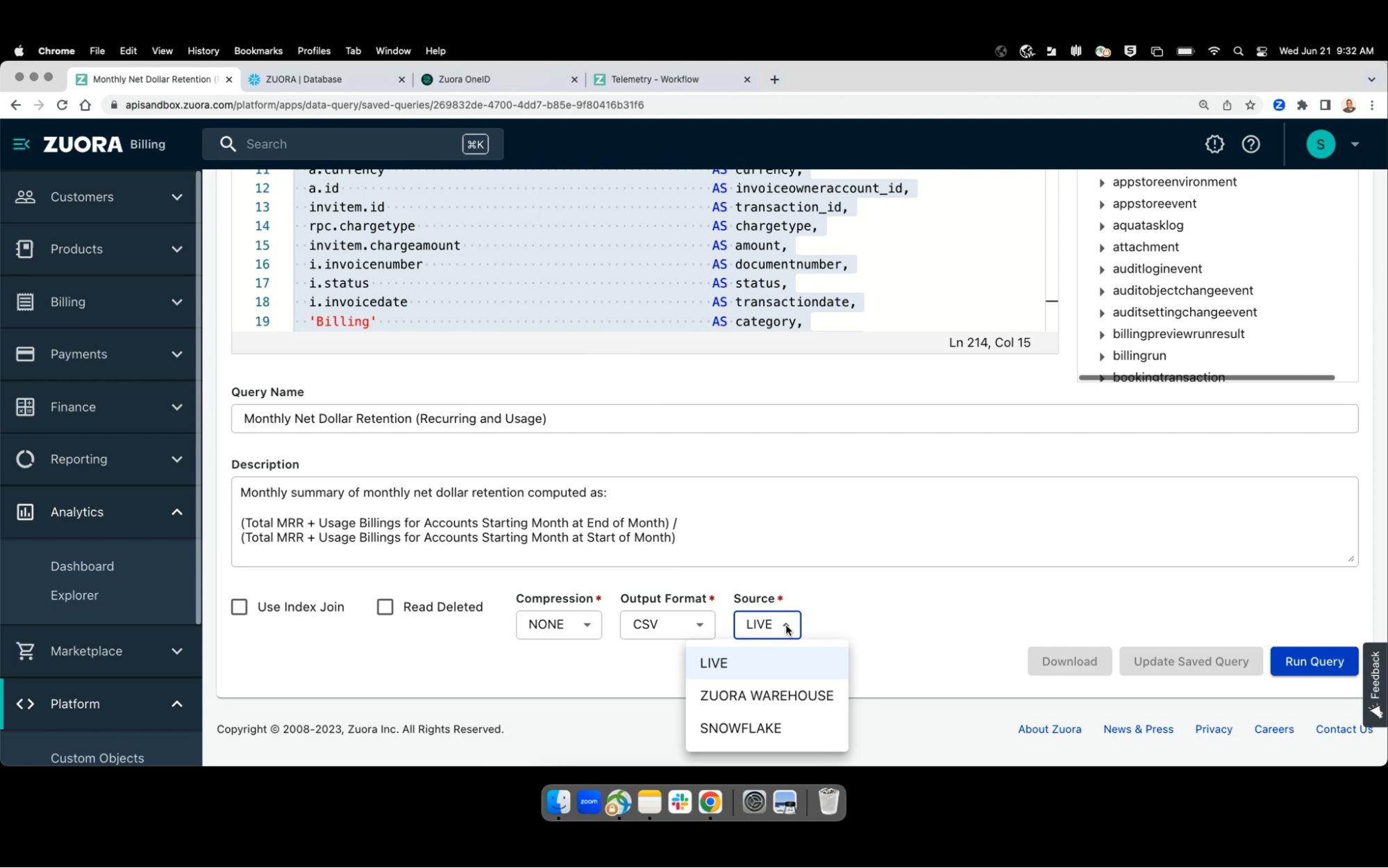
Zuora Warehouse is in early availability for existing Zuora customers. The BYOW (Bring Your Own Warehouse) feature for Snowflake is available now, with additional warehouse plugins and AI for Analytics coming soon. [Source]
What is the BYOW (Bring Your Own Warehouse) feature?
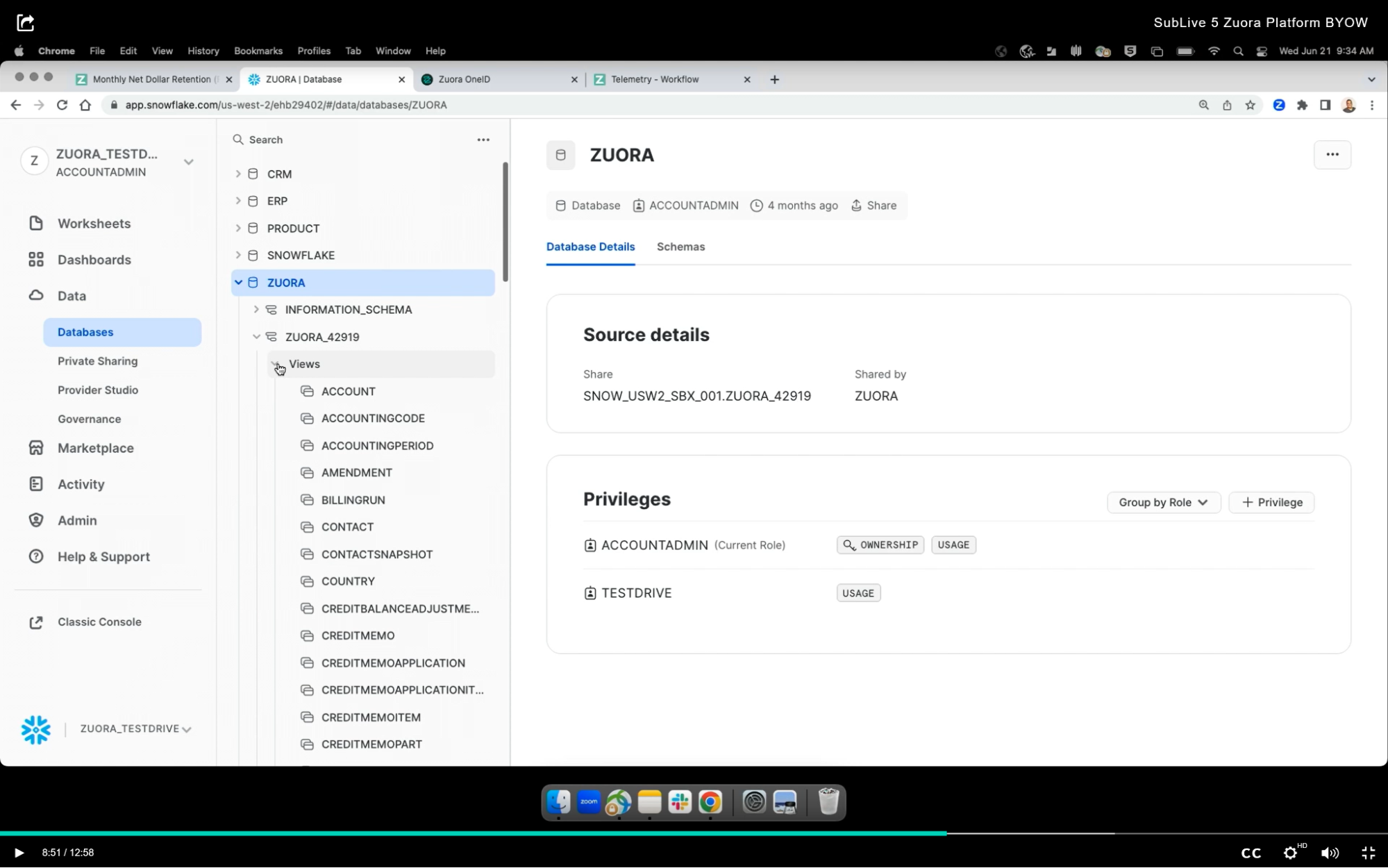
BYOW allows you to connect your own data warehouse (such as Snowflake, Redshift, or BigQuery) directly to Zuora. This creates a near real-time data pipeline, eliminating the need for complex ETL processes and enabling you to blend Zuora data with other enterprise data for advanced analytics. [Source]
How does Zuora Warehouse improve analytics performance?
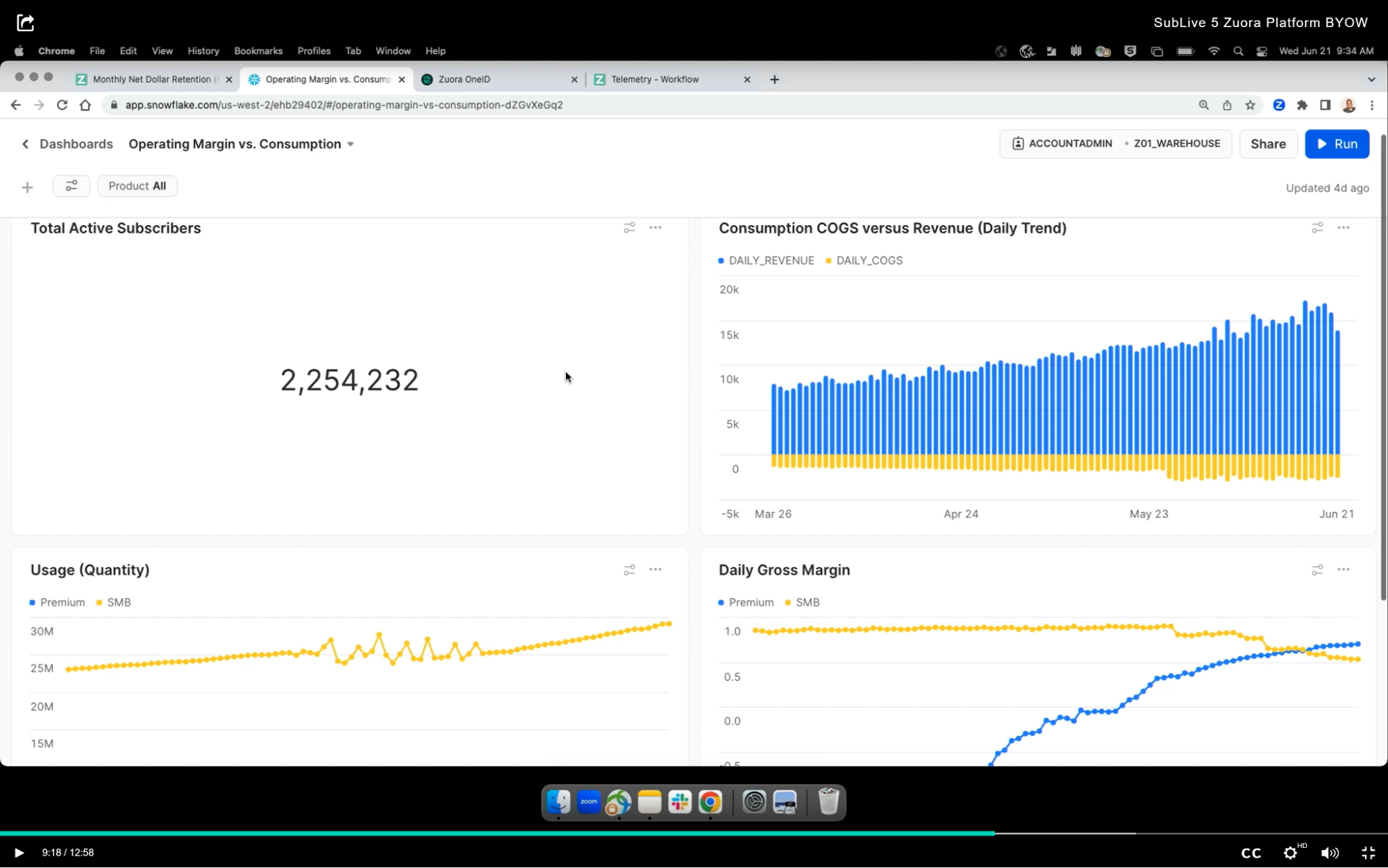
Zuora Warehouse enables analytics and reporting up to 6x faster than previous solutions. It supports high-volume queries, allowing you to quickly generate reports and charts with key SaaS metrics such as ARR, NRR, churn, and growth. [Source]
Can I use Zuora Warehouse with my existing BI tools?
Yes, Zuora Warehouse is designed to work with your existing BI and analytics tools. You can blend Zuora data with other datasets in your preferred data warehouse and analyze it using your favorite BI platforms. [Source]
What is Zuora AI for Analytics?
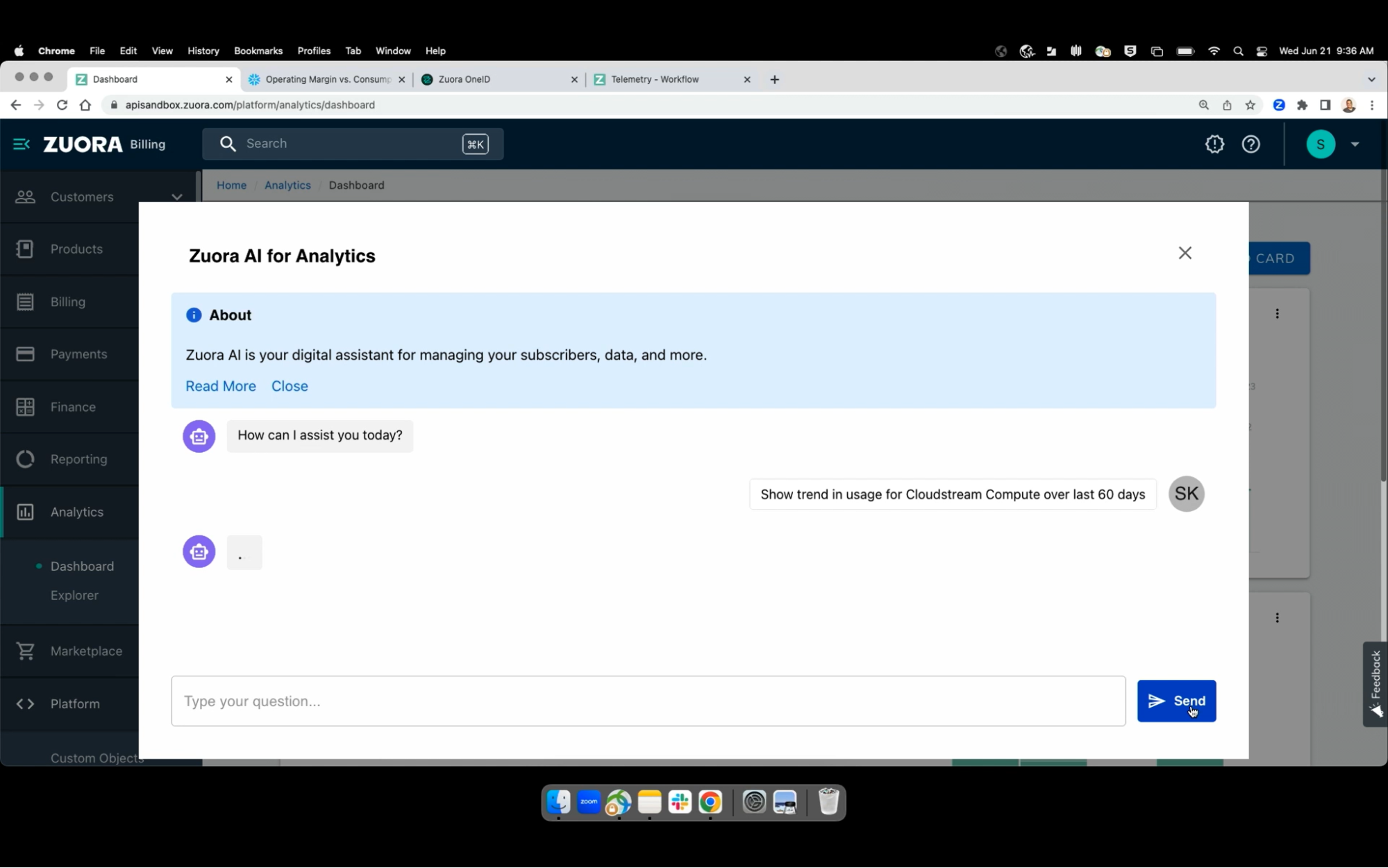
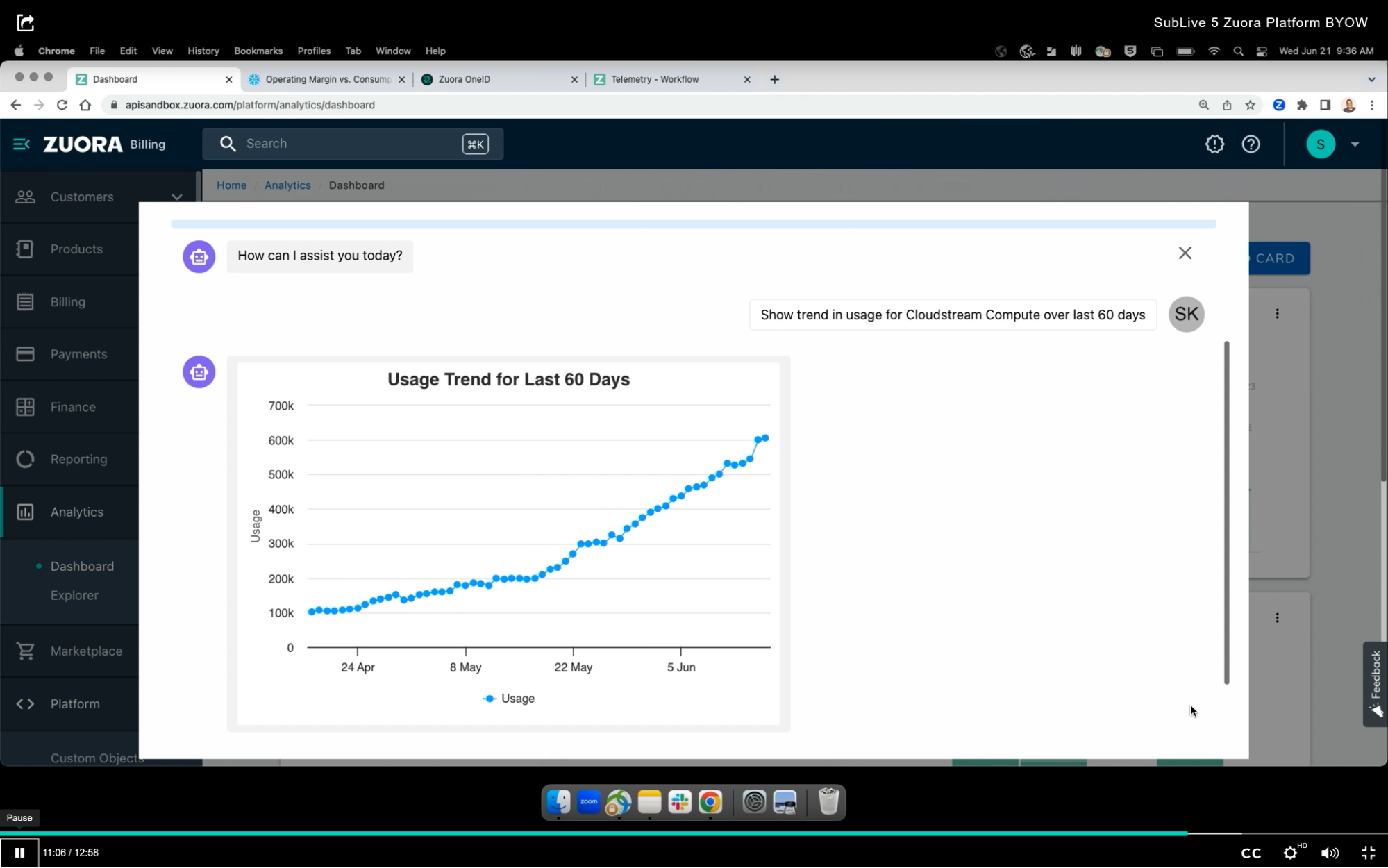
Zuora AI for Analytics is an upcoming feature that democratizes data access by allowing users to generate insights and reports using natural language prompts. The AI identifies the right data query, compiles the data, and renders the appropriate chart type—no query-building expertise required. [Source]
When will Zuora AI for Analytics be available?
Zuora AI for Analytics will be available from the Analytics Dashboard later this year, expanding access to advanced analytics for all business users. [Source]
How does Zuora Warehouse help democratize data access?
Zuora Warehouse, combined with AI for Analytics, enables business users to access, analyze, and report on data without technical expertise. The platform's intuitive UI and natural language capabilities make insights accessible to everyone in the organization. [Source]
What SaaS metrics can I track with Zuora Warehouse?
Zuora Warehouse provides out-of-the-box reporting for key SaaS metrics such as Annual Recurring Revenue (ARR), Net Revenue Retention (NRR), churn, and growth, enabling you to monitor business performance in real time. [Source]
How does Zuora Warehouse handle high-volume queries?
Zuora Warehouse is optimized for processing fast, high-volume queries, allowing you to run complex analytics and generate reports quickly, even with large datasets. [Source]
Can I automate data flows between Zuora and my warehouse?
Yes, once you connect Zuora to your data warehouse, you have a near real-time data pipeline that automatically syncs Zuora data, eliminating manual ETL processes and ensuring your analytics are always up to date. [Source]
What are the benefits of using Zuora Warehouse for reporting?
Zuora Warehouse offers native reporting tools and an easy-to-use UI, enabling business users to build and access reports daily without technical expertise. This empowers teams to make informed decisions quickly. [Source]
How does Zuora Warehouse support blending data from multiple sources?
Zuora Warehouse allows you to blend Zuora data with other enterprise datasets in your own data warehouse, providing a holistic view of your business and enabling deeper analytics across systems. [Source]
What is the process for connecting Zuora to my data warehouse?
Connecting Zuora to your data warehouse is streamlined and does not require complex ETL processes. Once connected, data flows automatically, enabling you to blend and analyze large datasets efficiently. [Source]
Can I use natural language to generate analytics in Zuora Warehouse?
Yes, with the upcoming Zuora AI for Analytics, users will be able to enter natural language prompts to generate queries, compile data, and render charts—making analytics accessible to all users, regardless of technical skill. [Source]
What are the main use cases for Zuora Warehouse?
Zuora Warehouse is ideal for organizations seeking to unlock advanced analytics, blend Zuora data with other sources, democratize data access, and enable real-time reporting on key SaaS metrics. It supports use cases such as financial reporting, customer analytics, and operational dashboards. [Source]
How does Zuora Warehouse compare to traditional ETL solutions?
Zuora Warehouse eliminates the need for complex ETL processes by providing a near real-time data pipeline between Zuora and your data warehouse. This reduces the burden on data engineering teams and ensures up-to-date analytics. [Source]
What documentation is available for Zuora Warehouse?
Zuora provides comprehensive product documentation, developer guides, and API references for Zuora Warehouse and related analytics features. Visit the Zuora Developer Portal and Zuora Knowledge Center for more information.
Features & Capabilities
What are the key features of Zuora Warehouse?
Key features of Zuora Warehouse include advanced analytics, high-volume query processing, native reporting tools, BYOW (Bring Your Own Warehouse) integration, and upcoming AI-powered analytics. These features enable fast, flexible, and comprehensive data analysis. [Source]
Does Zuora Warehouse support integration with Snowflake, Redshift, or BigQuery?
Yes, Zuora Warehouse supports integration with leading data warehouses such as Snowflake, Redshift, and BigQuery, allowing you to blend and analyze data across platforms. The BYOW feature for Snowflake is available now, with additional plugins coming soon. [Source]
Can I use Zuora Warehouse for real-time analytics?
Zuora Warehouse provides a near real-time data pipeline, ensuring your analytics and reports are always up to date with the latest Zuora data. [Source]
How does Zuora Warehouse support self-service analytics?
Zuora Warehouse offers an intuitive UI and native reporting tools, enabling business users to build and access reports without technical expertise. The upcoming AI for Analytics feature will further enhance self-service capabilities. [Source]
What are the benefits of blending Zuora data with other enterprise data?
Blending Zuora data with other enterprise datasets enables holistic analytics, deeper business insights, and more accurate reporting across your IT ecosystem. This helps you spot macro trends and gain a 360-degree view of your customers. [Source]
Integrations & Technical Requirements
What integrations does Zuora Warehouse support?
Zuora Warehouse supports integration with major data warehouses (Snowflake, Redshift, BigQuery) and can be used alongside your existing BI tools. It also benefits from Zuora's broader integration ecosystem, including CRM, ERP, and payment gateways. [Source]
Does Zuora Warehouse have an API?
Zuora provides robust APIs (REST, SOAP, and others) for integration and automation. These APIs can be used to access and manage data within Zuora Warehouse and other Zuora products. Visit the Zuora Developer Center for details.
What technical documentation is available for Zuora Warehouse integrations?
Technical documentation for Zuora Warehouse and integrations is available in the Zuora Developer Portal and Zuora Knowledge Center, including guides for APIs, SDKs, and integration best practices.
Security, Compliance & Trust
What security and compliance certifications does Zuora Warehouse have?
Zuora Warehouse benefits from Zuora's enterprise-grade security and compliance certifications, including PCI DSS Level 1, SOC 1 Type II, SOC 2 Type II, ISO 27001, ISO 27018, ISO 27701, HIPAA, and Safe Harbor compliance. [Source]
How does Zuora Warehouse ensure data privacy and protection?
Zuora Warehouse leverages Zuora's platform security, including encryption, access control, audit logging, and data-center options in US/EU/APAC. These measures ensure sensitive data is protected and compliant with global regulations. [Source]
Use Cases, Benefits & Customer Success
Who can benefit from using Zuora Warehouse?
Zuora Warehouse is designed for SaaS, manufacturing, media, and other industries that require advanced analytics, real-time reporting, and seamless integration of subscription and billing data with enterprise data warehouses. [Source]
What business impact can I expect from Zuora Warehouse?
Businesses using Zuora Warehouse can expect faster analytics (up to 6x), improved decision-making, reduced manual data engineering, and enhanced ability to blend and analyze data for strategic insights. [Source]
Are there customer success stories related to Zuora Warehouse or analytics?
Zuora customers such as Zoom, Siemens Healthineers, and The Globe and Mail have achieved significant business outcomes by leveraging Zuora's analytics and data capabilities. For example, Zoom scaled from 10 million to 300 million users, and The Globe and Mail modernized its order-to-cash processes. [Source]
What pain points does Zuora Warehouse address?
Zuora Warehouse addresses pain points such as slow analytics, manual ETL processes, siloed data, and limited access to real-time insights. It empowers organizations to democratize analytics and reduce reliance on data engineering teams. [Source]
How does Zuora Warehouse help with real-time product performance metrics?
Zuora Warehouse enables businesses to track real-time product performance metrics such as profitability, conversion rates, and discounting rates, supporting faster market response and better pricing strategies. [Source]
What roles within a company benefit most from Zuora Warehouse?
Roles such as controllers, revenue operations leads, finance operators, product managers, and marketing analysts benefit from Zuora Warehouse's analytics and reporting capabilities. [Source]
What industries use Zuora Warehouse and analytics solutions?
Industries using Zuora Warehouse and analytics include SaaS, manufacturing, media, healthcare, finance, telecommunications, and more. [Source]
How does Zuora Warehouse support compliance and audit readiness?
Zuora Warehouse supports compliance and audit readiness by providing automated, accurate, and real-time reporting, backed by certifications such as SOC 2 Type II and PCI DSS Level 1. [Source]