
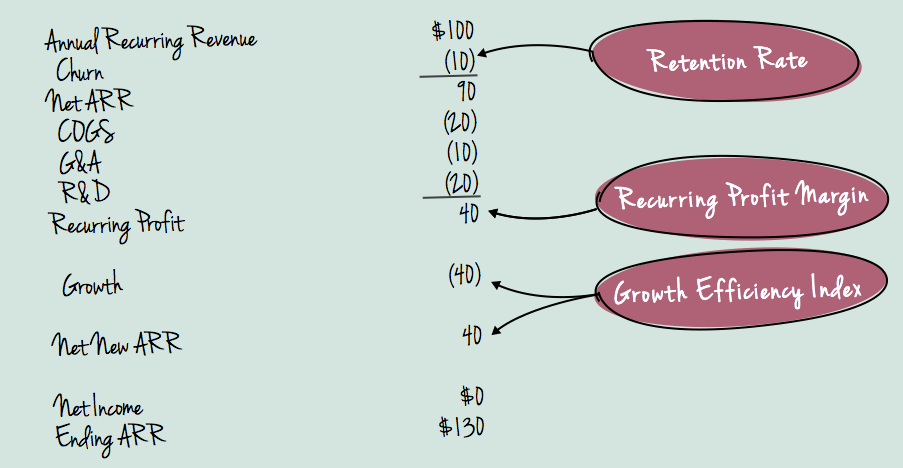
Les marges bénéficiaires récurrentes représentent simplement la différence entre vos revenus récurrents et vos coûts récurrents. L’exploitation de cet indicateur SaaS est essentielle. Pourquoi ? Plus vos coûts récurrents sont élevés, moins vous disposez de ressources à allouer — autrement dit, à enregistrer en bénéfices ou à investir dans des dépenses de croissance ponctuelles. Illustrons cela avec notre exemple.
Vous disposez désormais de 90 $ à utiliser. Mais certaines charges récurrentes inhérentes à l’activité vont rapidement réduire ce montant.
Vous devrez engager des dépenses pour fournir votre service et ainsi générer les revenus récurrents nécessaires à la croissance de votre entreprise, c’est-à-dire le coût des ventes (COGS, Cost of Goods Sold). Pour une société SaaS, un exemple de COGS serait le coût de maintenance de votre centre de données. Supposons que vous dépensiez 20 $ à ce titre.
Il existe également des frais généraux et administratifs (G&A) indispensables au fonctionnement quotidien — littéralement pour garder les lumières allumées. Il s’agit par exemple du loyer de vos bureaux ou de la rémunération de votre équipe financière. Disons que vous dépensiez 10 $ ici.
Et qu’en est-il de la Recherche et Développement (R&D) ? Il ne s’agit généralement pas d’un coût récurrent, mais nous constatons que la taille des équipes R&D de la plupart des entreprises varie peu dans le temps, contrairement à des services comme le marketing. Prévoyons donc 20 $ pour votre R&D récurrente.
Vous avez sans doute déjà anticipé le calcul, mais ces charges récurrentes vous laissent avec 40 $, soit une marge bénéficiaire récurrente de 40 %. Puis le cycle recommence — vous savez désormais combien vous pouvez réinvestir dans la croissance ou comptabiliser en bénéfices pour l’année.