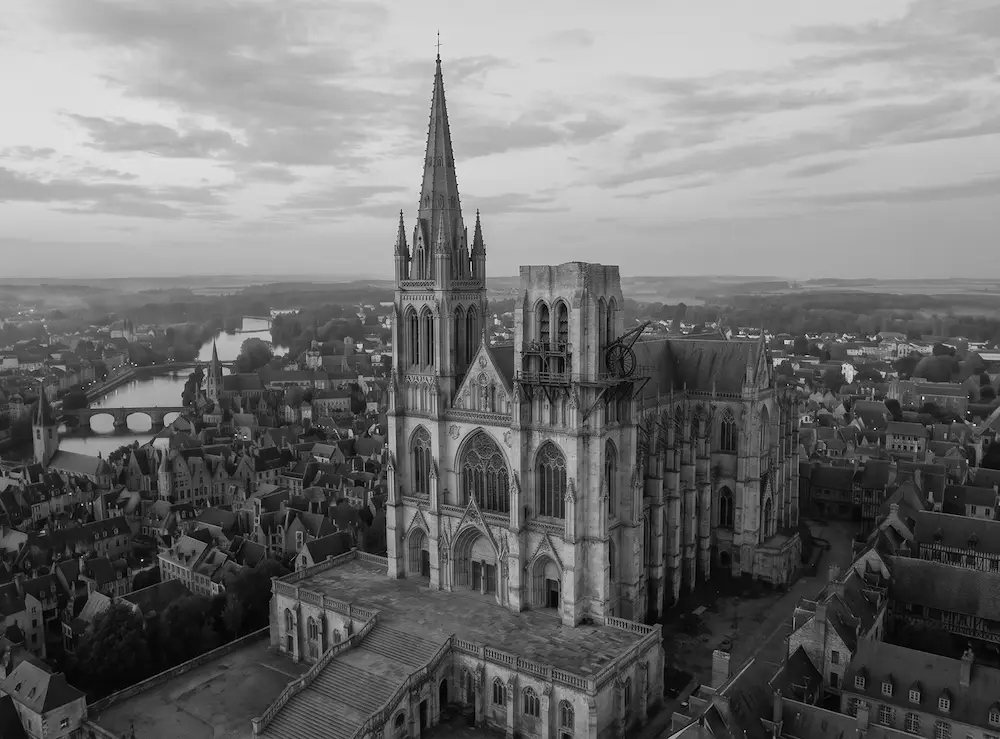
In 1248, the masons of Cologne laid the foundation of a cathedral they knew they would never see completed. Neither would their children or their grandchildren. The cathedral was finally completed in 1880, 632 years after it began.
Cologne wasn’t unusual. Notre-Dame took nearly two centuries. Sagrada Família has been under construction since 1882. There’s a great (if perhaps apocryphal) story about the medieval founders of a new Oxford college planting an oak forest at the same time they laid the cornerstone –– for when the roof would eventually need repairs.
Think of a cathedral as any huge, forbidding project that feels like it’s going to take generations to complete. In the past, you probably would have dismissed it out of hand.
But AI changes the math. For the first time, the hardest part of building something isn’t brute labor requirements, or capacity constraints.
We’re not at the stage where millions of humanoid robots can build anything we want yet, but we’re certainly on the cusp of its digital equivalent. Which raises the question: What would you do with infinite labor? What cathedral would you build?
Maybe it helps to think in terms of categories of scale.
- One person. A tutor that helps you level up with new tools and methodologies for your job or favorite hobby. A diarist that captures stories from your kids and parents. An MD that knows your medical history.
- One organization. Natural language-based insight into anything company-specific that you want to learn about. Every employee gets a bunch of new function-specific interns.
- One city. Infrastructure that learns and optimizes. Urban services that help people stay connected and healthy.
- One nation. High-speed rail, smart power grids, trade agreements that monitor themselves, comprehensive citizen portals, your federal taxes show up every year in an email.
- One planet. Globally coordinated projects: climate change, health and hunger, education and entrepreneurship. The ocean mapped. The poles stabilized. The atmosphere optimized.
- One solar system. An elevator to an orbital solar array. Space travel with the current cost and access of airline travel. A permanent settlement on the moon. Dark matter defined.
Look at that list, and one thing stands out. None of these projects is new. Every “cathedral” was already on someone’s wish list, often for decades. The constraint was never imagination. It was capacity.
As we saw with the recent PHP patch, AI is currently helping us to resolve forty years of technical debt. That’s huge, cathedral-sized hole that’s currently being filled. But when it comes to thinking about vast new projects, it’s also helping us to evaporate decades of learned caution and institutional fatalism.
In my company, for example, we used to have annual development plans, but now thanks to AI we work in a 90-day project window. In other words, we don’t really know what we’ll be doing in February. It feels a little weird.
The compression feels disorienting at first. So much of modern work was built around the assumption that execution was slow and deliberate: planning cycles, roadmaps, approvals, handoffs. Okay, processes aren’t disappearing entirely. But they are being radically contracted.
So what does this mean for a business? Start with the projects every company has shelved for lack of people. Moving off the legacy ERP system that still runs half the back office. Unifying twenty years of customer data spread across systems that were never designed to talk to each other. Rebuilding the product catalog so every offer can be quoted, billed, and recognized without a manual workaround. These are the initiatives that sit on a roadmap for a decade because no one can spare the team to do them.
Then there are the projects that never made the list, because staffing them seemed absurd! Reading every customer contract you’ve ever signed to find unbilled usage, missed renewals, and pricing terms that no longer make sense. Writing down what your most experienced people know before they retire. Testing a dozen pricing models at once instead of one a year. Closing the books in a day.
None of this requires a breakthrough. It requires labor, and labor is the constraint that’s going away. So the decision in front of most executives now is simply which one to start first.
The possibilities are endless. When you’re talking about infinite labor and unlimited capacity, the first question is often the hardest to ask.
What cathedral would you like to build?