A Usage Based Billing Platform That Turns Pricing Complexity Into Finance Clarity
Go to market with usage-based pricing using a single source of truth—from event ingestion through invoice to revenue recognition—driving accuracy, trust, and predictable growth with a finance-grade usage-based billing solution.
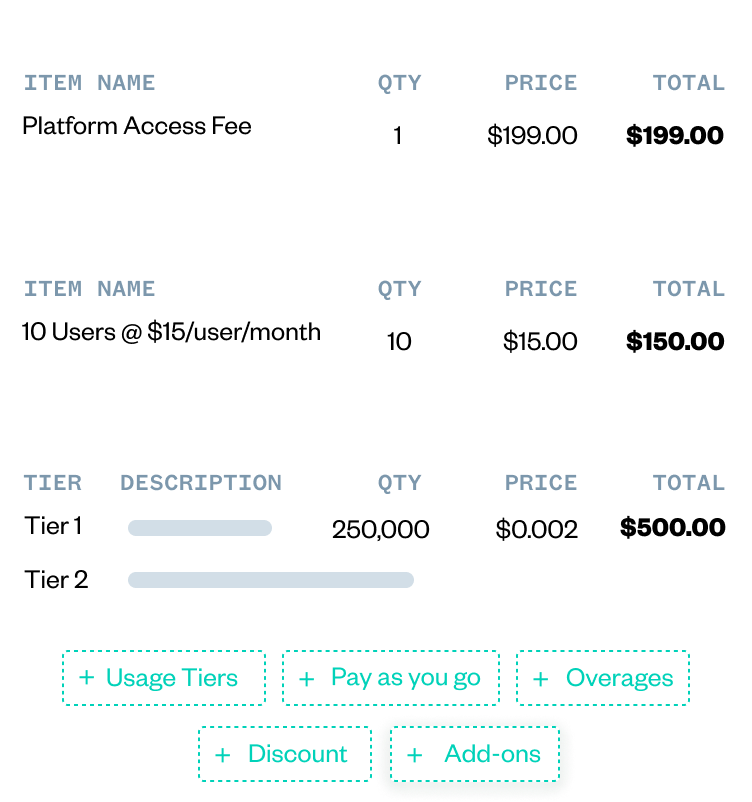
A Usage Based Pricing Solution with a Finance-Aware Product Catalog
Configure usage-based pricing models out of the box
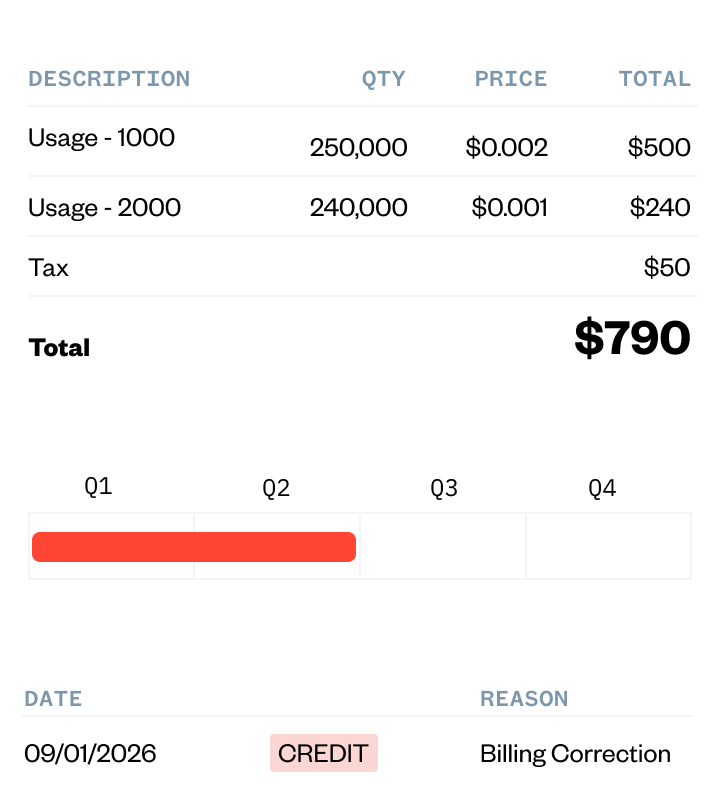
Bring finance to the forefront of pricing
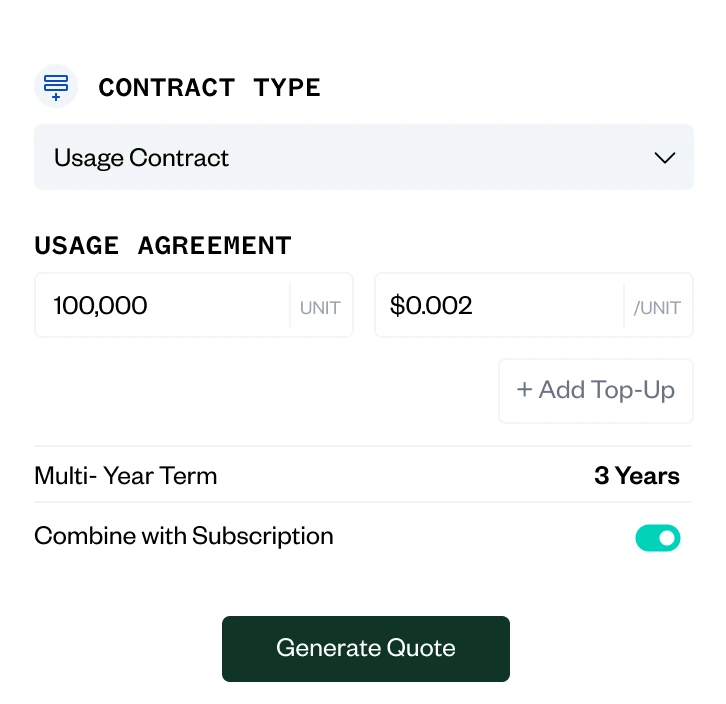
Enable sales to quote for usage-based offers
Our usage-based billing platform supports pay-as-you-go, prepaid, volume discounts, tiers, thresholds, overages, and commitment models with clicks not code.
Configure usage pricing with accounting controls built in, so every invoice, recognition event, and adjustment can align seamlessly across order to cash
Ensure accuracy from the first sales order with the ability to quote usage contracts, add top-ups, create multi-year agreements, or bundle usage with subscriptions.
Visibility that builds trust: from ingestion to invoice to revenue.
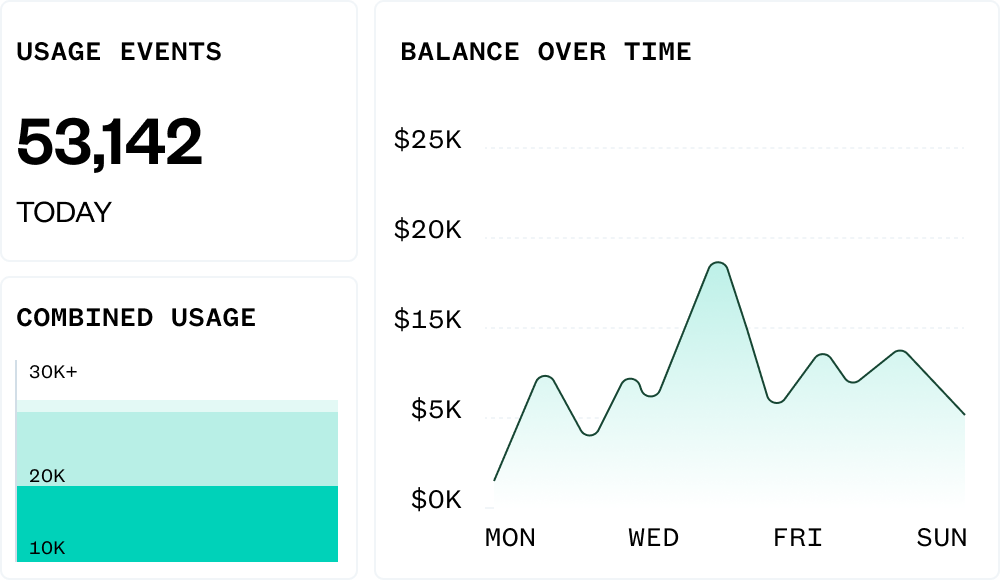
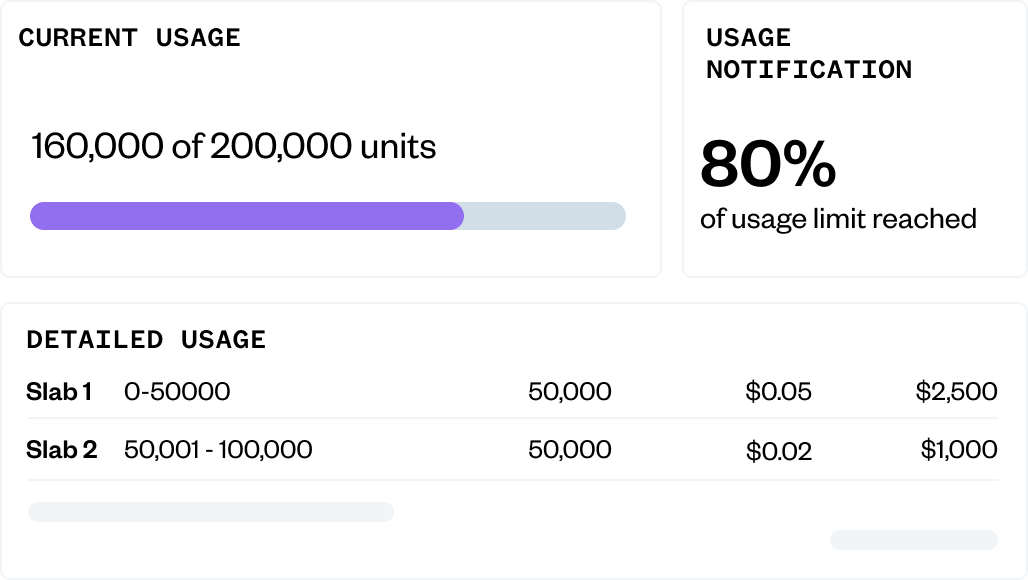
With Zuora’s usage based billing solution, you monitor usage balances in real time, build trust with customers through transparency, and simplify audits with detailed usage waterfall reports.
Monitor usage balances in real time Usage events are rated in real time, giving billing teams live insight into exactly how much each customer has used, even mid-cycle.
Build trust with customers through transparency Configurable widgets, real-time threshold notifications, alongside detailed usage invoices give customers control over their spend, avoid surprise overages, and reduce billing disputes.
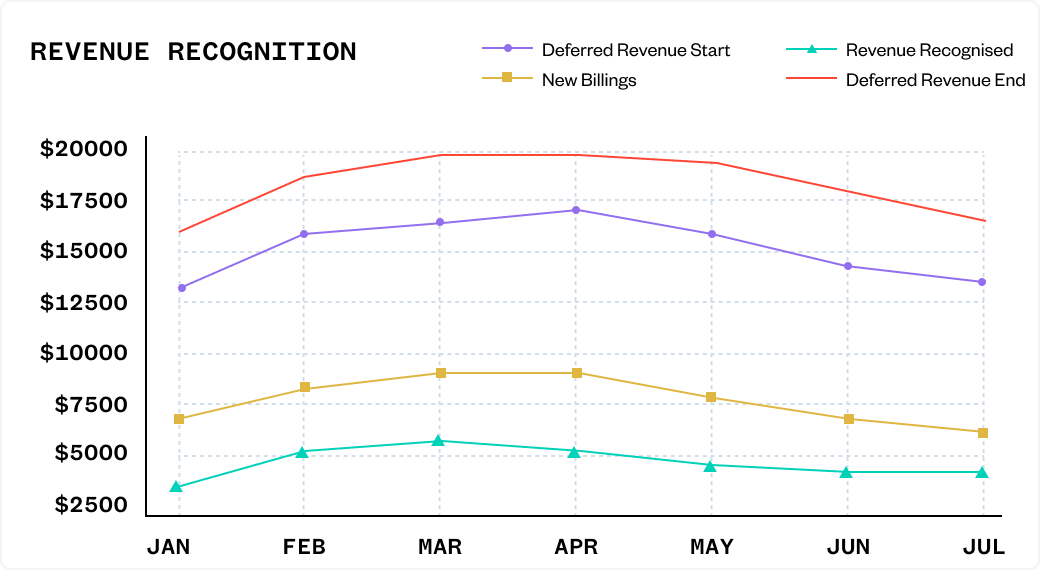
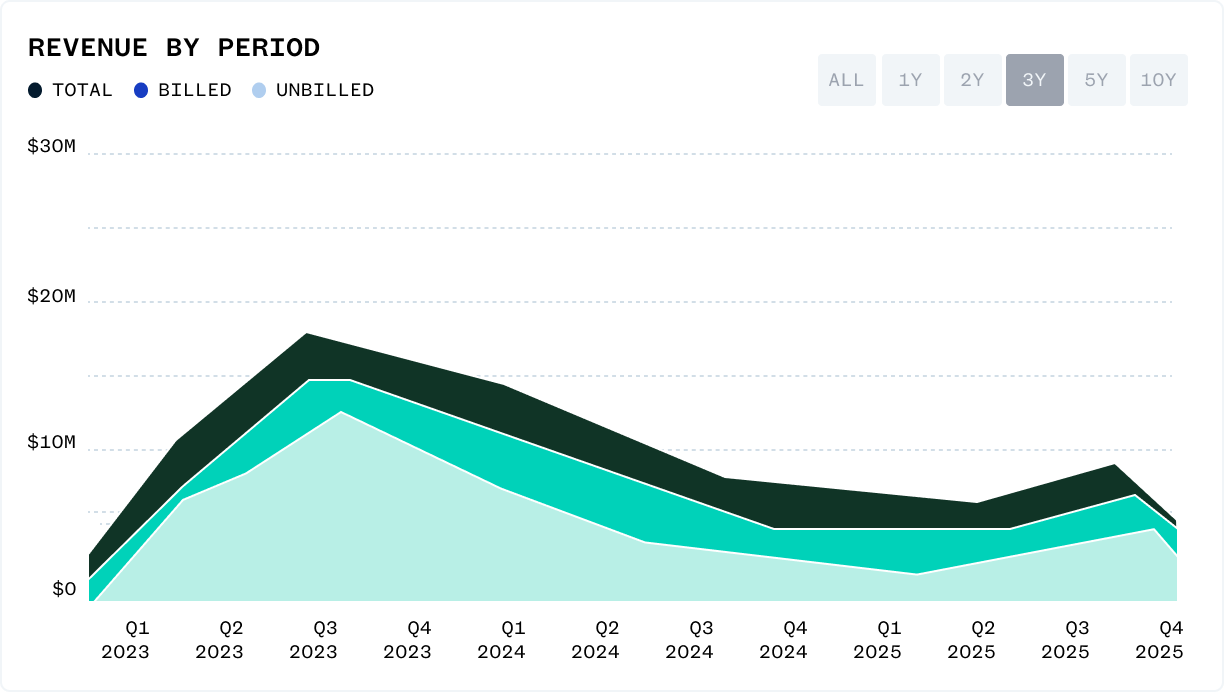
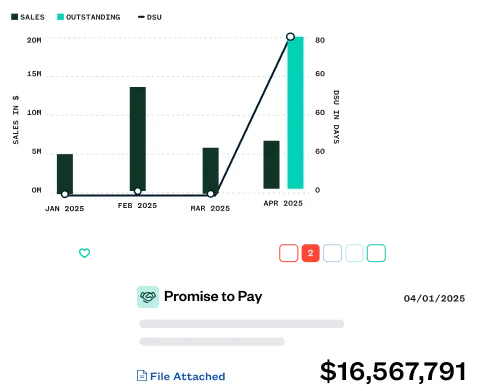
Simplify audits with usage waterfall reports Reduce manual reconciliation with a detailed, unified view of recognized and deferred revenue across pre-paid and committed usage contracts
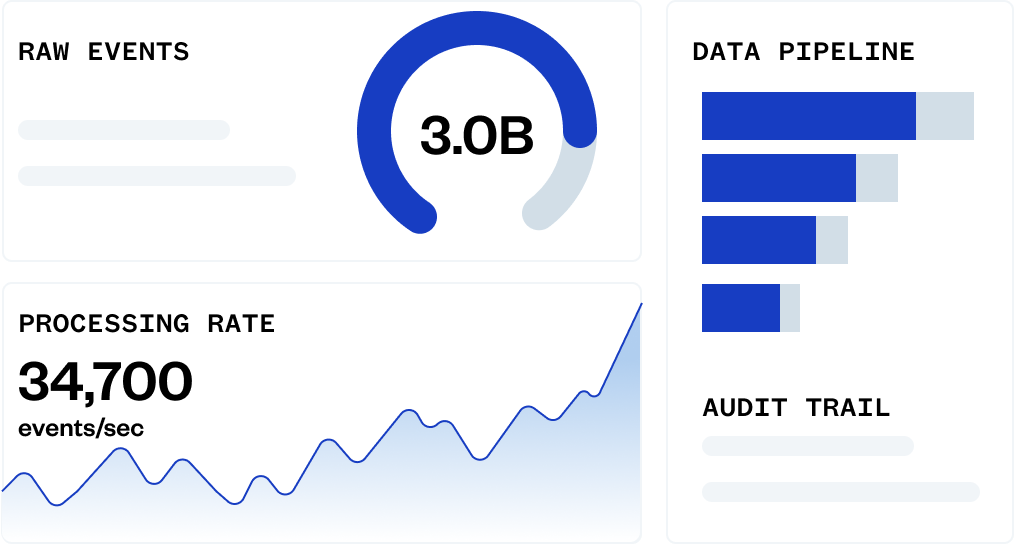
Accurately meter billions of daily usage events Align with your product service to directly ingest, enrich, aggregate, and transform events equipped with a full audit trail across the entire data pipeline. Scalable to 3B raw usage events per day
Recognize usage revenue as soon as an event is ingested Confidently estimate and adjust variable considerations based on actual, real time, usage data. Track usage revenue on a product-by-product basis
Why leading enterprises chose Zuora for usage based billing
After outgrowing spreadsheets, Zoom adopted Zuora as their order-to-cash platform in 2015, before raising Series C. Zoom continues to run their multi-billion dollar business on Zuora today.
Read Case study
Zendesk became a Zuora customer in 2010 when they had 5000 accounts. They’ve scaled with Zuora through the years and continue to run their entire order-to-cash process on Zuora today.
Read Case study
“It’s reassuring to know that with Zuora we can continue to scale our business to meet the needs of our growing global customer base.”
Lauren Feeney, Financial Controller, Secureframe
Read Case study
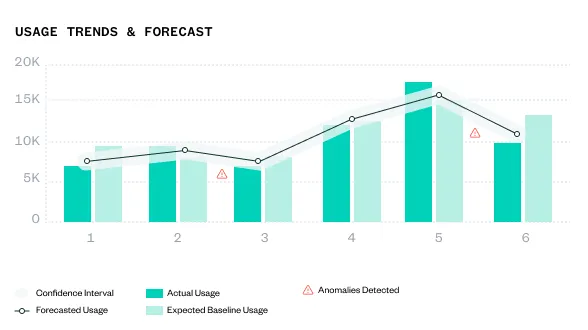
Forecast, predict, and refine with usage intelligence
Forecast usage, grounded in actual customer data
Leverage actual customer usage coupled with machine learning to accurately forecast and detect anomalies
Uncover growth opportunities with AI
AI-driven account scoring provides predictive scoring based on usage to proactively identity upsell opportunities or churn risk
Frequently Asked Questions Usage Based Pricing
What is usage based pricing software?
Usage based billing software (also called usage based pricing software) enables companies to set prices based on how much customers actually use a product or service, rather than relying only on fixed recurring fees. It helps businesses meter consumption, apply pricing rules, generate accurate invoices, and connect usage data to revenue processes so finance and product teams can scale monetization with more accuracy and control.
How does usage based pricing work in Zuora?
Zuora’s usage based billing software manages the full flow from event ingestion to finance outcomes. Usage events are ingested and rated against your pricing rules, balances and thresholds are updated in real time, invoices are generated from rated usage, the data flows into revenue recognition, and usage intelligence supports forecasting and planning.
What types of usage contracts does Zuora usage based pricing software support?
Zuora supports a wide range of usage-based billing models, including pay-as-you-go, prepaid, volume pricing, tiered pricing, thresholds, overages, and commitments. That gives teams the flexibility to launch simple consumption offers or more complex hybrid agreements that combine multiple pricing approaches in one contract.
How does Zuora’s usage based pricing software handle revenue recognition?
Usage events flow into Zuora Revenue so you can recognize usage revenue as events are ingested, with ASC 606/IFRS 15 compliance and audit-ready schedules. This lets finance teams automate revenue treatment for variable usage without waiting on manual reconciliation.
How does Zuora usage based pricing software handle usage disputes or pricing discrepancies?
Zuora usage based pricing software helps reduce disputes by giving teams real-time transparency into usage, detailed invoices that show how charges were calculated, and audit trails that trace each amount back to the underlying event data. When discrepancies do arise, finance and support teams have clearer records and dispute resolution flows to investigate and resolve them faster.
Can customers view their usage and projected costs in real time with Zuora usage based pricing platform?
Yes. Zuora usage based pricing software gives customers real-time visibility through usage dashboards, embedded widgets, notifications, and portal experiences. That makes it easier for customers to track consumption, monitor projected costs, and stay ahead of thresholds or balance changes.
How can I forecast revenue with Zuora’s usage based pricing software?
Zuora’s usage based pricing software helps you forecast revenue by combining live usage data with usage intelligence and machine learning-based forecasting. Teams can model expected consumption, improve pipeline accuracy, and make better decisions using forward-looking visibility instead of waiting for invoices to close the loop.
Is Zuora usage based pricing software compliant and auditable?
Yes. Zuora usage based pricing software supports compliance and auditability with detailed usage audit trails, usage waterfall reporting, and a direct tie-in to Zuora Revenue. That gives finance teams traceability from event to invoice to recognized revenue, with stronger controls for reviews and audits.
What’s the best usage based pricing software?
The best usage based billing software should do more than meter and invoice usage. It should scale to billions of events, support hybrid monetization, and give finance teams the controls they need for compliance, forecasting, and revenue recognition. Zuora stands out by combining high-scale usage processing with finance-grade governance in one platform.
How do I get started with usage based pricing software in Zuora?
Getting started with usage based billing software in Zuora begins with defining your usage metrics, pricing models, and billing rules, then connecting your event data and revenue workflows. To take the next step, Talk to Sales or Request a usage-based billing demo.
How does usage based billing software help companies monetize AI products?
Usage based billing software helps companies monetize AI products by metering AI consumption and turning it into accurate charges based on usage, credits, or outcomes. That makes it easier to price things like tokens, API calls, model runs, or workflows, bill customers accurately, and recognize revenue as AI usage grows.
Can Zuora support AI credits, prepaid balances, and committed usage?
Yes. Zuora usage based billing software supports prepaid drawdown, AI credits, top-ups, minimum commitments, overages, thresholds, and hybrid models. This gives teams the flexibility to package AI offers in ways that balance customer predictability with scalable monetization.
How does Zuora help prevent bill shock with AI usage?
Zuora usage based pricing software helps prevent bill shock with real-time usage visibility, customer dashboards and widgets, threshold notifications, remaining balance tracking, and audit trails. That gives both customers and internal teams earlier warning signs so they can manage spend before charges become a surprise.
Trusted by 1,000+ companies worldwide for nearly 2 decades, Zuora unifies quoting, billing, payments, AR, revenue, and analytics into the most complete monetization solution.