Modern Business Snap Assessment
The Subscribed Institute, our partners and customers have spent a decade researching why some companies emerge from technical, economic, and category disruption better and stronger than their peers.
It’s not coincidence or luck.
It’s their capability to Do Modern Business.

Are You Ready for Change?
Rate your business on the three most significant dimensions that predict your ability to navigate technical, economic, and category disruption to get your snap assessment.

Customer Model
Our customer model today excels at producing innovation
Our customers' perception of our brand and product value is reinforced and ongoing vs. transactional
We track the right data points and have an effective process to understand changing customer needs
We understand differences across our customer base and create value through personalized products and experiences
Netflix
Michelin
F5
Adobe
Caterpillar
In Clayton Christensen’s theory of Jobs to Be Done, he states that innovative businesses understand the choices customers make and the relationship their products have with customer needs.
We call this understanding and relationship the Customer Model.
When you get it right, you’re oriented around the needs of your customer instead of your internal value production chain.

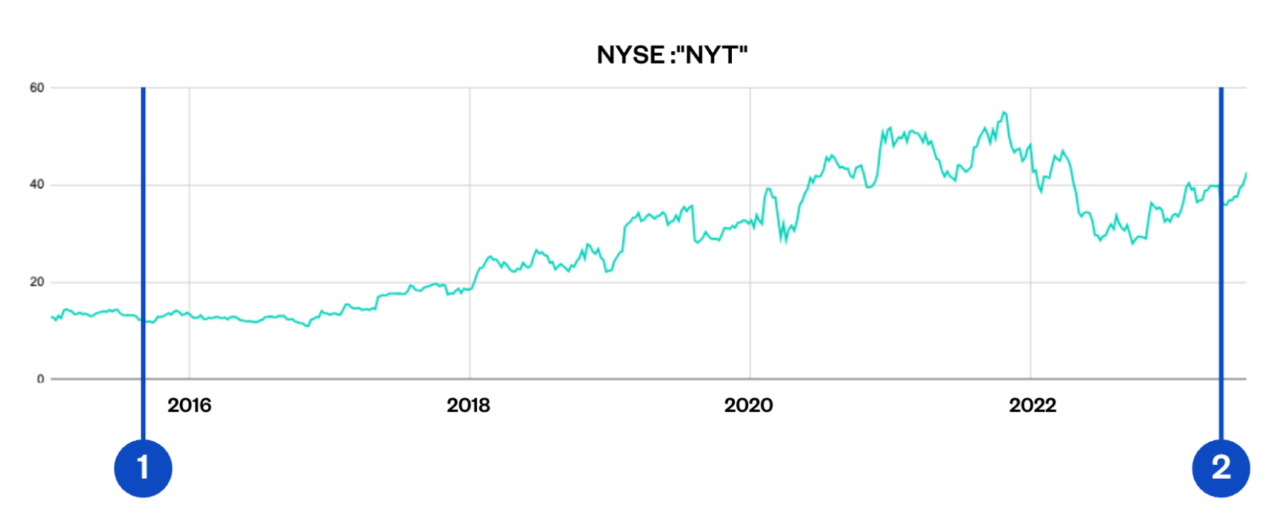
The New York Times was never a newspaper business, they just needed to put digital distribution first to see it. Over the last 7 years they’ve defined their ‘job to be done’ and focused their products and company around customer needs.

If The New York Times doesn’t understand why I might choose to “hire” its product in certain circumstances and why I might choose something else in others, its data about me or people like me is unlikely to help it create any new innovations for me…
Correlation does not reveal the one thing that matters most in innovation—the causality behind why I might purchase a particular solution. That answer, I believe, is found in the job I’m hiring a product or service to do.
Professor of Business Administration
Harvard Business School
Our strategy is to become the essential subscription for every curious English-speaking person seeking to understand and engage in the world…
We know how important healthy engagement is to a healthy business. In each of our subscription categories, we have command over the product levers that help drive that, and we believe there’s a huge growth runway ahead of us.
Vice President of Product,
New York Times

Technology Stack
Our business effectively leverages technology to drive innovation
We deliver product packaging and consumption pricing innovation at the pace of market changes
Our financial systems and processes contribute to customer insights and accelerate our pace of innovation
We have a comprehensive, real-time view of customer engagement available to decision makers at every level of our company
Dramatic business model changes require new technical capabilities.
A 100 year old media giant launches a direct streaming offering. A heavy machinery manufacturer releases new IoT fleet management services. The leading application performance and security vendor updates their offerings to serve the hybrid cloud.
But Modern Business isn’t about delivering one dramatic change.
Disjointed platforms manage product catalogs, customer records, financial transactions, and the business processes that deliver value.
Product and pricing updates or any changes to the customer model require expensive, risky, and brittle integration work.
The Modern Business orients their tech stack around sustained customer relationships.
Orchestration organizes functional systems in service of nurturing and monetizing subscribers, enabling the business to stay ahead of competitors and changing market conditions.
Today F5 is one of the largest providers of hybrid cloud application services in the world, but they started in hardware. As cloud computing changed the application landscape, F5 adopted a long-term product and growth strategy to meet customer’s requirements across on-premise, cloud, and hybrid cloud application environments.
Two major factors contributed to F5’s successful transformation:




F5 engaged Zuora and Deloitte to realize the vision of a broader software subscription portfolio to meet customers where they are and how they want to consume F5’s services.
To deliver on our customers’ expectations, we knew we needed to improve capabilities around amendments, choice of subscription durations, and recurring billing—functionality that has become table stakes for subscription software offerings…
We were able to put the options customers wanted right at the fingertips of our account managers, eliminating purchasing friction.
Director of Product Management
F5
Companies that think beyond the typical as-a-service use cases and leverage XaaS for advanced or emerging technologies, like new hybrid services that combine on-premise services and cloud, may be able to stay a step ahead of the game.
Managing Director, Deloitte Services LP
Executive Director, Center for TMT
Deloitte

Organizational Structure
Our company is organized effectively to drive innovation
Our org is agile and able to quickly adapt to meet changes in the market
We have robust and standardized processes & reporting to manage diverse products in the market
We're capable of spinning up operations to support new products and effectively integrate acquired products into our portfolio
Modern businesses set up their organizations in order to drive a deep understanding of their customers’ needs and introduce new offers, experiences, and business models FAST.
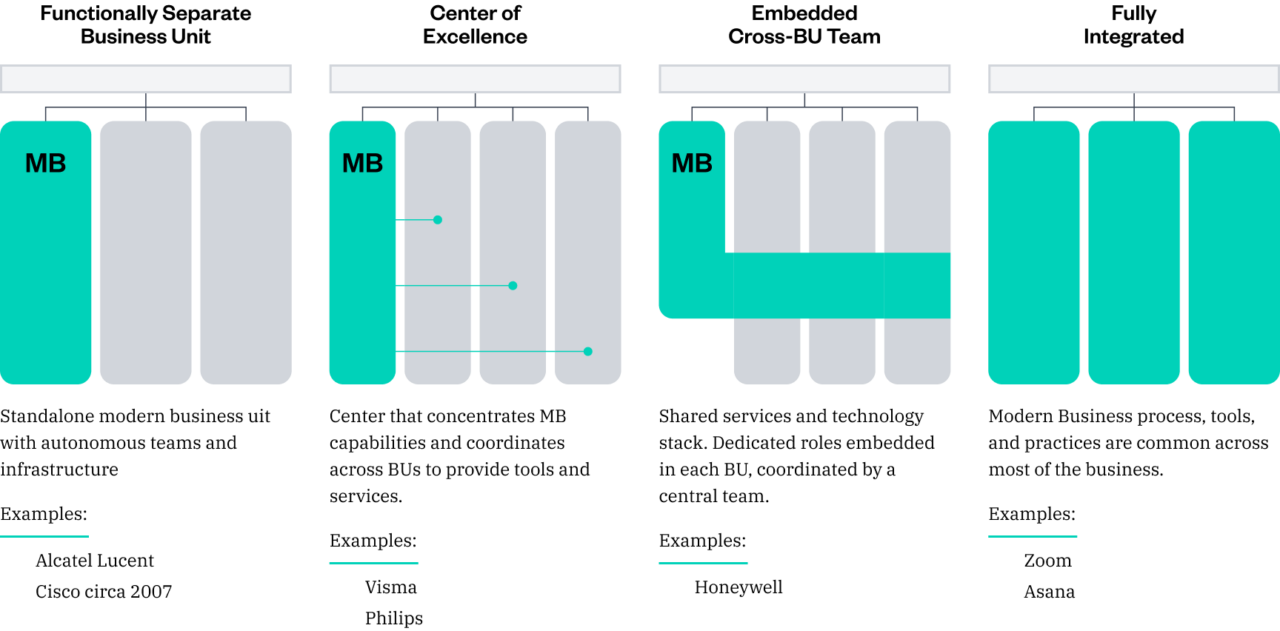

Honeywell is known as an industrial manufacturer, but in the last few years they’ve also pulled off a dramatic and successful digital transformation, rolling out software and IoT solutions that provides insights to operators of buildings, airlines, industrial facilities, and other infrastructure.
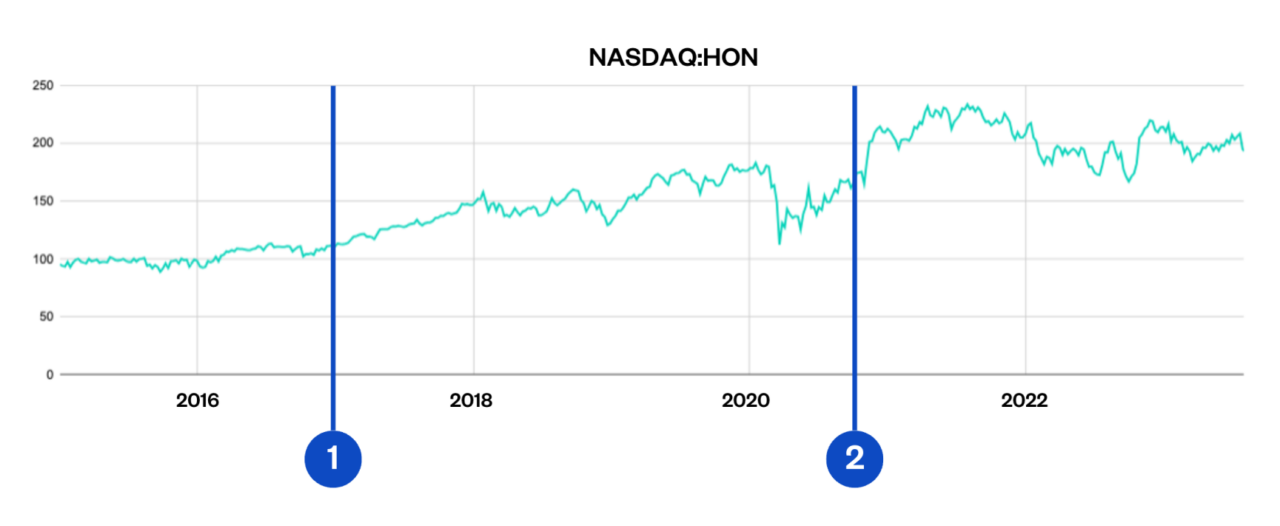
Darius Adamczyk takes the helm as CEO pursuing a vision of Honeywell as a software-industrial company. He spins out the connected software division to work across their industrial, aerospace, and real estate business.
When we carved out our Honeywell Connected Enterprise business, they also operate under a different set of rules and controls. Not dramatically different, but different enough so they can make the decision they need quickly to generate momentum.
CEO
Honeywell
Five years and one pandemic later, Honeywell hasn’t just overhauled their digital infrastructure, they’ve organized, hired, and built their culture & operating architecture around the software-industrial vision.
The creation of Honeywell Forge provides a glimpse into the momentum and conviction with which Honeywell moves to make this ‘startup’ work…
We formed and operationalized a new team focused on building software in under two months…
We’re all about making Honeywell stronger, not trying to discount this company’s amazing history of industrial innovation instead build upon it. That’s the only way we’ll succeed.
Chief Commercial Officer for Honeywell Connected Enterprise
Get Your Modern Business Snap Assessment
Thanks for your response!
We'll get back to shortly.